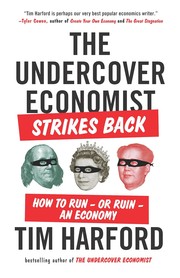
The Undercover Economist Strikes Back: How to Run-or-Ruin an Economy
Macroeconomics explained: how to run, or ruin, an economy.
Who recommended it 1 · 1 direct
Similar books 6
Chosen by shared topics, the entries that hold them, and the people who recommended both.
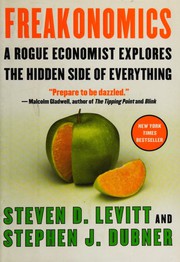
Incentives and data applied to cheating teachers, sumo wrestlers and other puzzles.
“Also, see the story of cheating in the Chicago Public School system in Steven D. Levitt and Stephen J. Dubner, Freakonomics: A Rogue Economist Explores the Hidden Side of Everything (New York: Harper Perennial, 2009), 23-35” — Michael Mauboussin
Source: Blaming the Rat: Incentives, Motivation, and How They Interact, page 14
Recommended by: Michael Mauboussin, Mohnish Pabrai and 7 others
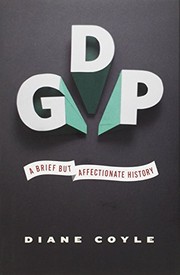
How GDP is measured, and why its figures can jump overnight.
Recommended by: Mohnish Pabrai, Patrick Collison
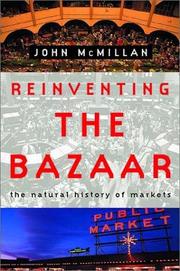
How markets work, how much they matter and how they can be designed better.
Recommended by: Mohnish Pabrai
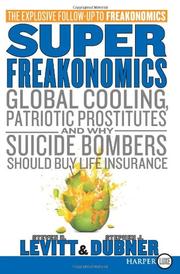
Data and incentives applied to climate, crime and altruism.
“I recommend this book to anyone who reads nonfiction. It is very well written and full of great insights.” — Bill Gates
Source: Gates Notes review of SuperFreakonomics
Recommended by: Bill Gates, Mohnish Pabrai
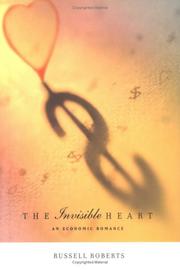
A novel in which two teachers argue for and against markets.
“there is a book called The Invisible Heart which explains basic economics to most people” — Joel Greenblatt
Source: Masters in Business transcript: Joel Greenblatt (2018)
Recommended by: Joel Greenblatt, Mohnish Pabrai
Economics applied to pirates: why they behaved as they did and why they succeeded.
Recommended by: Mohnish Pabrai