
The Invisible Heart: An Economic Romance
A novel in which two teachers argue for and against markets.
Economics argued through a novel; markets and their moral defence
Summary
Roberts wrote a novel to make an argument. Sam Gordon teaches economics at a private high school and holds a strongly market-liberal position; Laura Silver teaches English and holds the opposing view; they argue and fall in love while a subplot involving a corporate executive, a workplace safety scandal and a government investigation tests the positions.
The economic content is delivered through the arguments. Roberts covers why prices convey information, why firms have incentives to provide safety even without regulation because of wage premiums and reputation, why sweatshop employment can improve on the alternatives available to the workers who take it, why corporate philanthropy is a poor use of shareholder capital, why price gouging after disasters allocates scarce goods, and why unintended consequences frequently reverse the effect of well-intended policy. Laura's objections are given real weight in places and are conceded in others.
The form is the book's problem and its point. As a novel it is thin, the characters exist to hold positions, and the plot resolves in favour of Sam's framework. As economics it is a well-constructed statement of the Chicago and public choice position, accessible to readers who would not read the argument in expository form. Roberts is explicit that it is advocacy. Readers should take it as one side stated attractively, and should note that several of the empirical claims, particularly on workplace safety and on the effects of regulation, are contested in the labour economics literature rather than settled.
Key takeaways 7
- Prices carry information about scarcity that no central authority possesses, which is why interfering with them produces shortages rather than fairness.
- Firms have commercial incentives to provide workplace safety, because unsafe employers must pay a wage premium to attract workers.
- Employment in low-wage export factories is chosen by workers because the available alternatives are worse, so eliminating it without changing the alternatives harms them.
- Corporate philanthropy spends money belonging to shareholders on causes the executives prefer, and is not a legitimate use of the firm's capital.
- Price increases after a disaster allocate scarce goods to those who need them most and attract new supply, which price controls prevent.
- Well-intended regulation frequently produces effects opposite to its purpose, because it changes behaviour in ways its designers did not model.
- Good intentions are not evidence of good outcomes, and the moral case for a policy must rest on its consequences rather than on its motive.
Who should read it
Readers who want the market-liberal position on regulation, wages and prices argued in accessible narrative form, understood as advocacy.
Who recommended it 2 · 2 direct
“there is a book called The Invisible Heart which explains basic economics to most people”
Similar books 6
Chosen by shared topics, the entries that hold them, and the people who recommended both.
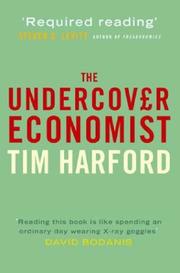
Price theory in daily life: coffee near stations, supermarket tiers and used cars.
Recommended by: Mohnish Pabrai, Naval Ravikant
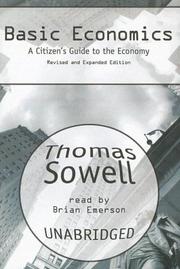
How prices, incentives and trade-offs work, from housing and labour to trade.
Recommended by: Marc Andreessen
Judge a policy by its long-run effects on all groups, applied to two dozen cases.
“I've given dozens of copies of this classic to students... The book should be required reading on every campus.” — Christopher Bloomstran
Source: Semper Augustus 2020 Letter to Clients, 'To Read or Not to Read', p. 57
Recommended by: Christopher Bloomstran, Changpeng Zhao and 3 others
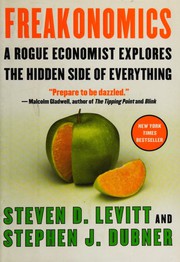
Incentives and data applied to cheating teachers, sumo wrestlers and other puzzles.
“Also, see the story of cheating in the Chicago Public School system in Steven D. Levitt and Stephen J. Dubner, Freakonomics: A Rogue Economist Explores the Hidden Side of Everything (New York: Harper Perennial, 2009), 23-35” — Michael Mauboussin
Source: Blaming the Rat: Incentives, Motivation, and How They Interact, page 14
Recommended by: Michael Mauboussin, Mohnish Pabrai and 7 others
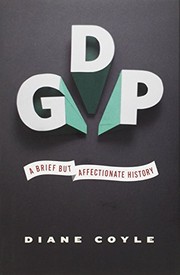
How GDP is measured, and why its figures can jump overnight.
Recommended by: Mohnish Pabrai, Patrick Collison
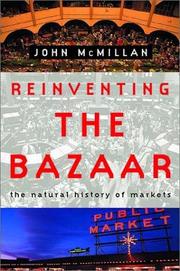
How markets work, how much they matter and how they can be designed better.
Recommended by: Mohnish Pabrai