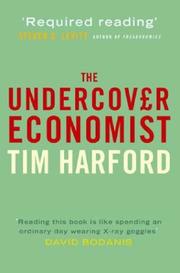
The Undercover Economist
Price theory in daily life: coffee near stations, supermarket tiers and used cars.
Summary
Harford applies price theory to ordinary transactions: the cost of a cappuccino near a train station, the pricing tiers on a supermarket shelf, the market for secondhand cars, health insurance in the United States, and the auction of 3G spectrum in Britain. Each chapter takes a familiar situation and shows which economic mechanism explains it.
The recurring themes are scarcity power, price discrimination, information asymmetry and externalities. Harford argues that most of what looks like corporate greed is actually rent extracted from a scarce input, usually location or a regulatory barrier, and that firms spend enormous effort separating customers by willingness to pay. He works through Akerlof's lemons model to explain why used-car and insurance markets break down, and uses Coase and Pigou to argue for pricing externalities rather than banning them. The final chapters cover why some countries stay poor, leaning on institutional and corruption arguments, and why China's reforms worked.
The book is an introduction, not a contribution. It rests on standard microeconomics and a set of well-chosen illustrations rather than original research, and it is useful for pricing intuition, for thinking about where margin actually comes from, and for spotting adverse selection in a business model. Its policy positions sit firmly in the market-liberal tradition of the mid-2000s and have aged less well: the treatment of globalisation and sweatshops is confident in ways that later empirical work has complicated, and the pre-2008 confidence about financial markets is visible throughout.
Key takeaways 7
- Scarcity power, usually derived from location or regulation rather than from a superior product, determines who captures margin in a transaction.
- Firms use three main price discrimination tactics: charging different customers different prices, offering versions that sort customers by willingness to pay, and setting prices that vary by group.
- Product differentiation in retail is often manufactured to make price comparison difficult rather than to serve distinct needs.
- Asymmetric information causes insurance and used-car markets to unravel, because the parties who know most about the risk select into the trade.
- Externalities are best addressed by pricing them, since a tax set at the external cost preserves the information that prices carry.
- Poor countries are poor mainly because their institutions allow theft by those in power, not because they lack resources or capital.
- Auction design determines how much value a government captures from selling public assets, as the British 3G spectrum auction demonstrated.
Who should read it
Operators and founders who want a working grasp of pricing power, price discrimination and information asymmetry without a formal economics background.
Who recommended it 2 · 1 direct
Similar books 6
Chosen by shared topics, the entries that hold them, and the people who recommended both.
Judge a policy by its long-run effects on all groups, applied to two dozen cases.
“I've given dozens of copies of this classic to students... The book should be required reading on every campus.” — Christopher Bloomstran
Source: Semper Augustus 2020 Letter to Clients, 'To Read or Not to Read', p. 57
Recommended by: Christopher Bloomstran, Changpeng Zhao and 3 others
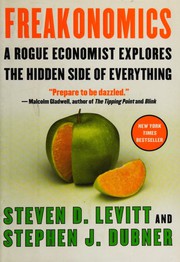
Incentives and data applied to cheating teachers, sumo wrestlers and other puzzles.
“Also, see the story of cheating in the Chicago Public School system in Steven D. Levitt and Stephen J. Dubner, Freakonomics: A Rogue Economist Explores the Hidden Side of Everything (New York: Harper Perennial, 2009), 23-35” — Michael Mauboussin
Source: Blaming the Rat: Incentives, Motivation, and How They Interact, page 14
Recommended by: Michael Mauboussin, Mohnish Pabrai and 7 others

A novel in which two teachers argue for and against markets.
“there is a book called The Invisible Heart which explains basic economics to most people” — Joel Greenblatt
Source: Masters in Business transcript: Joel Greenblatt (2018)
Recommended by: Joel Greenblatt, Mohnish Pabrai
How prices, incentives and trade-offs work, from housing and labour to trade.
Recommended by: Marc Andreessen
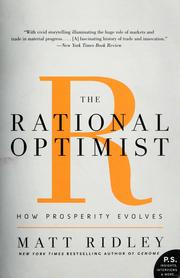
Prosperity grows as trade and specialisation let ideas meet and combine.
“…books I've recommended, highlighted to death, or forced on friends.” — Andrew Wilkinson
Source: Andrew Wilkinson's Bookshelf, neverenough.com
Recommended by: Andrew Wilkinson, Bill Gates, Frank Martin and 12 others
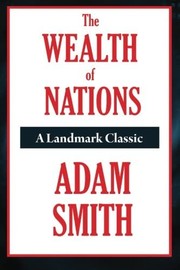
How the division of labour and free markets make a nation rich.
“In The Wealth of Nations (published in 1776) Smith noted that land prices had risen in recent decades, as interest rates declined.” — Howard Marks
Source: Easy Money
Recommended by: Howard Marks, John C. Bogle and 11 others
Where it sits in the reference 3
Topics 1
As an Amazon Associate I earn from qualifying purchases.