Updates

  1. Person pages list letters, writing, profiles and links as sortable tables with filters, and show each person's companies as links; Fund letters show each letter's description in its own column.
  2. Experts show a checked job title and a short description of each person; 30 more people have photographs.
  3. Every company, fund, university and publication the experts work for has a page listing the people there.
  4. Fund letters show each letter's thesis and filter by it; 225 person pages list the essays, columns and newsletter issues the person wrote.
  5. Person pages list every essay and newsletter issue a person wrote, and their own books as a table in List view.
  6. Recommends shows the five largest kinds of book and the rest under More; browse pictures load sooner.
  7. Podcasts and talks link the original episode, filter by Audio and video or Press, and list each publisher once.
  8. Pages are wider, Recommends has List and Grid, and a filter clicked again turns off.
  9. Book cards sit in a ruled grid with Open Library and Goodreads links and each book's one-line note.
  10. Funds is now Investors; each investor's styles are buttons that filter the table.
  11. Podcasts and talks on a person's page filter by year and publisher and show as a list or a grid of pictures.
  12. Quotes show only people's own words: 472 summaries written by list sites are gone.
  13. Country pages open from Browse again, and every link on the shelf lands on a page.
  14. Subject and person pages show their sections as tabs, and each book appears once on a person's page.
  15. Book cards show the quote, who said it and the source; grids show five cards to a row.
  16. On a phone, a menu holds the sections, search, Updates, Feedback and dark mode.
  17. Feedback takes a screenshot of the page with no browser prompt, opens a screenshot full size when you click it, and clears itself once sent.
  18. Book cards are centred, search names the topic each book sits in, and any text cut short shows whole on hover.
  19. Search groups its results by kind: people, companies, geographies, subjects, topics, books, funds, fund letters and papers.
  20. The Books table lists who recommended each book by name, and the browser tab names the section you are in.
  21. Feedback can take a screenshot of the page, or one you paste or choose, and opens in the corner beside Updates.
  22. Each rail button reopens its section where you left it, and Browse, Table and People show on every book and subject page.
  23. Filters grey out choices that hold nothing instead of hiding them, and Books › People filters by authors or recommenders.
  24. Feedback takes a subject line and up to three screenshots.
  25. Biographies are grouped by the person they are about: 41 new pages, from Abraham Lincoln to Lee Kuan Yew.
  26. Sport splits into 23 sports, and Religion into one topic per faith.
  27. Book lists show as cards: the cover, one recommendation quote and every recommender by name.
  28. Seventeen subjects that had two or three pages under different names now have one page each.
  29. Every page lists its Experts as authors and recommenders, with a link to them on the Experts tab.
  30. Economics, Financial history, Financial panics and Accounting are subjects of their own, with one page per financial crisis.
  31. Book, person and subject pages open inside the app, so the tabs stay in view.
  32. 996 more book covers, and photographs or logos for 227 more people and companies.
  33. Books › Browse shows every subject as cards, and the rail holds Fund letters, Papers, Experts, Books and Funds.
  34. Every topic over 150 books splits into narrower topics, each with a page of its own.

Send feedback

What is it?
Screenshots, up to 3 (optional)
or paste one with Ctrl+V

We use your email only to reply to you.

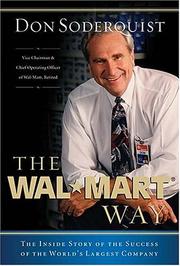
The Wal-Mart Way

The Wal-Mart Way

Don Soderquist
2005
T4 231 pages · about 3h 51m to read Open Librarygoodreads

Insider account by the long-serving chief operating officer.

Summary

Soderquist joined Wal-Mart in 1980 from Ben Franklin Stores and served as chief operating officer and vice chairman until 2000. He wrote an insider account of the company's culture and management practices during its expansion from a regional chain to the largest retailer in the world.

The content is largely about operating discipline and values as he experienced them. He describes the Saturday morning meeting where merchandising decisions were made on the previous week's numbers, the practice of sending executives into stores every week, the open-door policy for associates, the store-within-a-store approach that gave department managers profit and loss responsibility for their sections, and the aggressive expense control that ran from shared hotel rooms to the design of the home office. He also gives Sam Walton's approach to competitors, which was to visit their stores constantly and copy what worked.

The framing is explicitly values-based. Soderquist argues that Wal-Mart's growth came from treating associates as partners, serving customers, and maintaining what he calls servant leadership, and he connects this to his own Christian faith.

This is a company insider's account published by an executive who benefited from the company's success, and it reads as such. It does not engage with the substantial criticism of Wal-Mart on wages, healthcare, the effect on supplier margins, the effect on small-town retailers, or the sex discrimination litigation. Charles Fishman's The Wal-Mart Effect covers that ground. The operational detail is genuine and useful; the interpretive frame should be treated as advocacy.

Key takeaways 7

  1. Wal-Mart's weekly Saturday meeting allowed merchandising decisions to be made on the previous week's actual sales data.
  2. Giving department managers profit and loss responsibility for their section produced ownership behaviour at store level.
  3. Executives spending most of the week in stores kept decision-making connected to what customers were actually doing.
  4. Extreme expense discipline at the corporate centre was communicated as a signal to the whole organisation rather than as a cost saving.
  5. Sam Walton built the company partly by systematically visiting competitors and copying their better practices.
  6. Calling employees associates and inviting their suggestions produced operating improvements that headquarters would not have found.
  7. Culture is transmitted by what senior executives visibly do rather than by what the company publishes.

Who should read it

Retail and multi-site operators who want an insider account of Wal-Mart's operating cadence, read alongside independent accounts of its effects.

Who recommended it 1 · 1 direct

Similar books 6

Chosen by shared topics, the entries that hold them, and the people who recommended both.

Bryce G. Hoffman · 2012

The 2006-2010 turnaround told with close management access.

Recommended by: Mohnish Pabrai

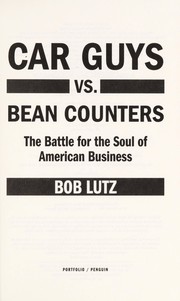
Bob Lutz · 2011

Insider account: Lutz on product culture versus finance control.

Recommended by: Mohnish Pabrai

Where it sits in the reference 3

Companies
Business themes
Business themes

Topics

Company HistoriesBusiness and Management