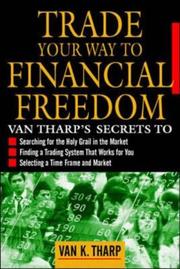
Trade Your Way to Financial Freedom
Introduces expectancy, R-multiples and position sizing to a general audience.
Summary
Tharp, a psychologist who worked with traders, argues that most trading education focuses on entry signals, which he says are the least important part of a trading system, and that the components which actually determine results are exits and position sizing.
His framework treats a trading system as a set of components: setup conditions, entry, protective stop, profit-taking exit, and position sizing. He argues that a system's expectancy, meaning the average amount won or lost per unit risked per trade, combined with the number of opportunities and the position sizing method, determines the outcome, and that entry accuracy contributes far less than traders assume. He supports this with a marble game demonstration in which participants given identical trade sequences produce wildly different results purely through position sizing decisions.
His position sizing material covers several methods including fixed fractional, percent volatility and percent risk, and he argues this is where most of the difference between traders originates.
The psychological material, which is his professional background, covers beliefs about markets, the fact that a trader trades their beliefs rather than the market, and the requirement that a system fit the person using it or it will be abandoned during drawdown.
The book contains no verified performance record for the approaches described and it operates in a field where evidence is generally poor. Tharp also sold expensive courses, which shapes the framing. The specific claims that exits and sizing dominate entries is defensible and useful; the surrounding material should be treated cautiously.
Key takeaways 7
- Entry signals contribute far less to trading results than exits and position sizing, and most trading education concentrates on the least important component.
- A system's expectancy, meaning average result per unit risked, combined with opportunity frequency, determines the outcome rather than win rate.
- Position sizing produces most of the variation in results between traders using the same signals, which the marble game demonstrates directly.
- A trading system must fit the psychology of the person using it, because a system the trader does not believe in will be abandoned during its first drawdown.
- Traders act on their beliefs about markets rather than on markets, so examining those beliefs is part of building a system.
- Objectives should be defined before a system is designed, since the acceptable drawdown and required return determine what system is appropriate.
- Risking a fixed small percentage of capital per trade is what allows a system with positive expectancy to survive the losing sequences it will encounter.
Who should read it
Traders who want the argument that position sizing and exits dominate entry signals, read with caution about the surrounding claims.
About Van K. Tharp
Trading coach and psychologist; founder, Van Tharp Institute
Well-regarded trader coach whose position-sizing and expectancy framework is widely adopted but rarely cited outside trading.
Who recommended it 1 · 1 direct
Similar books 6
Chosen by shared topics, the entries that hold them, and the people who recommended both.
Recommended by: Mohnish Pabrai
Global macro managers on how they build trades.
Reflexivity, where beliefs move prices and prices move facts, tested in a live diary.
“The Alchemy joins Reminiscences of a Stock Operator as a timeless instructional guide to the marketplace.” — Paul Tudor Jones
Source: Tudor Jones pairing it with Reminiscences of a Stock Operator
Recommended by: Guy Spier, Paul Tudor Jones, Peter Cundill and 3 others
Hedge funds from Alfred Winslow Jones in 1949 through Soros, Robertson and beyond.
“It's hard to imagine anyone will ever write a better book on the subject.” — Paul Graham
Source: Paul Graham on X (Apr 8, 2021)
Recommended by: Mohnish Pabrai, Paul Graham, Josh Wolfe and 1 other
Templeton's method: buying at the point of maximum pessimism worldwide
“There are a few books - really not that many which I believe are indispensable reading for every serious investor: The Templeton Touch by William Proctor.” — Peter Cundill
Source: Cundill's list of books indispensable for every serious investor
Recommended by: Mohnish Pabrai, Peter Cundill
Where it sits in the reference 3
Topics