Updates

  1. Person pages list letters, writing, profiles and links as sortable tables with filters, and show each person's companies as links; Fund letters show each letter's description in its own column.
  2. Experts show a checked job title and a short description of each person; 30 more people have photographs.
  3. Every company, fund, university and publication the experts work for has a page listing the people there.
  4. Fund letters show each letter's thesis and filter by it; 225 person pages list the essays, columns and newsletter issues the person wrote.
  5. Person pages list every essay and newsletter issue a person wrote, and their own books as a table in List view.
  6. Recommends shows the five largest kinds of book and the rest under More; browse pictures load sooner.
  7. Podcasts and talks link the original episode, filter by Audio and video or Press, and list each publisher once.
  8. Pages are wider, Recommends has List and Grid, and a filter clicked again turns off.
  9. Book cards sit in a ruled grid with Open Library and Goodreads links and each book's one-line note.
  10. Funds is now Investors; each investor's styles are buttons that filter the table.
  11. Podcasts and talks on a person's page filter by year and publisher and show as a list or a grid of pictures.
  12. Quotes show only people's own words: 472 summaries written by list sites are gone.
  13. Country pages open from Browse again, and every link on the shelf lands on a page.
  14. Subject and person pages show their sections as tabs, and each book appears once on a person's page.
  15. Book cards show the quote, who said it and the source; grids show five cards to a row.
  16. On a phone, a menu holds the sections, search, Updates, Feedback and dark mode.
  17. Feedback takes a screenshot of the page with no browser prompt, opens a screenshot full size when you click it, and clears itself once sent.
  18. Book cards are centred, search names the topic each book sits in, and any text cut short shows whole on hover.
  19. Search groups its results by kind: people, companies, geographies, subjects, topics, books, funds, fund letters and papers.
  20. The Books table lists who recommended each book by name, and the browser tab names the section you are in.
  21. Feedback can take a screenshot of the page, or one you paste or choose, and opens in the corner beside Updates.
  22. Each rail button reopens its section where you left it, and Browse, Table and People show on every book and subject page.
  23. Filters grey out choices that hold nothing instead of hiding them, and Books › People filters by authors or recommenders.
  24. Feedback takes a subject line and up to three screenshots.
  25. Biographies are grouped by the person they are about: 41 new pages, from Abraham Lincoln to Lee Kuan Yew.
  26. Sport splits into 23 sports, and Religion into one topic per faith.
  27. Book lists show as cards: the cover, one recommendation quote and every recommender by name.
  28. Seventeen subjects that had two or three pages under different names now have one page each.
  29. Every page lists its Experts as authors and recommenders, with a link to them on the Experts tab.
  30. Economics, Financial history, Financial panics and Accounting are subjects of their own, with one page per financial crisis.
  31. Book, person and subject pages open inside the app, so the tabs stay in view.
  32. 996 more book covers, and photographs or logos for 227 more people and companies.
  33. Books › Browse shows every subject as cards, and the rail holds Fund letters, Papers, Experts, Books and Funds.
  34. Every topic over 150 books splits into narrower topics, each with a page of its own.

Send feedback

What is it?
Screenshots, up to 3 (optional)
or paste one with Ctrl+V

We use your email only to reply to you.

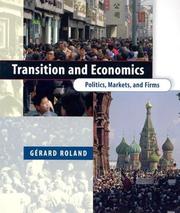
Transition and Economics

Transition and Economics

Gerard Roland
2000
T2 429 pages · about 7h 9m to read Open Librarygoodreads

The theory of sequencing: why gradualism beat shock therapy in some places.

Summary

Gerard Roland wrote the most analytically rigorous treatment of the postcommunist transition, applying formal political economy to the questions that the policy debate had argued over informally.

His central contribution is to reframe the gradualism versus shock therapy dispute in terms that can be analysed. He identifies aggregate uncertainty, meaning nobody knows whether a reform will work, and individual uncertainty, meaning nobody knows how a reform will affect them personally, and shows that these produce different political dynamics. Reforms with high individual uncertainty may be blocked before implementation even when a majority would benefit, because people fear being among the losers. Once implemented, a reform that benefits a majority becomes irreversible, which is the case for partial reform as a strategy: it creates constituencies for further reform. Against this he sets complementarities between reforms, which is the case for comprehensiveness, since partial reform can produce worse outcomes than either the starting point or the complete programme.

He applies this to the actual sequences: price liberalisation, privatisation, restructuring, and the building of legal and financial institutions. He also examines the Chinese gradual path and argues that its success reflected specific initial conditions rather than a generally superior method. The book is formal, uses game-theoretic reasoning throughout, and is written for economists. It is the place to go for the transition debate stated rigorously rather than polemically.

Key takeaways 7

  1. Individual uncertainty about who will lose can block a reform that a majority would benefit from once implemented.
  2. Partial reform creates constituencies that support further reform, which is the analytical case for gradualism.
  3. Complementarities between reforms mean that partial implementation can produce worse outcomes than either no reform or complete reform.
  4. Reversal costs make a reform irreversible once a majority benefits, which is why the order of implementation matters.
  5. Roland argues that China's gradual path succeeded because of specific initial conditions rather than because gradualism is generally superior.
  6. Privatisation without restructuring transfers ownership without changing behaviour, so sequencing between them determines the outcome.
  7. The gradualism debate can be analysed formally rather than argued over, and the answer depends on the specific reform's properties.

Who should read it

Economists and serious policy readers who want the transition debate analysed formally rather than as a contest between advocates.

Similar books 6

Chosen by shared topics, the entries that hold them, and the people who recommended both.
Ivan T. Berend · 1996

Economic history that explains the industrial base the Czechs privatised.

Marcin Piatkowski · 2018

How Poland achieved Europe's fastest sustained growth after 1989.
Ivan T. Berend · 2009

Covers EU accession as the main driver of Romanian institutional change.
Anders Aslund, Anders Åslund · 2007

Comparative transition account; Czech vouchers judged against other sequencing choices.

Kristen R. Ghodsee, Mitchell Orenstein · 2021

What happened to Eastern Europe in the thirty years after 1989, measured.
Anders Åslund, Simeon Djankov · 2014

Includes the Czech voucher scheme written up by people who designed and criticised it.

Where it sits in the reference 2

Geographies
Economics

Topics

EconomicsPolitics and GovernmentEurope, Britain and Russia