
How Capitalism Was Built
Comparative transition account; Czech vouchers judged against other sequencing choices.
Summary
Aslund, an economist who advised several post-communist governments, wrote a comparative history of the transition from communism to market economies across the twenty-one countries of Central and Eastern Europe, the Baltics, the Caucasus and Central Asia, plus Russia.
His argument is that the countries which liberalised prices quickly, stabilised their currencies decisively, and privatised early performed better than those that attempted gradual reform, and that the case for gradualism was refuted by the outcomes. He argues that partial reform is the worst option because it creates rents from the gap between controlled and market prices, and that the beneficiaries of those rents then become the constituency blocking further reform. He examines the specific mechanisms: subsidised credit, export licence arbitrage, and the trade in commodities at controlled domestic prices sold at world prices, which he identifies as the source of the Russian oligarch fortunes.
He covers the fiscal and monetary aspects of stabilisation, the sequencing debates, the differences between voucher privatisation and other methods, and the relationship between political democratisation and economic reform, arguing that the two supported each other.
Aslund was a participant as well as an observer and the book defends the reform programmes he advised. The critical literature on Russian privatisation and on the social costs of shock therapy, including the mortality and inequality outcomes, is given less weight than critics believe it warrants. Readers should pair it with an account from the other position. The comparative data across many countries is its most useful contribution.
Key takeaways 7
- Countries that liberalised prices quickly and stabilised decisively performed better than those attempting gradual reform, and the comparative record supports this consistently.
- Partial reform is the worst option because the gap between controlled and market prices generates rents that create a constituency against completing the reform.
- Russian oligarch fortunes originated in arbitrage between controlled domestic commodity prices and world prices, and in subsidised credit, rather than in privatisation itself.
- Rapid inflation stabilisation required a hard budget constraint on state enterprises, which was the political battle that determined each country's path.
- Political democratisation and economic reform supported each other, since democratic governments were better able to resist the rent-seekers that partial reform created.
- The initial output collapse was largely the disappearance of production that had no value at world prices, which measured GDP figures treated as loss.
- Institutions supporting property rights and contract enforcement had to be built rather than assumed, and their absence explains the divergence between the best and worst performers.
Who should read it
Investors and analysts working in transition and emerging economies who want the comparative reform record argued from the liberalising position.
About Anders Aslund
Swedish economist who advised Russia and Ukraine on market reform in the 1990s; later a fellow at the Peterson Institute and Atlantic Council.
How Capitalism Was Built compares the post-communist transitions country by country and argues that fast liberalisation with early stabilisation produced better outcomes than gradual reform. Russia's Crony Capitalism follows the money from those reforms into a state organised around asset seizure and offshore ownership, which is the operating environment for anyone holding assets in the region.
Center for Social and Economic Research, Atlantic Council, Peterson Institute
Similar books 6
Chosen by shared topics, the entries that hold them, and the people who recommended both.

Includes the Czech voucher scheme written up by people who designed and criticised it.
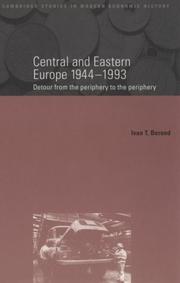
Economic history that explains the industrial base the Czechs privatised.
How Poland achieved Europe's fastest sustained growth after 1989.

Covers EU accession as the main driver of Romanian institutional change.
The critique of the transition's distributional cost.

The case for Poland's 1990 shock therapy, from an adviser to the programme.
Where it sits in the reference 6
Topics