Updates

  1. Person pages list letters, writing, profiles and links as sortable tables with filters, and show each person's companies as links; Fund letters show each letter's description in its own column.
  2. Experts show a checked job title and a short description of each person; 30 more people have photographs.
  3. Every company, fund, university and publication the experts work for has a page listing the people there.
  4. Fund letters show each letter's thesis and filter by it; 225 person pages list the essays, columns and newsletter issues the person wrote.
  5. Person pages list every essay and newsletter issue a person wrote, and their own books as a table in List view.
  6. Recommends shows the five largest kinds of book and the rest under More; browse pictures load sooner.
  7. Podcasts and talks link the original episode, filter by Audio and video or Press, and list each publisher once.
  8. Pages are wider, Recommends has List and Grid, and a filter clicked again turns off.
  9. Book cards sit in a ruled grid with Open Library and Goodreads links and each book's one-line note.
  10. Funds is now Investors; each investor's styles are buttons that filter the table.
  11. Podcasts and talks on a person's page filter by year and publisher and show as a list or a grid of pictures.
  12. Quotes show only people's own words: 472 summaries written by list sites are gone.
  13. Country pages open from Browse again, and every link on the shelf lands on a page.
  14. Subject and person pages show their sections as tabs, and each book appears once on a person's page.
  15. Book cards show the quote, who said it and the source; grids show five cards to a row.
  16. On a phone, a menu holds the sections, search, Updates, Feedback and dark mode.
  17. Feedback takes a screenshot of the page with no browser prompt, opens a screenshot full size when you click it, and clears itself once sent.
  18. Book cards are centred, search names the topic each book sits in, and any text cut short shows whole on hover.
  19. Search groups its results by kind: people, companies, geographies, subjects, topics, books, funds, fund letters and papers.
  20. The Books table lists who recommended each book by name, and the browser tab names the section you are in.
  21. Feedback can take a screenshot of the page, or one you paste or choose, and opens in the corner beside Updates.
  22. Each rail button reopens its section where you left it, and Browse, Table and People show on every book and subject page.
  23. Filters grey out choices that hold nothing instead of hiding them, and Books › People filters by authors or recommenders.
  24. Feedback takes a subject line and up to three screenshots.
  25. Biographies are grouped by the person they are about: 41 new pages, from Abraham Lincoln to Lee Kuan Yew.
  26. Sport splits into 23 sports, and Religion into one topic per faith.
  27. Book lists show as cards: the cover, one recommendation quote and every recommender by name.
  28. Seventeen subjects that had two or three pages under different names now have one page each.
  29. Every page lists its Experts as authors and recommenders, with a link to them on the Experts tab.
  30. Economics, Financial history, Financial panics and Accounting are subjects of their own, with one page per financial crisis.
  31. Book, person and subject pages open inside the app, so the tabs stay in view.
  32. 996 more book covers, and photographs or logos for 227 more people and companies.
  33. Books › Browse shows every subject as cards, and the rail holds Fund letters, Papers, Experts, Books and Funds.
  34. Every topic over 150 books splits into narrower topics, each with a page of its own.

Send feedback

What is it?
Screenshots, up to 3 (optional)
or paste one with Ctrl+V

We use your email only to reply to you.

The Great Rebirth: Lessons from the Victory

The Great Rebirth: Lessons from the Victory of Capitalism over Communism

Anders Åslund, Simeon Djankov
2014
T3 Open Librarygoodreads

Includes the Czech voucher scheme written up by people who designed and criticised it.

Summary

Aslund and Djankov edited a collection of essays by economists and by former policymakers who conducted the post-communist transitions, published on the twenty-fifth anniversary of 1989. Contributors include Leszek Balcerowicz, Vaclav Klaus, Mart Laar, Anatoly Chubais and others who ran reform programmes, alongside academic economists.

The collection's argument is that rapid and comprehensive reform outperformed gradualism, and it presents both the comparative data and the participants' own accounts of why they chose the sequence they did. The recurring conclusions are: liberalise prices immediately because partial liberalisation creates arbitrage rents; stabilise the currency decisively because inflation destroys the constituency for reform; impose hard budget constraints on state enterprises early; privatise quickly even imperfectly, because delayed privatisation permits asset stripping by managers who have control without ownership; and build the institutions of a market economy simultaneously rather than sequentially.

The country coverage includes Poland, the Czech Republic, Estonia, Russia, Ukraine, Georgia and others, and the comparison between those that reformed rapidly and those that did not is the empirical core.

The collection is written by the reformers and their intellectual allies, so it is a defence of their record rather than an assessment of it. The social costs, the mortality crisis in Russia, the inequality outcomes and the political consequences including the emergence of authoritarian government receive less attention than critics believe they warrant. Read it as the reformers' case, with the critical literature sought elsewhere.

Key takeaways 7

  1. Rapid comprehensive reform outperformed gradual reform across the post-communist transitions, and the comparative record is consistent.
  2. Partial price liberalisation creates arbitrage rents that generate a constituency against completing the reform.
  3. Delayed privatisation permits asset stripping by managers who hold control without ownership, which makes slow privatisation worse than imperfect fast privatisation.
  4. Decisive currency stabilisation must come early, because sustained inflation destroys public support for the whole reform programme.
  5. Hard budget constraints on state enterprises are the decisive political battle, since soft constraints preserve the old economy indefinitely.
  6. Institution building must happen simultaneously with liberalisation rather than sequentially, because markets without contract enforcement produce predation.
  7. The countries that reformed fastest reached higher income levels within a decade, and the initial output fall was largely the disappearance of production with no value at world prices.

Who should read it

Readers interested in transition economics who want the reformers' own account and comparative data, balanced with critical sources.

Similar books 6

Chosen by shared topics, the entries that hold them, and the people who recommended both.

Anders Aslund, Anders Åslund · 2007

Comparative transition account; Czech vouchers judged against other sequencing choices.
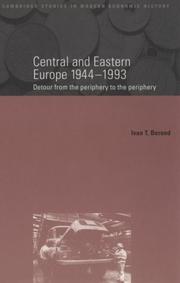
Ivan T. Berend · 1996

Economic history that explains the industrial base the Czechs privatised.

Ivan T. Berend · 2009

Covers EU accession as the main driver of Romanian institutional change.

Marcin Piatkowski · 2018

How Poland achieved Europe's fastest sustained growth after 1989.

Kristen R. Ghodsee, Mitchell Orenstein · 2021

What happened to Eastern Europe in the thirty years after 1989, measured.
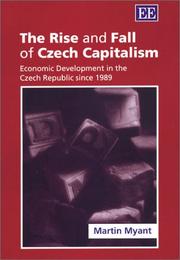
Martin Myant · 2003

The book on voucher privatisation, bank ownership and the tunnelling that followed.

Where it sits in the reference 4

Geographies
Geographies
Geographies
Economics

Topics

EconomicsGeneral HistoryPolitics and GovernmentModern Europe and RussiaEurope, Britain and Russia