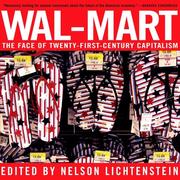
Wal-Mart: The Face of Twenty-First-Century Capitalism
Essays on Wal-Mart as an economic and social institution, its supply chain included.
Edited volume on the supply chain and logistics model.
Summary
Nelson Lichtenstein edited this collection of essays by historians, economists, sociologists and labour scholars examining Wal-Mart as an economic and social institution.
The contributions cover distinct areas. The company's origins in the rural South and the culture and politics that came with it. Its logistics and information systems, which required suppliers to adopt its standards and made it the coordinator of supply chains it did not own. Its labour practices, its opposition to unionisation and the litigation over wages and discrimination. Its effect on suppliers, with Procter and Gamble and other manufacturers accommodating themselves to a buyer larger than any of them. Its role in relocating manufacturing to China, and the specific mechanism by which continuous price reduction demands transmitted through the supply chain. And comparative material on retail in other countries, which shows that the American outcome was not inevitable.
The collection is written largely from a critical perspective, though the contributors are academics rather than advocates and several assess the consumer benefits directly. It is more analytical than the journalistic treatments and situates the company in a longer history of American business organisation. It was published in 2006, before Amazon changed the competitive position and before the company's later wage increases.
Key takeaways 7
- Wal-Mart's information and logistics systems made it the coordinator of supply chains it did not own.
- Requiring suppliers to adopt its data and logistics standards transferred coordination costs to them while retaining the resulting information.
- Continuous price reduction demands transmitted through the supply chain and drove manufacturing relocation to lower-cost countries.
- The company's rural Southern origins shaped its labour relations and its political positioning.
- Comparative retail evidence from other countries shows that the American outcome was not inevitable.
- Power in the American economy shifted from manufacturers to retailers, and Wal-Mart is the case that demonstrates the shift.
- The contributors are academics rather than advocates and several assess the consumer benefits directly.
Who should read it
Investors and analysts who want an academic multi-disciplinary treatment of Wal-Mart as an economic institution rather than a journalistic account.
Similar books 6
Chosen by shared topics, the entries that hold them, and the people who recommended both.
A labour historian on Wal-Mart as the new template for capitalist organisation.
The costs Wal-Mart imposes on its workers, suppliers, rivals and towns.
What Wal-Mart's scale does to its suppliers, its towns and prices everywhere.

A critical history of Walmart and Sam Walton by a reporter who covered the company.
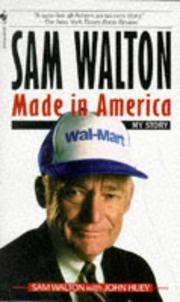
How Walmart grew from one Arkansas store by cutting costs and prices.
Recommended by: David Cancel, David Perell, Mohnish Pabrai and 4 others
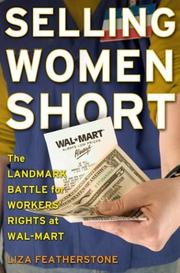
The Dukes v. Wal-Mart sex discrimination case and the women who brought it.
Where it sits in the reference 2
Topics 3
As an Amazon Associate I earn from qualifying purchases.