How to Lead
Interviews with founders, CEOs and public figures.
Summary
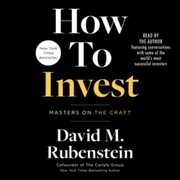
Rubenstein, co-founder of the Carlyle Group, assembled edited transcripts of interviews he conducted for his television programme with figures including Jeff Bezos, Bill Gates, Warren Buffett, Phil Knight, Oprah Winfrey, Richard Branson, Ruth Bader Ginsburg, Colin Powell, Jack Nicklaus and others across business, government, sport and the arts.
The interviews are conversational rather than probing, and Rubenstein's approach is to ask about origins, decisions and habits rather than to challenge his subjects. He groups them loosely by type of leadership: visionaries, builders, transformers, commanders, decision makers and masters.
The recurring material across subjects concerns persistence through early failure, willingness to make decisions with incomplete information, obsessive focus on a single domain over decades, and the observation from several subjects that they were considered unlikely to succeed at the time they started. Bezos discusses the regret minimisation framework and the distinction between reversible and irreversible decisions. Buffett discusses circle of competence and temperament. Knight discusses the near-death financing episodes at Nike.
The form limits what the book can deliver. Subjects who have told their stories many times give polished versions, the interviews are short, and Rubenstein's access depends on not asking hard questions. There is no analysis, no attempt to identify what distinguishes these people from equally determined people who failed, and heavy selection on outcome. The book works as a source of individual observations rather than as a treatment of leadership. Anyone wanting the full version of these subjects' thinking should go to their own writing or to full-length biographies.
Key takeaways 7
- Bezos distinguishes reversible decisions, which should be made fast by individuals, from irreversible ones, which deserve deliberation.
- Several subjects report that they were considered unlikely to succeed at the point they committed to their eventual field.
- Extended focus on a single domain over decades appears more consistently across these subjects than any particular talent.
- Willingness to decide with incomplete information rather than waiting for certainty is a repeated theme across very different fields.
- Nike came close to financial failure repeatedly in its first decade, which the public record of its later success obscures.
- Interview subjects who have told their stories many times supply rehearsed accounts, which limits what the form can reveal.
- A collection selected entirely on outcome cannot distinguish the causes of success from characteristics shared with those who failed.
Who should read it
Readers who want short accessible interviews with well-known figures, rather than analysis of what produces leadership.
About David M. Rubenstein
Co-founder and co-chairman, The Carlyle Group, 1987-present; host, The David Rubenstein Show
Built one of the largest private equity firms and has become the most prolific interviewer of investors and leaders, turning those conversations into a widely read book series.
Where it sits in the reference 3
Similar books 6
Chosen by shared topics, the entries that hold them, and the people who recommended both.