Leonardo da Vinci
Summary
Isaacson builds the biography around Leonardo's notebooks, roughly seven thousand two hundred surviving pages, and uses them to argue that his art and his science were a single activity. The book covers the illegitimate birth near Vinci, the Verrocchio workshop, the Milan years under Ludovico Sforza, the return to Florence, the anatomical work, and the final years in France.
The strongest material connects specific investigations to specific paintings. Isaacson shows how Leonardo's dissection of the human face, including the muscles that produce a smile, informs the Mona Lisa, and how his optical studies of how the eye perceives edges produced sfumato. His work on hydrodynamics, the movement of water around obstacles, appears in the treatment of hair and of fabric. The anatomical drawings of the heart, including the hypothesis about vortices in the aortic valve, were confirmed only in the twentieth century.
Isaacson emphasises the pattern of unfinished work. Leonardo left the Adoration of the Magi, the Sforza horse, the Battle of Anghiari and most of his treatises incomplete, and Isaacson treats this as a product of curiosity that outran commitment rather than as failure. He completed perhaps fifteen paintings in his life.
The interpretive claims are the weak part. Isaacson's argument that Leonardo represents a model of interdisciplinary creativity applicable to modern innovation is asserted repeatedly and thinly supported. Art historians have criticised the treatment of the Salvator Mundi attribution, which the book handles more credulously than the evidence supports. The notebook material is the reason to read it.
Key takeaways 8
- Leonardo's scientific investigation and his painting were one activity, and specific anatomical and optical findings appear directly in specific paintings.
- He dissected human bodies to understand the muscles producing expression, which is why the faces in his paintings carry information other painters could not produce.
- His observational method involved recording detail obsessively without a hypothesis, filling notebooks with questions he set himself.
- He left most of his work unfinished because curiosity moved him to the next problem, and he completed roughly fifteen paintings in a lifetime.
- His anatomical hypothesis about blood flow in the aortic valve was correct and was not confirmed until the twentieth century.
- He was illegitimate, left-handed, largely self-taught and unable to read Latin for much of his life, which kept him outside the scholarly tradition and forced him to observe directly.
- He treated the boundary between disciplines as an artefact rather than a fact, moving between engineering, anatomy, optics, geology and painting on the same page.
- He worked on the Mona Lisa for over a decade and never delivered it, treating a commission as an ongoing investigation rather than a job.
Who should read it
Readers interested in how direct observation across unrelated fields produces work that specialists cannot, drawn from primary notebook evidence.
About Walter Isaacson
American biographer and professor of history at Tulane University; formerly editor of Time and chief executive of CNN and the Aspen Institute.
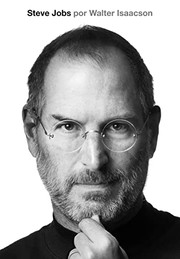
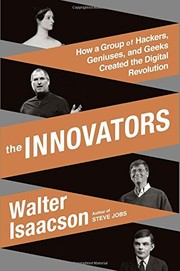
The biographies are built on long direct access - years of interviews with Jobs, then with Musk - and reconstruct how each subject decided, hired and treated the people around them. The Innovators does the same for computing, presenting it as a chain of collaborations rather than a sequence of lone inventions.
Where it sits in the reference 1
Who recommended it 10 · 1 direct
Similar books 6
Chosen by shared topics, the entries that hold them, and the people who recommended both.