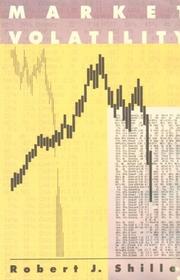
Macro Markets
Summary
Robert Shiller proposes creating financial markets for the largest risks that households and countries face and that no existing instrument covers. His observation is that the securities markets trade claims on corporate profits, which are a small fraction of national income, while the great majority of income accrues to labour and to owner-occupied housing, neither of which can be hedged.
The proposal is for perpetual claims on income aggregates: markets in national income or gross domestic product, in aggregate house prices, in occupational income indices for specific professions, and in similar measures. A worker in a declining occupation could sell a claim on that occupation's future income. A country dependent on one commodity could hedge its national income against a diversified basket. A homeowner could hedge house price risk without selling the house. Shiller works through the contract design, the index construction problems, the settlement mechanics and the incentive problems including moral hazard and adverse selection.
Shiller went on to implement parts of this, most visibly through the Case-Shiller house price indices and the futures contracts based on them, which have traded with limited liquidity. The book's central prediction, that these markets would develop, has largely not happened, and the reasons are the ones his critics identified: index measurement lags, basis risk between an individual's exposure and any published index, and the difficulty of attracting the other side of the trade. The intellectual case remains the clearest available statement of what financial innovation could do rather than what it has done.
Key takeaways 7
- Existing securities markets trade claims on corporate profits, which constitute a small share of national income, leaving most economic risk unhedgeable.
- Perpetual claims settled on income aggregates would allow households to hedge labour income and housing exposure.
- Countries dependent on a single commodity or sector could exchange national income exposure for a diversified claim.
- Index construction is the binding constraint, since a hedge is only as good as the correlation between the index and the individual's actual exposure.
- Shiller argues that the absence of these markets is an institutional failure rather than evidence that no demand exists.
- Macro markets would also produce forecasts of aggregate income and house prices, which have public value independent of the hedging.
- Moral hazard limits contract design, because an individual who has hedged their occupational income has less reason to protect it.
Who should read it
Investors and financial engineers interested in what risk transfer markets do not yet cover, and in the design problems that have prevented them from developing.
About Robert J. Shiller
Sterling Professor of Economics Emeritus, Yale University; co-creator of the Case-Shiller home price indices; Nobel laureate in economics 2013
Excess-volatility work and Irrational Exuberance are the primary sources for the empirical case that asset prices move far more than fundamentals justify.
Where it sits in the reference 2
Similar books 6
Chosen by shared topics, the entries that hold them, and the people who recommended both.