Power Failure: The Rise and Fall of an American Icon
Longest and most complete narrative history of the company.
Summary
Cohan wrote a long history of General Electric from its founding through its dismantling, based on extensive interviews including with Jack Welch before his death, Jeff Immelt, John Flannery and Larry Culp.
The central analytical claim concerns GE Capital. Cohan argues that by the end of Welch's tenure the finance arm was generating roughly half of the company's earnings, that its returns depended on GE's triple-A credit rating and on access to cheap commercial paper funding, and that this made an industrial conglomerate into a lightly regulated financial institution with a manufacturing business attached. The reported results that made Welch's record, including the consistent earnings that met analyst expectations quarter after quarter, were produced in substantial part by GE Capital's ability to time asset sales and reserve movements. Cohan documents the settled Securities and Exchange Commission accounting case and argues that the smoothness itself was the evidence.
The Immelt chapters cover the inheritance: a company whose funding model failed in 2008 and required government guarantees, and a chief executive who then made large acquisitions including Alstom, at the top of the thermal power cycle, just as gas turbine demand collapsed. The insurance liabilities from a long-exited business produced multi-billion dollar reserve charges years later.
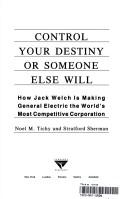
Cohan is critical of Welch, which reverses the consensus of the 1990s, and generous to neither successor. The book is very long and the interview material sometimes substitutes for analysis. Its financial explanation of how the earnings were produced is the most valuable part, and it is the necessary counterweight to Tichy and Sherman's contemporaneous account, also in this reference.
Key takeaways 7
- GE Capital generated roughly half of the company's earnings, which made an industrial conglomerate largely a financial institution.
- GE Capital's returns depended on the parent's triple-A rating and on commercial paper funding that disappeared in 2008.
- Consistently meeting analyst expectations quarter after quarter was itself evidence that the earnings were being managed.
- The Alstom acquisition was completed as demand for thermal power generation was collapsing, which destroyed the value immediately.
- Long-term care insurance liabilities from an exited business produced reserve charges more than a decade after the exit.
- Conglomerate structure concealed which businesses were creating value, because the reported result was the sum.
- Welch's reputation rested on results whose composition was not understood by investors at the time.
Who should read it
Investors and directors who want the full account of how a celebrated conglomerate's earnings were actually produced and why it could not survive the funding market's closure.
About William D. Cohan
Financial journalist and former investment banker at Lazard, Merrill Lynch and JPMorgan Chase.
House of Cards reconstructs the ten days in which Bear Stearns lost its funding, hour by hour and from the people in the room, and remains the closest study of how a broker-dealer run actually proceeds. Money and Power and The Last Tycoons trace how Goldman Sachs and Lazard made money over decades, including the partnership economics and internal politics that decided who got paid.
Where it sits in the reference 3
Similar books 6
Chosen by shared topics, the entries that hold them, and the people who recommended both.