The Morgans: Private International Bankers, 1854-1913
Scholarly firm history; the archival base later popular biographies drew on.
Summary
Vincent Carosso wrote the scholarly history of the House of Morgan from the establishment of George Peabody's London firm through the death of J. Pierpont Morgan in 1913, with access to the family and firm archives.
The institutional history covers the succession of partnerships: Peabody and Company in London, Junius Spencer Morgan's succession to it, Drexel Morgan in New York, and the eventual configuration of J. P. Morgan and Company with its London and Paris affiliates. Carosso explains the business, which was principally the placement of American securities with European investors, and the reputational capital that made it possible: a Morgan endorsement of an issue substituted for information that European buyers could not obtain about American borrowers.
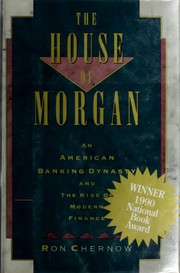
The substantive chapters cover the railroad reorganisations of the 1880s and 1890s, in which Morgan restructured bankrupt railways and imposed governance terms that became known as Morganisation; the 1895 gold syndicate that supplied the United States Treasury with gold during a reserve crisis; the formation of United States Steel in 1901; and the 1907 panic, in which Morgan organised the rescue that a central bank would later have performed. Carosso is scholarly and measured rather than either celebratory or hostile. The book is long and detailed and is the standard academic account; Ron Chernow's later House of Morgan covers a longer period with more narrative and less archival depth.
Key takeaways 7
- The Morgan business was placing American securities with European investors, and its asset was the reputation that substituted for information.
- A Morgan endorsement let European buyers hold American railway securities they had no means of evaluating themselves.
- Railway reorganisation involved imposing governance terms and board representation as the condition of restructuring.
- Morgan supplied the United States Treasury with gold in 1895 through a private syndicate, which demonstrated the absence of a central bank.
- The 1907 rescue was organised privately because no institution existed to perform the lender of last resort function.
- Partnership structure meant the family's capital was at risk in every commitment, which disciplined what the firm would underwrite.
- Carosso's archival access makes this the standard academic account of the period.
Who should read it
Financial historians and investors who want the archival history of how American industry was financed from Europe before a central bank existed.
Where it sits in the reference 2
Similar books 6
Chosen by shared topics, the entries that hold them, and the people who recommended both.