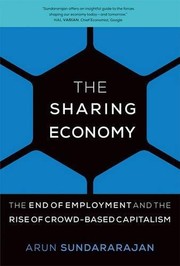
The Sharing Economy: The End of Employment and the Rise of Crowd-Based Capitalism
Economics of trust and matching that make marketplaces like Airbnb work.
Summary
Arun Sundararajan, an economist at New York University, analyses platform-mediated exchange between individuals, which he calls crowd-based capitalism, and considers what it means for markets, employment and regulation.
His analytical framing draws on transaction cost economics. Activities that once required firms because coordination was expensive can now be organised through platforms that reduce search, verification and contracting costs to near zero. Digital reputation systems substitute for the trust that institutional employment and brand previously supplied. This makes it economic for individuals to supply services directly at a scale that was previously impossible, and it blurs the boundary between personal and professional activity, between employment and entrepreneurship, and between renting and owning.
His regulatory argument is that neither the existing employment framework nor deregulation fits. He proposes delegated regulation through self-regulatory organisations, in which platforms take on responsibility for standards subject to public oversight, and data-driven regulation using the information platforms already collect. He also argues for portable benefits attached to individuals rather than to jobs. Sundararajan is more optimistic about worker outcomes than the empirical literature supports, and Ravenelle's field research on the same platforms reaches very different conclusions. His institutional analysis of why these arrangements became possible is the strongest part of the book.
Key takeaways 7
- Platforms reduce search, verification and contracting costs enough that individuals can supply services that previously required firms.
- Digital reputation systems substitute for the trust that employment and brand previously supplied.
- The boundary between employment and entrepreneurship blurs when the same person does both through the same platform on the same day.
- Neither the existing employment framework nor deregulation fits platform work, which requires a new regulatory approach.
- Sundararajan proposes delegated regulation through self-regulatory organisations subject to public oversight.
- Benefits should attach to individuals rather than to jobs, since workers now hold multiple simultaneous relationships.
- The book is more optimistic about worker outcomes than the field research on the same platforms supports.
Who should read it
Founders and policymakers working on platform businesses who want the institutional economics of why these arrangements became viable.
Where it sits in the reference 2
Similar books 6
Chosen by shared topics, the entries that hold them, and the people who recommended both.