
Campbell's Law
Campbell's sharper social-science version: the more a quantitative indicator is used for decision-making, the more it will be corrupted and the more it will distort the process it monitors. Where Goodhart notes the measure breaks, Campbell notes the underlying activity bends to fit it. In markets it explains why disclosure regimes reliably produce managed numbers.
Start here
- The Tyranny of MetricsJerry Z. Muller, 2018
- Weapons of Math DestructionCathy O'Neil, 2016
- Seeing Like a StateJames C. Scott, 1998

Why large state plans fail when they override local, practical knowledge.
Recommended by: Balaji S. Srinivasan, Nat Eliason and 1 other
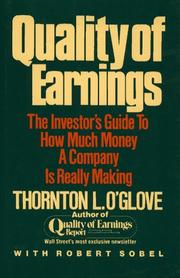
How to test whether reported earnings reflect reality, from tax books to receivables.
Recommended by: Rational Capital Investment Fund and 1 other
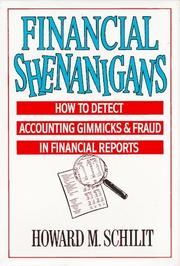
The tricks companies use to inflate earnings, cash flow and key metrics, by case.
“Some of my favorites include Howard M. Schilit and Jeremy Perler, Financial Shenanigans: How to Detect Accounting Gimmicks & Fraud in Financial Reports, 3rd Edition (New York: McGraw Hill, 2010)” — Michael Mauboussin
Source: Thirty Years: Reflections on the Ten Attributes of Great Investors, page 18
Recommended by: Michael Mauboussin, Mohnish Pabrai and 1 other

How algorithms in hiring, lending and policing harm people and deepen inequality.
Recommended by: Tom Peters
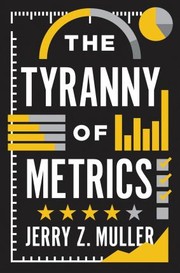
How fixation on measured performance damages the work it is meant to improve.
 Marc Andreessenrecommends 1 book here
 Michael Mauboussinrecommends 1 book here
 Mohnish Pabrairecommends 1 book here
 William Ackmanrecommends 1 book here
 Balaji S. Srinivasanrecommends 1 book here
 Nat Eliasonrecommends 1 book here
- Unintended ConsequencesShane Parrish · essay · How well-meant rules produce the opposite result.
- Bias from Incentives and ReinforcementShane Parrish · essay · Munger's claim that incentives reshape sincere belief.
- Externalities: Why We Can Never Do One ThingShane Parrish · essay · Every action has effects you did not price.