Financial Shenanigans
The tricks companies use to inflate earnings, cash flow and key metrics, by case.
The standard field guide to earnings, cash-flow and metric manipulation.
Summary
Schilit, a former accounting professor who founded a forensic research firm, catalogues the techniques companies use to misrepresent their financial performance, organised by type and illustrated with specific cases.
The framework divides manipulations into earnings manipulation shenanigans, cash flow shenanigans and key metric shenanigans. Earnings manipulation includes recording revenue too soon or before it is earned, recording bogus revenue, boosting income with one-time gains, shifting current expenses to a later period, failing to record or improperly reducing liabilities, shifting current revenue to a later period, and shifting future expenses to the current period through excessive reserves.
Cash flow shenanigans include shifting financing inflows into the operating section, moving operating cash outflows to other sections, boosting operating cash flow with acquisitions or disposals, and unsustainable increases through the timing of payments. Key metric shenanigans cover the misuse of non-standard measures and the presentation of metrics that conceal deteriorating economics.
The warning signs Schilit gives are practical: growth in receivables outpacing revenue, growth in inventory outpacing sales, a widening gap between net income and operating cash flow, changes in accounting policy or in auditors, unusual related party transactions, and management turnover in the finance function. Each edition adds cases, and the fourth covers Enron, WorldCom, Lehman, Valeant and others. The book is dense and requires some accounting familiarity. It is a catalogue rather than an argument, which suits reference use. It remains the standard practical text on detecting misrepresentation from published statements.
Key takeaways 8
- Recording revenue before it is earned, in various forms, is the most common single category of financial misrepresentation.
- A widening gap between reported net income and operating cash flow is the most reliable general warning sign available.
- Receivables growing faster than revenue indicates that sales are being recorded before cash is likely to arrive.
- Inventory growing faster than sales indicates either deteriorating demand or costs being capitalised that should be expensed.
- Financing inflows can be shifted into the operating cash flow section, which makes operating cash flow itself a manipulable figure.
- Excessive reserves taken in one period create the capacity to release them into earnings in later periods.
- Non-standard metrics presented by management should be reconciled to standard measures, since the adjustments reveal what is being excluded.
- Changes in accounting policy, in auditors or in finance leadership warrant examination regardless of the explanation offered.
Who should read it
Investors and analysts who read financial statements and want a catalogue of specific manipulation techniques and their warning signs.
Who recommended it 3 · 2 direct
“Some of my favorites include Howard M. Schilit and Jeremy Perler, Financial Shenanigans: How to Detect Accounting Gimmicks & Fraud in Financial Reports, 3rd Edition (New York: McGraw Hill, 2010)”
“Yeah, I think in terms of in terms of books I'm am reading Well, I think, one of the books I think I read recently a book called Financial Shenanigans.”
Similar books 6
Chosen by shared topics, the entries that hold them, and the people who recommended both.
How to test whether reported earnings reflect reality, from tax books to receivables.
Recommended by: Rational Capital Investment Fund and 1 other
How companies dress up their reported operating cash flow, and how to spot it.
“Charles W. Mulford and Eugene E. Comiskey, Creative Cash Flow Reporting: Uncovering Sustainable Financial Performance (Hoboken, NJ: John Wiley & Sons, 2005)” — Michael Mauboussin
Source: Thirty Years: Reflections on the Ten Attributes of Great Investors, page 18
Recommended by: Michael Mauboussin, Mohnish Pabrai
How to detect the ways companies manipulate reported results.
“Charles W. Mulford and Eugene E. Comiskey, The Financial Numbers Game: Detecting Creative Accounting Practices (Hoboken, NJ: John Wiley & Sons, 2005)” — Michael Mauboussin
Source: Thirty Years: Reflections on the Ten Attributes of Great Investors, page 18
Recommended by: Michael Mauboussin
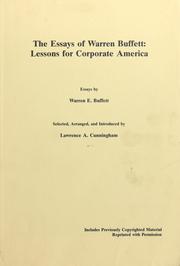
Berkshire's shareholder letters arranged by topic: governance, valuation, mergers.
“The resource is as valuable as Larry Cunningham's The Essays of Warren Buffett, which similarly organizes by subject matter” — Christopher Bloomstran
Source: Semper Augustus 2024 Letter to Clients, 'Books and Tunes for Walking', p. 96
Recommended by: Christopher Bloomstran, Francois Rochon and 11 others
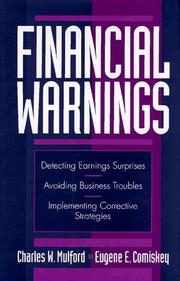
How to spot weakening finances and coming earnings shortfalls in published accounts.
Recommended by: Mohnish Pabrai
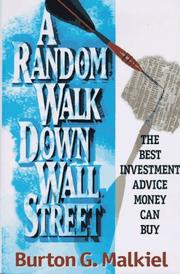
Stock prices follow a random walk, so a low-cost index fund beats stock picking.
“Even earlier, in 1973, in his classic A Random Walk Down Wall Street, Burton G. Malkiel had called for such a fund, although, alas, when we started it, I had yet to read his book.” — John C. Bogle
Source: CONVERGENCE!, page 1
Recommended by: Jason Zweig, John C. Bogle and 5 others
Where it sits in the reference 5
Topics 2
As an Amazon Associate I earn from qualifying purchases.