Updates

  1. Person pages list letters, writing, profiles and links as sortable tables with filters, and show each person's companies as links; Fund letters show each letter's description in its own column.
  2. Experts show a checked job title and a short description of each person; 30 more people have photographs.
  3. Every company, fund, university and publication the experts work for has a page listing the people there.
  4. Fund letters show each letter's thesis and filter by it; 225 person pages list the essays, columns and newsletter issues the person wrote.
  5. Person pages list every essay and newsletter issue a person wrote, and their own books as a table in List view.
  6. Recommends shows the five largest kinds of book and the rest under More; browse pictures load sooner.
  7. Podcasts and talks link the original episode, filter by Audio and video or Press, and list each publisher once.
  8. Pages are wider, Recommends has List and Grid, and a filter clicked again turns off.
  9. Book cards sit in a ruled grid with Open Library and Goodreads links and each book's one-line note.
  10. Funds is now Investors; each investor's styles are buttons that filter the table.
  11. Podcasts and talks on a person's page filter by year and publisher and show as a list or a grid of pictures.
  12. Quotes show only people's own words: 472 summaries written by list sites are gone.
  13. Country pages open from Browse again, and every link on the shelf lands on a page.
  14. Subject and person pages show their sections as tabs, and each book appears once on a person's page.
  15. Book cards show the quote, who said it and the source; grids show five cards to a row.
  16. On a phone, a menu holds the sections, search, Updates, Feedback and dark mode.
  17. Feedback takes a screenshot of the page with no browser prompt, opens a screenshot full size when you click it, and clears itself once sent.
  18. Book cards are centred, search names the topic each book sits in, and any text cut short shows whole on hover.
  19. Search groups its results by kind: people, companies, geographies, subjects, topics, books, funds, fund letters and papers.
  20. The Books table lists who recommended each book by name, and the browser tab names the section you are in.
  21. Feedback can take a screenshot of the page, or one you paste or choose, and opens in the corner beside Updates.
  22. Each rail button reopens its section where you left it, and Browse, Table and People show on every book and subject page.
  23. Filters grey out choices that hold nothing instead of hiding them, and Books › People filters by authors or recommenders.
  24. Feedback takes a subject line and up to three screenshots.
  25. Biographies are grouped by the person they are about: 41 new pages, from Abraham Lincoln to Lee Kuan Yew.
  26. Sport splits into 23 sports, and Religion into one topic per faith.
  27. Book lists show as cards: the cover, one recommendation quote and every recommender by name.
  28. Seventeen subjects that had two or three pages under different names now have one page each.
  29. Every page lists its Experts as authors and recommenders, with a link to them on the Experts tab.
  30. Economics, Financial history, Financial panics and Accounting are subjects of their own, with one page per financial crisis.
  31. Book, person and subject pages open inside the app, so the tabs stay in view.
  32. 996 more book covers, and photographs or logos for 227 more people and companies.
  33. Books › Browse shows every subject as cards, and the rail holds Fund letters, Papers, Experts, Books and Funds.
  34. Every topic over 150 books splits into narrower topics, each with a page of its own.

Send feedback

What is it?
Screenshots, up to 3 (optional)
or paste one with Ctrl+V

We use your email only to reply to you.

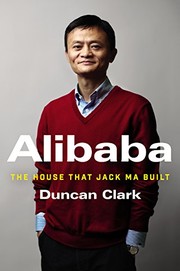
Alibaba: The House That Jack Ma Built

Alibaba: The House That Jack Ma Built

Duncan Clark
2016
T2 304 pages · about 5h 4m to read Open Librarygoodreads

The standard history, by an adviser present from the early days.

Summary

Clark, a former investment banker who has worked in China since 1994 and who knew Jack Ma from the early days of Alibaba, tells the company's history from the Hangzhou apartment through the 2014 New York listing.

The business analysis is the strongest part. Clark explains why Alibaba won against eBay in China: it made listings free while eBay charged, it built Alipay because there was no trusted payment mechanism and Chinese buyers would not pay strangers in advance, and it built AliWangwang messaging because Chinese buyers wanted to negotiate with sellers directly, which eBay's model prohibited. He shows that Taobao's advantage was solving trust and payment problems specific to a market with weak consumer protection and low credit card penetration, and that eBay's failure was applying a global product to a market whose constraints were different.

The governance material is important for investors. Clark covers the transfer of Alipay out of Alibaba in 2011, which Yahoo and SoftBank said occurred without their approval and which Ma justified by reference to Chinese regulations on foreign ownership of payment licences. He explains the variable interest entity structure through which foreign shareholders hold contractual rather than ownership rights in the Chinese operating companies, which is the arrangement every United States-listed Chinese company uses and whose enforceability has never been tested.

The book was written with Ma's cooperation and is sympathetic. It was published in 2016, before the regulatory campaign that halted the Ant Group listing and removed Ma from public life, which is the most important thing that has happened to the company since.

Key takeaways 7

  1. Alibaba defeated eBay in China by making listings free, building a payment escrow system, and letting buyers and sellers communicate directly, all of which eBay's global model prohibited.
  2. Alipay was built because no trusted payment mechanism existed, and solving that problem rather than the marketplace software was the decisive contribution.
  3. Chinese e-commerce required solving trust and payment problems that Western markets had already solved through credit cards and consumer protection law.
  4. The variable interest entity structure gives foreign shareholders contractual claims rather than ownership of the Chinese operating companies, and its enforceability has never been tested in court.
  5. The 2011 transfer of Alipay out of Alibaba demonstrated that foreign shareholders in Chinese companies hold positions that can be altered by decisions they do not control.
  6. Alibaba's business model was advertising and commission revenue on a free marketplace, which required scale before any revenue appeared.
  7. Regulatory relationships in China are part of a company's operating model rather than an external constraint on it.

Who should read it

Investors and founders interested in why localised product decisions beat a global incumbent, and in the governance structures behind Chinese listings.

Who recommended it 1 · 1 direct

Similar books 6

Chosen by shared topics, the entries that hold them, and the people who recommended both.
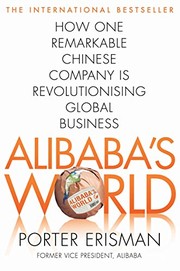
Porter Erisman · 2015

Insider account: an early Western executive on the eBay fight.

Edward Tse · 2015

How Chinese private champions including Alibaba actually built scale.
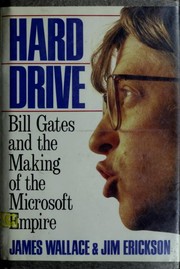
James Wallace, Jim Erickson · 1992

A critical history of Bill Gates and the early Microsoft, from Lakeside School on.

Lulu Yilun Chen · 2022

The story of Tencent, Alibaba's main rival, and China's tech ambitions.

Where it sits in the reference 3

Companies
Biographies
Business models

Topics

Company HistoriesBiography and MemoirFounders and Entrepreneurs