Updates

  1. Person pages list letters, writing, profiles and links as sortable tables with filters, and show each person's companies as links; Fund letters show each letter's description in its own column.
  2. Experts show a checked job title and a short description of each person; 30 more people have photographs.
  3. Every company, fund, university and publication the experts work for has a page listing the people there.
  4. Fund letters show each letter's thesis and filter by it; 225 person pages list the essays, columns and newsletter issues the person wrote.
  5. Person pages list every essay and newsletter issue a person wrote, and their own books as a table in List view.
  6. Recommends shows the five largest kinds of book and the rest under More; browse pictures load sooner.
  7. Podcasts and talks link the original episode, filter by Audio and video or Press, and list each publisher once.
  8. Pages are wider, Recommends has List and Grid, and a filter clicked again turns off.
  9. Book cards sit in a ruled grid with Open Library and Goodreads links and each book's one-line note.
  10. Funds is now Investors; each investor's styles are buttons that filter the table.
  11. Podcasts and talks on a person's page filter by year and publisher and show as a list or a grid of pictures.
  12. Quotes show only people's own words: 472 summaries written by list sites are gone.
  13. Country pages open from Browse again, and every link on the shelf lands on a page.
  14. Subject and person pages show their sections as tabs, and each book appears once on a person's page.
  15. Book cards show the quote, who said it and the source; grids show five cards to a row.
  16. On a phone, a menu holds the sections, search, Updates, Feedback and dark mode.
  17. Feedback takes a screenshot of the page with no browser prompt, opens a screenshot full size when you click it, and clears itself once sent.
  18. Book cards are centred, search names the topic each book sits in, and any text cut short shows whole on hover.
  19. Search groups its results by kind: people, companies, geographies, subjects, topics, books, funds, fund letters and papers.
  20. The Books table lists who recommended each book by name, and the browser tab names the section you are in.
  21. Feedback can take a screenshot of the page, or one you paste or choose, and opens in the corner beside Updates.
  22. Each rail button reopens its section where you left it, and Browse, Table and People show on every book and subject page.
  23. Filters grey out choices that hold nothing instead of hiding them, and Books › People filters by authors or recommenders.
  24. Feedback takes a subject line and up to three screenshots.
  25. Biographies are grouped by the person they are about: 41 new pages, from Abraham Lincoln to Lee Kuan Yew.
  26. Sport splits into 23 sports, and Religion into one topic per faith.
  27. Book lists show as cards: the cover, one recommendation quote and every recommender by name.
  28. Seventeen subjects that had two or three pages under different names now have one page each.
  29. Every page lists its Experts as authors and recommenders, with a link to them on the Experts tab.
  30. Economics, Financial history, Financial panics and Accounting are subjects of their own, with one page per financial crisis.
  31. Book, person and subject pages open inside the app, so the tabs stay in view.
  32. 996 more book covers, and photographs or logos for 227 more people and companies.
  33. Books › Browse shows every subject as cards, and the rail holds Fund letters, Papers, Experts, Books and Funds.
  34. Every topic over 150 books splits into narrower topics, each with a page of its own.

Send feedback

What is it?
Screenshots, up to 3 (optional)
or paste one with Ctrl+V

We use your email only to reply to you.

Alibaba's World

Alibaba's World

Porter Erisman
2015
T3 242 pages · about 4h 2m to read Open Librarygoodreads

Insider account: an early Western executive on the eBay fight.

Summary

Erisman joined Alibaba in 2000 as an early Western employee and served as a vice president through 2008, working in international marketing and corporate affairs. He wrote a participant's account of the company's first decade.

The business content covers the sequence of Alibaba's businesses. The original Alibaba.com connected Chinese manufacturers to overseas buyers, monetising through membership and verification fees rather than transactions. Taobao was launched in 2003 to compete with eBay's Chinese operation, and Erisman describes the decision to charge sellers nothing, which eBay could not match without destroying its own model, and the addition of the Wangwang instant messaging tool that let buyers and sellers negotiate directly. Alipay was created because Chinese buyers would not send money to strangers, and it worked by holding funds in escrow until the buyer confirmed receipt. Erisman argues that this escrow function, rather than payment processing, was the innovation that made Chinese e-commerce possible.

He also covers the relationship with Yahoo, the SARS epidemic and the company quarantine during which Taobao was built, Jack Ma's management style and use of company culture, and the way the company handled counterfeit goods.

The book is an insider memoir, written by someone loyal to the company, and it does not examine the harder questions: the variable interest entity structure, the Alipay transfer out of the joint venture that Yahoo and SoftBank disputed, counterfeiting at scale, or Alibaba's relationship with the Chinese state. It ends before the 2014 listing and before the regulatory intervention of 2020 onward. Read it for the competitive decisions of the early period, which are well described, and go elsewhere for the corporate governance.

Key takeaways 7

  1. Taobao beat eBay in China by charging sellers nothing, which the incumbent could not match without destroying its own revenue model.
  2. Escrow, not payment processing, was the function that made online transactions possible between Chinese strangers.
  3. Alibaba's original business monetised through membership and verification fees rather than by taking a cut of transactions.
  4. Allowing buyers and sellers to communicate directly increased trust, and eBay's policy of preventing it was a competitive weakness.
  5. Building a local product for local behaviour beat importing a proven foreign model, which is the recurring pattern in Chinese internet competition.
  6. Jack Ma used explicit company culture and shared vocabulary as a management system in place of process.
  7. The SARS quarantine forced distributed work and coincided with the period when Taobao was built.

Who should read it

Founders and investors studying platform competition in China who want an insider account of the early product and pricing decisions.

Similar books 6

Chosen by shared topics, the entries that hold them, and the people who recommended both.

Duncan Clark · 2016

Alibaba from Jack Ma's Hangzhou apartment to its 2014 New York listing.

Recommended by: Patrick Collison

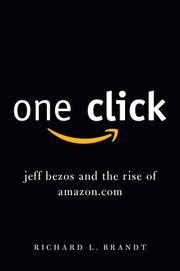
Richard L. Brandt · 2011

Jeff Bezos and Amazon's early years, from D. E. Shaw to the founding in 1994.

Recommended by: Mohnish Pabrai

Edward Tse · 2015

How Chinese private champions including Alibaba actually built scale.

Brad Stone · 2021

Amazon from 2010 to 2020: Alexa, AWS, logistics and its rise to the top.

Recommended by: Andrew Wilkinson

Where it sits in the reference 3

Companies
Biographies
Industries

Topics

Company HistoriesBiography and MemoirFounders and Entrepreneurs