
Updates

  1. Person pages list letters, writing, profiles and links as sortable tables with filters, and show each person's companies as links; Fund letters show each letter's description in its own column.
  2. Experts show a checked job title and a short description of each person; 30 more people have photographs.
  3. Every company, fund, university and publication the experts work for has a page listing the people there.
  4. Fund letters show each letter's thesis and filter by it; 225 person pages list the essays, columns and newsletter issues the person wrote.
  5. Person pages list every essay and newsletter issue a person wrote, and their own books as a table in List view.
  6. Recommends shows the five largest kinds of book and the rest under More; browse pictures load sooner.
  7. Podcasts and talks link the original episode, filter by Audio and video or Press, and list each publisher once.
  8. Pages are wider, Recommends has List and Grid, and a filter clicked again turns off.
  9. Book cards sit in a ruled grid with Open Library and Goodreads links and each book's one-line note.
  10. Funds is now Investors; each investor's styles are buttons that filter the table.
  11. Podcasts and talks on a person's page filter by year and publisher and show as a list or a grid of pictures.
  12. Quotes show only people's own words: 472 summaries written by list sites are gone.
  13. Country pages open from Browse again, and every link on the shelf lands on a page.
  14. Subject and person pages show their sections as tabs, and each book appears once on a person's page.
  15. Book cards show the quote, who said it and the source; grids show five cards to a row.
  16. On a phone, a menu holds the sections, search, Updates, Feedback and dark mode.
  17. Feedback takes a screenshot of the page with no browser prompt, opens a screenshot full size when you click it, and clears itself once sent.
  18. Book cards are centred, search names the topic each book sits in, and any text cut short shows whole on hover.
  19. Search groups its results by kind: people, companies, geographies, subjects, topics, books, funds, fund letters and papers.
  20. The Books table lists who recommended each book by name, and the browser tab names the section you are in.
  21. Feedback can take a screenshot of the page, or one you paste or choose, and opens in the corner beside Updates.
  22. Each rail button reopens its section where you left it, and Browse, Table and People show on every book and subject page.
  23. Filters grey out choices that hold nothing instead of hiding them, and Books › People filters by authors or recommenders.
  24. Feedback takes a subject line and up to three screenshots.
  25. Biographies are grouped by the person they are about: 41 new pages, from Abraham Lincoln to Lee Kuan Yew.
  26. Sport splits into 23 sports, and Religion into one topic per faith.
  27. Book lists show as cards: the cover, one recommendation quote and every recommender by name.
  28. Seventeen subjects that had two or three pages under different names now have one page each.
  29. Every page lists its Experts as authors and recommenders, with a link to them on the Experts tab.
  30. Economics, Financial history, Financial panics and Accounting are subjects of their own, with one page per financial crisis.
  31. Book, person and subject pages open inside the app, so the tabs stay in view.
  32. 996 more book covers, and photographs or logos for 227 more people and companies.
  33. Books › Browse shows every subject as cards, and the rail holds Fund letters, Papers, Experts, Books and Funds.
  34. Every topic over 150 books splits into narrower topics, each with a page of its own.

Send feedback

What is it?
Screenshots, up to 3 (optional)
or paste one with Ctrl+V

We use your email only to reply to you.

Amway: The Cult of Free Enterprise

Amway: The Cult of Free Enterprise

Stephen Butterfield
1985
T3 185 pages · about 3h 5m to read Open Librarygoodreads

A former distributor on the ideology that sustains recruitment.

Summary

Butterfield spent years as an Amway distributor, reaching a middle level of the organisation, and wrote a critical account after leaving.

His argument is that Amway's economics work through recruitment rather than through product sales. Distributors buy products at wholesale and are supposed to sell them at retail, but Butterfield argues that most product moves to distributors themselves and to their immediate circle, and that the meaningful income comes from bonuses on the purchasing volume of the organisation a distributor recruits beneath them. This means the business is about recruiting rather than selling, and that success requires a continuously expanding base of new recruits.

The second mechanism he identifies is the tools business. Upline distributors sell motivational tapes, books, seminars and rally tickets to their downline, and Butterfield argues that for the highest earners this revenue exceeds their income from product entirely, which means the top of the organisation profits from the aspiration of the people below rather than from any product moving to consumers.

His account of the culture is what gives the book its title. He describes the rallies, the testimonial format, the discouragement of contact with sceptical friends and family, the merger of the business with religious and patriotic language, and the way failure is attributed to insufficient belief rather than to the structure.

The book is a former participant's account written after a bad experience, and it argues one position throughout. Amway has disputed such characterisations and has operated for decades under regulatory arrangements including a 1979 Federal Trade Commission decision that set rules distinguishing it from a prohibited scheme. Readers should treat the culture material as testimony and the structural analysis as an argument that later litigation and regulatory action against the tools business substantially supported.

Key takeaways 7

  1. Distributor income comes primarily from bonuses on the purchasing volume of recruits rather than from retail product sales.
  2. A business model requiring continuous recruitment cannot deliver the promised income to more than a small fraction of participants.
  3. Upline distributors sell motivational materials and event tickets to their downline, and for top earners this revenue exceeds product income.
  4. The tools business means the top of the organisation profits from the aspiration of participants rather than from products reaching consumers.
  5. Recruitment presentations emphasise income potential while the compensation structure makes that income unattainable for nearly everyone.
  6. Attributing failure to insufficient belief rather than to the structure prevents participants from evaluating the arrangement.
  7. Discouraging contact with sceptical friends and family removes the outside judgement that would end participation.

Who should read it

Readers evaluating multi-level marketing structures who want a participant's account of the economics and the recruitment culture, treated as one-sided testimony.

Similar books 6

Chosen by shared topics, the entries that hold them, and the people who recommended both.
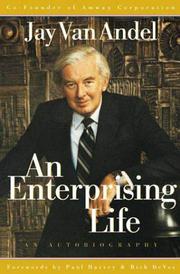
Jay Van Andel · 1998

Amway's co-founder's own account; read alongside the criticism.

Eric Scheibeler · 2009

Insider account by a high-level Amway distributor turned critic.

Robert L. FitzPatrick, Joyce K. Reynolds · 1996

A critical look at the arithmetic behind multi-level marketing pay plans.

Robert L. FitzPatrick · 2020

Why multi-level marketing's economics need constant recruitment to survive.

Bob Kealing · 2008

Brownie Wise and the home-party sales network that made Tupperware.

Bryant Simon · 2009

What Starbucks sells besides coffee, from visits to hundreds of its stores.

Where it sits in the reference 2

Companies
Business models

Topics

Company HistoriesSociology and CultureConsumer culture and cultural criticism