Updates

  1. Person pages list letters, writing, profiles and links as sortable tables with filters, and show each person's companies as links; Fund letters show each letter's description in its own column.
  2. Experts show a checked job title and a short description of each person; 30 more people have photographs.
  3. Every company, fund, university and publication the experts work for has a page listing the people there.
  4. Fund letters show each letter's thesis and filter by it; 225 person pages list the essays, columns and newsletter issues the person wrote.
  5. Person pages list every essay and newsletter issue a person wrote, and their own books as a table in List view.
  6. Recommends shows the five largest kinds of book and the rest under More; browse pictures load sooner.
  7. Podcasts and talks link the original episode, filter by Audio and video or Press, and list each publisher once.
  8. Pages are wider, Recommends has List and Grid, and a filter clicked again turns off.
  9. Book cards sit in a ruled grid with Open Library and Goodreads links and each book's one-line note.
  10. Funds is now Investors; each investor's styles are buttons that filter the table.
  11. Podcasts and talks on a person's page filter by year and publisher and show as a list or a grid of pictures.
  12. Quotes show only people's own words: 472 summaries written by list sites are gone.
  13. Country pages open from Browse again, and every link on the shelf lands on a page.
  14. Subject and person pages show their sections as tabs, and each book appears once on a person's page.
  15. Book cards show the quote, who said it and the source; grids show five cards to a row.
  16. On a phone, a menu holds the sections, search, Updates, Feedback and dark mode.
  17. Feedback takes a screenshot of the page with no browser prompt, opens a screenshot full size when you click it, and clears itself once sent.
  18. Book cards are centred, search names the topic each book sits in, and any text cut short shows whole on hover.
  19. Search groups its results by kind: people, companies, geographies, subjects, topics, books, funds, fund letters and papers.
  20. The Books table lists who recommended each book by name, and the browser tab names the section you are in.
  21. Feedback can take a screenshot of the page, or one you paste or choose, and opens in the corner beside Updates.
  22. Each rail button reopens its section where you left it, and Browse, Table and People show on every book and subject page.
  23. Filters grey out choices that hold nothing instead of hiding them, and Books › People filters by authors or recommenders.
  24. Feedback takes a subject line and up to three screenshots.
  25. Biographies are grouped by the person they are about: 41 new pages, from Abraham Lincoln to Lee Kuan Yew.
  26. Sport splits into 23 sports, and Religion into one topic per faith.
  27. Book lists show as cards: the cover, one recommendation quote and every recommender by name.
  28. Seventeen subjects that had two or three pages under different names now have one page each.
  29. Every page lists its Experts as authors and recommenders, with a link to them on the Experts tab.
  30. Economics, Financial history, Financial panics and Accounting are subjects of their own, with one page per financial crisis.
  31. Book, person and subject pages open inside the app, so the tabs stay in view.
  32. 996 more book covers, and photographs or logos for 227 more people and companies.
  33. Books › Browse shows every subject as cards, and the rail holds Fund letters, Papers, Experts, Books and Funds.
  34. Every topic over 150 books splits into narrower topics, each with a page of its own.

Send feedback

What is it?
Screenshots, up to 3 (optional)
or paste one with Ctrl+V

We use your email only to reply to you.

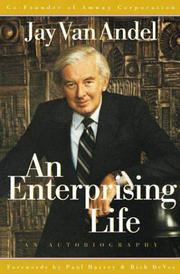
An Enterprising Life

An Enterprising Life

Jay Van Andel
1998
T3 234 pages · about 3h 54m to read Open Librarygoodreads

Amway's co-founder's own account; read alongside the criticism.

Summary

The reference has not verified this book in detail; the summary states only what the title, author and subject establish.

Van Andel co-founded Amway with Rich DeVos and wrote this memoir late in life, covering his childhood in the Dutch Reformed community of Grand Rapids, Michigan, the wartime service, the early business ventures with DeVos including a flying school and a sailing venture, the Nutrilite distributorship that taught them direct selling, and the founding of Amway in 1959.

The account combines business history with the philosophical position Van Andel held, which connects free enterprise, individual responsibility and Christian faith into a single argument. He presents Amway as a vehicle for enabling ordinary people to own a business without capital, and argues that the direct selling model removes the barriers of location, education and credentials that keep people out of business ownership.

The business content covers the compensation structure, the product line beginning with a biodegradable cleaner, the international expansion which eventually made Amway larger outside the United States than within it, particularly in Japan, Korea and later China, and the regulatory challenges including the Federal Trade Commission proceeding that concluded in 1979 with rules the company then operated under.

Van Andel also covers his role in Republican politics and in the United States Chamber of Commerce.

This is a founder's memoir presenting his own account, and it does not engage with the substantial criticism of the business model, including the questions about distributor earnings, the tools business through which upline distributors sell motivational materials to their downline, or the experience of participants who lost money. Butterfield's critical account is also in this reference. Read this for the founders' own framing and for the early history.

Key takeaways 7

  1. Amway was designed to let people own a business without capital, location or credentials, which is the founders' stated purpose.
  2. The founders learned direct selling as Nutrilite distributors before creating their own company.
  3. The compensation structure pays bonuses on the purchasing volume of a distributor's recruited organisation.
  4. International markets, particularly in Asia, eventually became larger for the company than the United States.
  5. A 1979 Federal Trade Commission proceeding produced rules distinguishing the structure from a prohibited scheme, which the company then operated under.
  6. The founders connected free enterprise, individual responsibility and religious faith into a single argument that became the company's culture.
  7. The memoir presents the founders' framing and does not address criticism of distributor earnings or of the tools business.

Who should read it

Readers wanting the founders' own account of Amway's origins and philosophy, read against critical accounts of the model.

Similar books 6

Chosen by shared topics, the entries that hold them, and the people who recommended both.

Bob Kealing · 2008

Brownie Wise and the home-party sales network that made Tupperware.
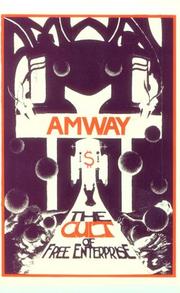
Stephen Butterfield · 1985

A former distributor on the ideology that sustains recruitment.

Eric Scheibeler · 2009

Insider account by a high-level Amway distributor turned critic.

Joe Coulombe · 2021

Founder's account of a private-label, limited-SKU, high-turn grocery model.

Russell B. Adams · 1978

King Gillette, his safety razor and the disputed give-away-the-handle story.

Where it sits in the reference 2

Companies
Business models

Topics

Biography and MemoirCompany HistoriesFounders and EntrepreneursRetail and consumer founders