Updates

  1. Person pages list letters, writing, profiles and links as sortable tables with filters, and show each person's companies as links; Fund letters show each letter's description in its own column.
  2. Experts show a checked job title and a short description of each person; 30 more people have photographs.
  3. Every company, fund, university and publication the experts work for has a page listing the people there.
  4. Fund letters show each letter's thesis and filter by it; 225 person pages list the essays, columns and newsletter issues the person wrote.
  5. Person pages list every essay and newsletter issue a person wrote, and their own books as a table in List view.
  6. Recommends shows the five largest kinds of book and the rest under More; browse pictures load sooner.
  7. Podcasts and talks link the original episode, filter by Audio and video or Press, and list each publisher once.
  8. Pages are wider, Recommends has List and Grid, and a filter clicked again turns off.
  9. Book cards sit in a ruled grid with Open Library and Goodreads links and each book's one-line note.
  10. Funds is now Investors; each investor's styles are buttons that filter the table.
  11. Podcasts and talks on a person's page filter by year and publisher and show as a list or a grid of pictures.
  12. Quotes show only people's own words: 472 summaries written by list sites are gone.
  13. Country pages open from Browse again, and every link on the shelf lands on a page.
  14. Subject and person pages show their sections as tabs, and each book appears once on a person's page.
  15. Book cards show the quote, who said it and the source; grids show five cards to a row.
  16. On a phone, a menu holds the sections, search, Updates, Feedback and dark mode.
  17. Feedback takes a screenshot of the page with no browser prompt, opens a screenshot full size when you click it, and clears itself once sent.
  18. Book cards are centred, search names the topic each book sits in, and any text cut short shows whole on hover.
  19. Search groups its results by kind: people, companies, geographies, subjects, topics, books, funds, fund letters and papers.
  20. The Books table lists who recommended each book by name, and the browser tab names the section you are in.
  21. Feedback can take a screenshot of the page, or one you paste or choose, and opens in the corner beside Updates.
  22. Each rail button reopens its section where you left it, and Browse, Table and People show on every book and subject page.
  23. Filters grey out choices that hold nothing instead of hiding them, and Books › People filters by authors or recommenders.
  24. Feedback takes a subject line and up to three screenshots.
  25. Biographies are grouped by the person they are about: 41 new pages, from Abraham Lincoln to Lee Kuan Yew.
  26. Sport splits into 23 sports, and Religion into one topic per faith.
  27. Book lists show as cards: the cover, one recommendation quote and every recommender by name.
  28. Seventeen subjects that had two or three pages under different names now have one page each.
  29. Every page lists its Experts as authors and recommenders, with a link to them on the Experts tab.
  30. Economics, Financial history, Financial panics and Accounting are subjects of their own, with one page per financial crisis.
  31. Book, person and subject pages open inside the app, so the tabs stay in view.
  32. 996 more book covers, and photographs or logos for 227 more people and companies.
  33. Books › Browse shows every subject as cards, and the rail holds Fund letters, Papers, Experts, Books and Funds.
  34. Every topic over 150 books splits into narrower topics, each with a page of its own.

Send feedback

What is it?
Screenshots, up to 3 (optional)
or paste one with Ctrl+V

We use your email only to reply to you.

Becoming Trader Joe

Becoming Trader Joe

Joe Coulombe
2021
T3 288 pages · about 4h 48m to read Open Librarygoodreads

Founder's account of a private-label, limited-SKU, high-turn grocery model.

Summary

Coulombe founded Trader Joe's and ran it from 1967 to 1989. He wrote this memoir in his late eighties, and it is unusually specific about the reasoning behind each decision rather than about the story.

The strategy began with a demographic observation. Coulombe identified a customer he described as overeducated and underpaid, produced in large numbers by the expansion of American higher education and by the return of Peace Corps volunteers and travellers with acquired tastes. These people wanted interesting food and wine but had limited money. He built a store for them rather than for the general grocery shopper.

The operating decisions follow. He carried a small number of items, each selected and repeatedly reviewed, and removed anything that did not sell well enough to justify its shelf space. He bought direct from producers, avoiding brokers and distributors, and used private label so that price comparison was impossible and so that he controlled specification. He exploited regulatory arbitrage where it existed, most importantly in wine, where California law and the Fair Trade repeal let him price aggressively. He paid full-time employees well above supermarket wages, targeting median household income for the region, on the argument that turnover and theft cost more than wages. He kept stores small and inexpensive and did not advertise conventionally, using the Fearless Flyer newsletter instead.

The book is candid about failures and about decisions that were accidents. It stops at his 1989 departure and does not cover the Aldi Nord ownership or the chain's national expansion. It is a single founder's account with no independent verification, and the demographic strategy he describes was specific to California in the 1960s and 1970s, so the transferable content is the method of reasoning rather than the conclusions.

Key takeaways 7

  1. Trader Joe's was designed for a specific demographic, educated people with low incomes and developed tastes, rather than for grocery shoppers generally.
  2. A small curated range lets a retailer buy direct from producers in quantities that justify the producer's attention.
  3. Private label makes price comparison impossible and gives the retailer control over product specification.
  4. Paying employees at the regional median household income reduced turnover and shrinkage by more than the wage cost.
  5. Removing slow items continuously, rather than adding new ones, is the discipline that keeps a curated range working.
  6. Regulatory conditions in wine distribution created a pricing advantage that Coulombe deliberately built the business around.
  7. Full-time employment rather than part-time staffing produced the product knowledge that the store's positioning required.

Who should read it

Founders and retail operators who want a founder's reasoning about customer selection, range discipline and wage policy stated in detail.

Similar books 6

Chosen by shared topics, the entries that hold them, and the people who recommended both.

Sam Walton, John Huey · 1992

How Walmart grew from one Arkansas store by cutting costs and prices.

Robert E. Price · 2012

The life of Sol Price, who invented the warehouse club and taught Costco.
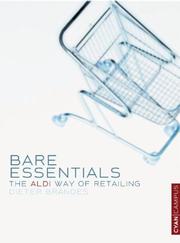
Dieter Brandes · 2004

Aldi's hard-discount method: radical simplicity as the way to keep costs low.

Bob Ortega · 1998

First major critical history by a WSJ Walmart reporter.
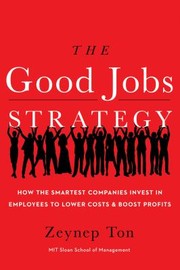
Zeynep Ton · 2014

Why Costco, Trader Joe's and QuikTrip pay more and still undercut rivals.
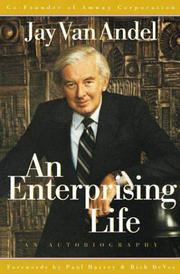
Jay Van Andel · 1998

Amway's co-founder's own account; read alongside the criticism.

Where it sits in the reference 3

Companies
Business models
Business models

Topics

Company HistoriesBiography and MemoirFounders and EntrepreneursRetail and consumer founders