Updates

  1. Person pages list letters, writing, profiles and links as sortable tables with filters, and show each person's companies as links; Fund letters show each letter's description in its own column.
  2. Experts show a checked job title and a short description of each person; 30 more people have photographs.
  3. Every company, fund, university and publication the experts work for has a page listing the people there.
  4. Fund letters show each letter's thesis and filter by it; 225 person pages list the essays, columns and newsletter issues the person wrote.
  5. Person pages list every essay and newsletter issue a person wrote, and their own books as a table in List view.
  6. Recommends shows the five largest kinds of book and the rest under More; browse pictures load sooner.
  7. Podcasts and talks link the original episode, filter by Audio and video or Press, and list each publisher once.
  8. Pages are wider, Recommends has List and Grid, and a filter clicked again turns off.
  9. Book cards sit in a ruled grid with Open Library and Goodreads links and each book's one-line note.
  10. Funds is now Investors; each investor's styles are buttons that filter the table.
  11. Podcasts and talks on a person's page filter by year and publisher and show as a list or a grid of pictures.
  12. Quotes show only people's own words: 472 summaries written by list sites are gone.
  13. Country pages open from Browse again, and every link on the shelf lands on a page.
  14. Subject and person pages show their sections as tabs, and each book appears once on a person's page.
  15. Book cards show the quote, who said it and the source; grids show five cards to a row.
  16. On a phone, a menu holds the sections, search, Updates, Feedback and dark mode.
  17. Feedback takes a screenshot of the page with no browser prompt, opens a screenshot full size when you click it, and clears itself once sent.
  18. Book cards are centred, search names the topic each book sits in, and any text cut short shows whole on hover.
  19. Search groups its results by kind: people, companies, geographies, subjects, topics, books, funds, fund letters and papers.
  20. The Books table lists who recommended each book by name, and the browser tab names the section you are in.
  21. Feedback can take a screenshot of the page, or one you paste or choose, and opens in the corner beside Updates.
  22. Each rail button reopens its section where you left it, and Browse, Table and People show on every book and subject page.
  23. Filters grey out choices that hold nothing instead of hiding them, and Books › People filters by authors or recommenders.
  24. Feedback takes a subject line and up to three screenshots.
  25. Biographies are grouped by the person they are about: 41 new pages, from Abraham Lincoln to Lee Kuan Yew.
  26. Sport splits into 23 sports, and Religion into one topic per faith.
  27. Book lists show as cards: the cover, one recommendation quote and every recommender by name.
  28. Seventeen subjects that had two or three pages under different names now have one page each.
  29. Every page lists its Experts as authors and recommenders, with a link to them on the Experts tab.
  30. Economics, Financial history, Financial panics and Accounting are subjects of their own, with one page per financial crisis.
  31. Book, person and subject pages open inside the app, so the tabs stay in view.
  32. 996 more book covers, and photographs or logos for 227 more people and companies.
  33. Books › Browse shows every subject as cards, and the rail holds Fund letters, Papers, Experts, Books and Funds.
  34. Every topic over 150 books splits into narrower topics, each with a page of its own.

Send feedback

What is it?
Screenshots, up to 3 (optional)
or paste one with Ctrl+V

We use your email only to reply to you.

L. L. Bean--The Man and His Company: The Com

L. L. Bean--The Man and His Company: The Complete Story

James L. Witherell
2011
T3 563 pages · about 9h 23m to read Open Librarygoodreads

Summary

Witherell wrote a detailed history of Leon Leonwood Bean and the company he founded in Freeport, Maine in 1912, drawing on company records, catalogues and local sources.

The founding is the most instructive part. Bean designed the Maine Hunting Shoe by combining a leather upper with a rubber bottom, sold ninety pairs by mail to holders of Maine hunting licences, and had ninety percent of them returned because the stitching failed where the leather met the rubber. He refunded every customer, which nearly ended the business, redesigned the shoe and continued. The unconditional guarantee that became the company's identity originated in that failure rather than as a marketing decision.

The business material covers the mail order model built on lists of licence holders and then on customer referrals, the catalogue as the primary sales instrument and Bean's personal writing of it, the Freeport store's decision to remain open continuously, the product range's slow expansion from a single item, and the family ownership that kept the company private.

The reference has not verified the specific figures in this account. The book is long and detailed, written for people with an interest in the company and in Maine, and it is a chronicle rather than a business analysis. Its value to an operator is the origin of the guarantee and the demonstration that a direct mail business can be built from a single product and a list.

Key takeaways 7

  1. Bean's first product failed, with ninety percent of the initial ninety pairs returned, and he refunded every customer at a cost that nearly ended the business.
  2. The unconditional guarantee originated in that failure rather than as a marketing decision, which is why it was credible.
  3. The business was built from a single product sold by mail to a defined list, in this case holders of Maine hunting licences.
  4. The catalogue was the primary sales instrument and Bean wrote it personally, which made the product descriptions the voice of the business.
  5. Product range expanded slowly from a single item over decades rather than being broadened to increase order value.
  6. Family ownership kept the company private and permitted decisions that a listed company's shareholders would have rejected.
  7. The reference has not verified the specific figures in this account.

Who should read it

Founders in direct-to-customer businesses interested in the origin of guarantee-based positioning and single-product mail order.

Who recommended it 1 · 1 direct

Similar books 6

Chosen by shared topics, the entries that hold them, and the people who recommended both.
Phil Knight · 2016

How a running-shoe importer became Nike, surviving one cash crisis after another.

“…books I've recommended, highlighted to death, or forced on friends.” — Andrew Wilkinson

Source: Andrew Wilkinson's Bookshelf, neverenough.com

Recommended by: Andrew Wilkinson, Bill Gates, Mohnish Pabrai and 25 others
Covadonga O'Shea · 2012

Amancio Ortega and Zara's fast-fashion model of short cycles and nearby factories.
Richard L. Brandt · 2011

Jeff Bezos and Amazon's early years, from D. E. Shaw to the founding in 1994.

Recommended by: Mohnish Pabrai

Debra Lee Baldwin · 1999

Glen Bell's rise from poverty to build Taco Bell and sell it for $130 million.

Recommended by: Mohnish Pabrai
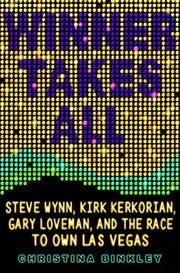
Christina Binkley · 2008

Wynn, Adelson, Kerkorian and the megaresort capex race.

Where it sits in the reference 2

Companies
Industries

Topics

Company HistoriesEntrepreneurship and StartupsBiography and MemoirFounders and EntrepreneursFounder Profiles and Startup StoriesRetail and consumer founders