Updates

  1. Person pages list letters, writing, profiles and links as sortable tables with filters, and show each person's companies as links; Fund letters show each letter's description in its own column.
  2. Experts show a checked job title and a short description of each person; 30 more people have photographs.
  3. Every company, fund, university and publication the experts work for has a page listing the people there.
  4. Fund letters show each letter's thesis and filter by it; 225 person pages list the essays, columns and newsletter issues the person wrote.
  5. Person pages list every essay and newsletter issue a person wrote, and their own books as a table in List view.
  6. Recommends shows the five largest kinds of book and the rest under More; browse pictures load sooner.
  7. Podcasts and talks link the original episode, filter by Audio and video or Press, and list each publisher once.
  8. Pages are wider, Recommends has List and Grid, and a filter clicked again turns off.
  9. Book cards sit in a ruled grid with Open Library and Goodreads links and each book's one-line note.
  10. Funds is now Investors; each investor's styles are buttons that filter the table.
  11. Podcasts and talks on a person's page filter by year and publisher and show as a list or a grid of pictures.
  12. Quotes show only people's own words: 472 summaries written by list sites are gone.
  13. Country pages open from Browse again, and every link on the shelf lands on a page.
  14. Subject and person pages show their sections as tabs, and each book appears once on a person's page.
  15. Book cards show the quote, who said it and the source; grids show five cards to a row.
  16. On a phone, a menu holds the sections, search, Updates, Feedback and dark mode.
  17. Feedback takes a screenshot of the page with no browser prompt, opens a screenshot full size when you click it, and clears itself once sent.
  18. Book cards are centred, search names the topic each book sits in, and any text cut short shows whole on hover.
  19. Search groups its results by kind: people, companies, geographies, subjects, topics, books, funds, fund letters and papers.
  20. The Books table lists who recommended each book by name, and the browser tab names the section you are in.
  21. Feedback can take a screenshot of the page, or one you paste or choose, and opens in the corner beside Updates.
  22. Each rail button reopens its section where you left it, and Browse, Table and People show on every book and subject page.
  23. Filters grey out choices that hold nothing instead of hiding them, and Books › People filters by authors or recommenders.
  24. Feedback takes a subject line and up to three screenshots.
  25. Biographies are grouped by the person they are about: 41 new pages, from Abraham Lincoln to Lee Kuan Yew.
  26. Sport splits into 23 sports, and Religion into one topic per faith.
  27. Book lists show as cards: the cover, one recommendation quote and every recommender by name.
  28. Seventeen subjects that had two or three pages under different names now have one page each.
  29. Every page lists its Experts as authors and recommenders, with a link to them on the Experts tab.
  30. Economics, Financial history, Financial panics and Accounting are subjects of their own, with one page per financial crisis.
  31. Book, person and subject pages open inside the app, so the tabs stay in view.
  32. 996 more book covers, and photographs or logos for 227 more people and companies.
  33. Books › Browse shows every subject as cards, and the rail holds Fund letters, Papers, Experts, Books and Funds.
  34. Every topic over 150 books splits into narrower topics, each with a page of its own.

Send feedback

What is it?
Screenshots, up to 3 (optional)
or paste one with Ctrl+V

We use your email only to reply to you.

Competition in Global Industries

Competition in Global Industries

Edited volume

Summary

The reference has not verified this book in detail; the summary states only what the title, author and subject establish.

Porter edited this volume of research on how firms compete internationally, based on a Harvard Business School colloquium, with contributions from scholars in strategy, economics and international business.

Porter's own framing chapter makes the analytical distinction the book rests on. He separates multidomestic industries, where competition in each country is essentially independent and a firm's position in one market does not affect its position in another, from global industries, where a firm's competitive position in one country is materially affected by its position elsewhere. The strategic implications differ entirely: in a multidomestic industry a firm should manage each country as a standalone business, while in a global industry it must coordinate across countries and can gain advantage from that coordination.

His analytical tool is the configuration and coordination framework. Configuration concerns where activities in the value chain are performed, ranging from concentrated in one location to dispersed across many. Coordination concerns how tightly activities in different locations are linked. A firm can concentrate research and manufacturing while dispersing sales, or disperse everything with high coordination, and each combination produces different advantages and costs.

Other contributions cover industry case studies, the role of governments, technology transfer, alliances and the coordination problems in managing multinational organisations.

The volume is academic and from 1986, so the specific industries and the international environment described are dated. The multidomestic versus global distinction and the configuration and coordination framework entered the strategy literature and remain in use. Porter developed the national dimension further in The Competitive Advantage of Nations.

Key takeaways 7

  1. Multidomestic industries permit independent country-by-country competition while global industries link a firm's position across markets.
  2. The distinction determines whether a firm should manage countries as standalone businesses or coordinate across them.
  3. Configuration concerns where value chain activities are performed and ranges from concentrated to dispersed.
  4. Coordination concerns how tightly activities in different locations are linked, and it is a separate decision from where they are located.
  5. A firm can concentrate some activities while dispersing others, and the correct pattern differs by activity rather than by firm.
  6. Advantage in a global industry can come from coordination itself rather than from the location of any individual activity.
  7. Government policy affects international competition through its effect on configuration choices rather than only through trade barriers.

Who should read it

Executives designing international operations who need the framework for deciding what to concentrate, what to disperse and what to coordinate.

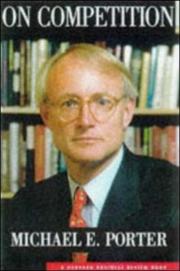
About Michael E. Porter

Bishop William Lawrence University Professor Emeritus, Harvard Business School; founder, Institute for Strategy and Competitiveness

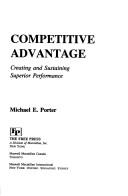
Competitive Strategy and the five-forces framework are the primary source for industry analysis, and Competitive Advantage supplied the value-chain vocabulary the field still uses.

Harvard Business School, Institute for Strategy and Competitiveness

Similar books 6

Chosen by shared topics, the entries that hold them, and the people who recommended both.
Michael E. Porter · 1985

The value chain: how to find where a firm's cost or differentiation advantage lies.
Michael E. Porter · 1980

Techniques for Analyzing Industries and Competitors

Michael E. Porter · 1998

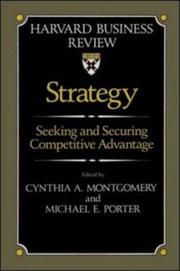
Collected HBR articles; expanded edition 2008

Michael E. Porter, Elizabeth Olmsted Teisberg · 2006

Creating Value-Based Competition on Results
Where it sits in the reference 3

Strategists
Business themes
Business themes

Topics

Business and Management