Updates

  1. Person pages list letters, writing, profiles and links as sortable tables with filters, and show each person's companies as links; Fund letters show each letter's description in its own column.
  2. Experts show a checked job title and a short description of each person; 30 more people have photographs.
  3. Every company, fund, university and publication the experts work for has a page listing the people there.
  4. Fund letters show each letter's thesis and filter by it; 225 person pages list the essays, columns and newsletter issues the person wrote.
  5. Person pages list every essay and newsletter issue a person wrote, and their own books as a table in List view.
  6. Recommends shows the five largest kinds of book and the rest under More; browse pictures load sooner.
  7. Podcasts and talks link the original episode, filter by Audio and video or Press, and list each publisher once.
  8. Pages are wider, Recommends has List and Grid, and a filter clicked again turns off.
  9. Book cards sit in a ruled grid with Open Library and Goodreads links and each book's one-line note.
  10. Funds is now Investors; each investor's styles are buttons that filter the table.
  11. Podcasts and talks on a person's page filter by year and publisher and show as a list or a grid of pictures.
  12. Quotes show only people's own words: 472 summaries written by list sites are gone.
  13. Country pages open from Browse again, and every link on the shelf lands on a page.
  14. Subject and person pages show their sections as tabs, and each book appears once on a person's page.
  15. Book cards show the quote, who said it and the source; grids show five cards to a row.
  16. On a phone, a menu holds the sections, search, Updates, Feedback and dark mode.
  17. Feedback takes a screenshot of the page with no browser prompt, opens a screenshot full size when you click it, and clears itself once sent.
  18. Book cards are centred, search names the topic each book sits in, and any text cut short shows whole on hover.
  19. Search groups its results by kind: people, companies, geographies, subjects, topics, books, funds, fund letters and papers.
  20. The Books table lists who recommended each book by name, and the browser tab names the section you are in.
  21. Feedback can take a screenshot of the page, or one you paste or choose, and opens in the corner beside Updates.
  22. Each rail button reopens its section where you left it, and Browse, Table and People show on every book and subject page.
  23. Filters grey out choices that hold nothing instead of hiding them, and Books › People filters by authors or recommenders.
  24. Feedback takes a subject line and up to three screenshots.
  25. Biographies are grouped by the person they are about: 41 new pages, from Abraham Lincoln to Lee Kuan Yew.
  26. Sport splits into 23 sports, and Religion into one topic per faith.
  27. Book lists show as cards: the cover, one recommendation quote and every recommender by name.
  28. Seventeen subjects that had two or three pages under different names now have one page each.
  29. Every page lists its Experts as authors and recommenders, with a link to them on the Experts tab.
  30. Economics, Financial history, Financial panics and Accounting are subjects of their own, with one page per financial crisis.
  31. Book, person and subject pages open inside the app, so the tabs stay in view.
  32. 996 more book covers, and photographs or logos for 227 more people and companies.
  33. Books › Browse shows every subject as cards, and the rail holds Fund letters, Papers, Experts, Books and Funds.
  34. Every topic over 150 books splits into narrower topics, each with a page of its own.

Send feedback

What is it?
Screenshots, up to 3 (optional)
or paste one with Ctrl+V

We use your email only to reply to you.

Corporate Ownership in France

Corporate Ownership in France

Antoin E. Murphy
2004
T4 Open Librarygoodreads

Cross-holdings, the state and who actually controls French companies.

Summary

The reference has not verified this book in detail; the summary states only what the title, author and subject establish.

Murphy, an economic historian at Trinity College Dublin who has written extensively on John Law and on French financial history, produced this work on corporate ownership in France. The reference has not verified the book's contents.

The subject matters because French corporate ownership has historically differed from the Anglo-American pattern. Ownership has been more concentrated, with families, the state and cross-shareholdings among large firms holding controlling positions rather than dispersed public shareholders. The state has held direct ownership in large parts of industry and banking through successive nationalisations and privatisations. The noyaux durs, meaning hard cores of stable cross-holding shareholders, were deliberately created during the privatisations of the 1980s and 1990s to prevent foreign acquisition of newly private companies. Double voting rights for long-term holders, permitted under French law and later made the default under the Florange law, further concentrate control relative to economic ownership.

The historical dimension includes the development of the French financial system, the effect of the Law episode of 1720 on French attitudes to paper finance and to joint stock companies, the slow development of French equity markets relative to Britain's, and the role of state-directed credit in industrial development.

Murphy's own scholarship on John Law is the most substantial part of his published work, and readers wanting his major contribution should look there. This volume's specific coverage should be verified against its contents.

Key takeaways 6

  1. French corporate ownership has been concentrated among families, the state and cross-shareholdings rather than dispersed among public shareholders.
  2. Cross-holding blocks were deliberately created during privatisations to prevent foreign acquisition of newly private companies.
  3. Double voting rights for long-term holders concentrate control relative to economic ownership under French law.
  4. State ownership through successive nationalisations and privatisations has been a persistent feature of French industry and banking.
  5. The 1720 Law episode shaped French attitudes to paper finance and to joint stock companies for generations afterward.
  6. French equity markets developed more slowly than Britain's, which is connected to the state's role in directing credit.

Who should read it

Readers researching French corporate governance and ownership structures, verified against the book's actual coverage.

Similar books 6

Chosen by shared topics, the entries that hold them, and the people who recommended both.

Stuart C. Gilson · 2001

Harvard case studies in bankruptcy and workout situations.

Dakin Campbell · 2021

On direct listings and the alternatives to the traditional IPO, SPACs included.

David Carey, John E. Morris · 2010

Blackstone from its 1985 founding through its 2007 public offering and the crisis.

Recommended by: Mohnish Pabrai
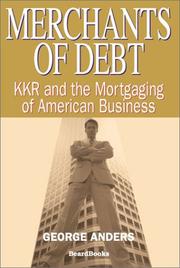
George Anders · 1992

KKR from 1976 through the RJR Nabisco buyout, and what debt did to its companies.
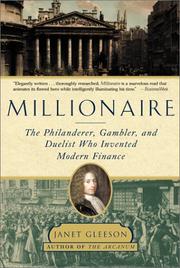
Janet Gleeson · 2000

John Law, the Mississippi bubble and the invention of paper money in France.

Where it sits in the reference 2

Geographies
Business models

Topics

Finance and MarketsGeneral HistoryModern Europe and Russia