
Dance with Chance: Making Luck Work for You
Why luck plays a larger part in life than people admit, and how to deal with it.
Summary
Makridakis, Hogarth and Gaba, business professors and risk management experts, argue that luck plays a far larger role in life than people acknowledge. They cite an analysis of mortality rates suggesting that controlling weight, blood pressure and cholesterol and not smoking have only a small effect on longevity, and that common knowledge about body weight may be wrong. They reconsider medical and investment advice in the light of chance and recommend avoiding doctors, seeking boring investments and ignoring almost everything in business books.
The early sections cover medicine and investing; the second section offers more abstract strategies for living with uncertainty. Publishers Weekly found that second part weaker and short on practical advice, but called the thesis provocative and valued the book's invitation to give up the illusion of control. It was published in 2009.
Key takeaways 4
- Much of what happens in health, investing and business comes from chance rather than skill or control.
- Boring, low-cost investments beat attempts to outguess the market.
- Most advice in business books rests on success stories that luck explains as well as skill.
- Accepting uncertainty works better than acting under the illusion of control.
Who should read it
Investors and decision-makers who want three business professors' case for respecting luck.
Who recommended it 1 · 1 direct
Similar books 6
Chosen by shared topics, the entries that hold them, and the people who recommended both.

Principles of observation, inference and avoiding error, from the Holmes stories.
Recommended by: Mohnish Pabrai, Patrick O'Shaughnessy and 1 other
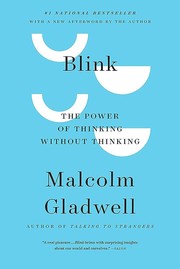
How snap judgments work, when to trust them and when they mislead.
“Malcolm Gladwell, Blink: The Power of Thinking Without Thinking (New York: Little, Brown and Company, 2005)” — Michael Mauboussin
Source: Are You an Expert? Experts and Markets, page 9
Recommended by: Michael Mauboussin, Mohnish Pabrai and 2 others
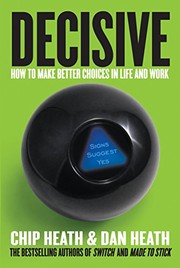
Four traps that ruin decisions, such as narrow framing, and a process to beat each.
“Interesting and insightful dive into the subject of how to make big decisions. Specific useful advice.” — Derek Sivers
Source: Derek Sivers book notes (primary, rated list) · Rating: 8/10
Recommended by: Andrew Wilkinson, Derek Sivers and 6 others
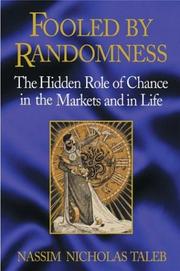
Why people mistake luck for skill, above all in markets.
“Fooled By Randomness was unquestionably the best non-fiction book I read in 2005.” — Brad Feld
Source: Book Review: Fooled By Randomness — Feld Thoughts
Recommended by: Barton Biggs, Brad Feld, Derek Sivers and 15 others
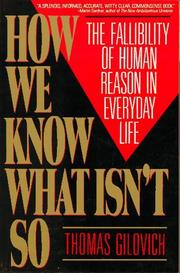
How people come to believe questionable or false things.
Recommended by: Mohnish Pabrai
How cognitive limits shape the work of intelligence analysts.
Recommended by: Mohnish Pabrai