Updates

  1. Person pages list letters, writing, profiles and links as sortable tables with filters, and show each person's companies as links; Fund letters show each letter's description in its own column.
  2. Experts show a checked job title and a short description of each person; 30 more people have photographs.
  3. Every company, fund, university and publication the experts work for has a page listing the people there.
  4. Fund letters show each letter's thesis and filter by it; 225 person pages list the essays, columns and newsletter issues the person wrote.
  5. Person pages list every essay and newsletter issue a person wrote, and their own books as a table in List view.
  6. Recommends shows the five largest kinds of book and the rest under More; browse pictures load sooner.
  7. Podcasts and talks link the original episode, filter by Audio and video or Press, and list each publisher once.
  8. Pages are wider, Recommends has List and Grid, and a filter clicked again turns off.
  9. Book cards sit in a ruled grid with Open Library and Goodreads links and each book's one-line note.
  10. Funds is now Investors; each investor's styles are buttons that filter the table.
  11. Podcasts and talks on a person's page filter by year and publisher and show as a list or a grid of pictures.
  12. Quotes show only people's own words: 472 summaries written by list sites are gone.
  13. Country pages open from Browse again, and every link on the shelf lands on a page.
  14. Subject and person pages show their sections as tabs, and each book appears once on a person's page.
  15. Book cards show the quote, who said it and the source; grids show five cards to a row.
  16. On a phone, a menu holds the sections, search, Updates, Feedback and dark mode.
  17. Feedback takes a screenshot of the page with no browser prompt, opens a screenshot full size when you click it, and clears itself once sent.
  18. Book cards are centred, search names the topic each book sits in, and any text cut short shows whole on hover.
  19. Search groups its results by kind: people, companies, geographies, subjects, topics, books, funds, fund letters and papers.
  20. The Books table lists who recommended each book by name, and the browser tab names the section you are in.
  21. Feedback can take a screenshot of the page, or one you paste or choose, and opens in the corner beside Updates.
  22. Each rail button reopens its section where you left it, and Browse, Table and People show on every book and subject page.
  23. Filters grey out choices that hold nothing instead of hiding them, and Books › People filters by authors or recommenders.
  24. Feedback takes a subject line and up to three screenshots.
  25. Biographies are grouped by the person they are about: 41 new pages, from Abraham Lincoln to Lee Kuan Yew.
  26. Sport splits into 23 sports, and Religion into one topic per faith.
  27. Book lists show as cards: the cover, one recommendation quote and every recommender by name.
  28. Seventeen subjects that had two or three pages under different names now have one page each.
  29. Every page lists its Experts as authors and recommenders, with a link to them on the Experts tab.
  30. Economics, Financial history, Financial panics and Accounting are subjects of their own, with one page per financial crisis.
  31. Book, person and subject pages open inside the app, so the tabs stay in view.
  32. 996 more book covers, and photographs or logos for 227 more people and companies.
  33. Books › Browse shows every subject as cards, and the rail holds Fund letters, Papers, Experts, Books and Funds.
  34. Every topic over 150 books splits into narrower topics, each with a page of its own.

Send feedback

What is it?
Screenshots, up to 3 (optional)
or paste one with Ctrl+V

We use your email only to reply to you.

Dark Shadows: Inside the Secret World of Kaz

Dark Shadows: Inside the Secret World of Kazakhstan

Joanna Lillis
2019
T3 288 pages · about 4h 48m to read Open Librarygoodreads

Reporting on the succession, Zhanaozen and how the state and business interlock.

Summary

Lillis, a journalist based in Kazakhstan for many years, wrote a portrait of the country during and immediately after Nursultan Nazarbayev's presidency, built from reporting across the country.

The political material covers the system Nazarbayev built after 1991: personal rule through a presidential apparatus, control of the media, the marginalisation of opposition through prosecution and exile, the elections that returned implausible majorities, and the family's position across business and government. Lillis covers the 2011 Zhanaozen events, in which police fired on striking oil workers, and the prosecutions that followed.

The economic material covers the oil dependence, the wealth concentrated among a small connected group, the sovereign fund and its management, and the offshore structures through which assets were held, which became visible through litigation and through leaks.

The social material is the strongest part and is what distinguishes the book from a political analysis. Lillis reports from across the country on questions the political coverage omits: the position of ethnic Russians in a state pursuing Kazakh national identity, the treatment of language, the legacy of Soviet nuclear testing at Semipalatinsk, the Aral Sea's destruction, the situation of ethnic Kazakhs returning from abroad, and the religious environment.

The book is journalism and does not attempt economic or political science analysis. It was published in 2019, shortly after Nazarbayev's resignation as president while retaining other positions, and before the January 2022 unrest that produced a violent crackdown and the removal of the Nazarbayev family from its remaining positions. Readers should treat it as a portrait of the system as it stood rather than as a current account.

Key takeaways 7

  1. Kazakhstan was governed through personal presidential rule with elections that returned implausible majorities.
  2. Oil dependence concentrated wealth among a small group connected to the presidency.
  3. Assets were held through offshore structures whose existence became visible through litigation and leaks rather than through disclosure.
  4. Police fired on striking oil workers at Zhanaozen in 2011, and the prosecutions that followed targeted the strikers.
  5. The state pursued Kazakh national identity while managing a large ethnic Russian population, which shaped language and citizenship policy.
  6. Soviet nuclear testing at Semipalatinsk and the destruction of the Aral Sea left environmental and health consequences that persist.
  7. The book describes the system before the 2022 unrest that removed the ruling family from its remaining positions.

Who should read it

Investors and operators in Central Asia who need the political and social context behind a resource-dependent personalised state.

Similar books 6

Chosen by shared topics, the entries that hold them, and the people who recommended both.

Alexander Cooley, John Heathershaw · 2017

How Central Asia's rulers use offshore firms, foreign banks and Western property.
Martha Brill Olcott · 2001

The standard account of Nazarbayev-era state building and asset allocation.
Steve LeVine · 2007

The fight for Caspian Sea oil from the 19th century to the present.
Tom Burgis · 2020

How money from resource-rich autocracies flows into Western finance and law.
Philip Shishkin · 2013

Kyrgyzstan's revolutions, asset seizures and the Bakiyev family's businesses.
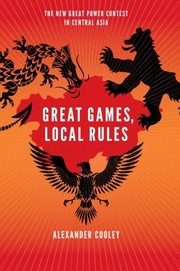
Alexander Cooley · 2012

How Central Asian states play the outside powers off against each other.

Where it sits in the reference 2

Geographies
Geographies

Topics

Politics and GovernmentTravel and ExplorationEurope, Britain and Russia