Updates

  1. Person pages list letters, writing, profiles and links as sortable tables with filters, and show each person's companies as links; Fund letters show each letter's description in its own column.
  2. Experts show a checked job title and a short description of each person; 30 more people have photographs.
  3. Every company, fund, university and publication the experts work for has a page listing the people there.
  4. Fund letters show each letter's thesis and filter by it; 225 person pages list the essays, columns and newsletter issues the person wrote.
  5. Person pages list every essay and newsletter issue a person wrote, and their own books as a table in List view.
  6. Recommends shows the five largest kinds of book and the rest under More; browse pictures load sooner.
  7. Podcasts and talks link the original episode, filter by Audio and video or Press, and list each publisher once.
  8. Pages are wider, Recommends has List and Grid, and a filter clicked again turns off.
  9. Book cards sit in a ruled grid with Open Library and Goodreads links and each book's one-line note.
  10. Funds is now Investors; each investor's styles are buttons that filter the table.
  11. Podcasts and talks on a person's page filter by year and publisher and show as a list or a grid of pictures.
  12. Quotes show only people's own words: 472 summaries written by list sites are gone.
  13. Country pages open from Browse again, and every link on the shelf lands on a page.
  14. Subject and person pages show their sections as tabs, and each book appears once on a person's page.
  15. Book cards show the quote, who said it and the source; grids show five cards to a row.
  16. On a phone, a menu holds the sections, search, Updates, Feedback and dark mode.
  17. Feedback takes a screenshot of the page with no browser prompt, opens a screenshot full size when you click it, and clears itself once sent.
  18. Book cards are centred, search names the topic each book sits in, and any text cut short shows whole on hover.
  19. Search groups its results by kind: people, companies, geographies, subjects, topics, books, funds, fund letters and papers.
  20. The Books table lists who recommended each book by name, and the browser tab names the section you are in.
  21. Feedback can take a screenshot of the page, or one you paste or choose, and opens in the corner beside Updates.
  22. Each rail button reopens its section where you left it, and Browse, Table and People show on every book and subject page.
  23. Filters grey out choices that hold nothing instead of hiding them, and Books › People filters by authors or recommenders.
  24. Feedback takes a subject line and up to three screenshots.
  25. Biographies are grouped by the person they are about: 41 new pages, from Abraham Lincoln to Lee Kuan Yew.
  26. Sport splits into 23 sports, and Religion into one topic per faith.
  27. Book lists show as cards: the cover, one recommendation quote and every recommender by name.
  28. Seventeen subjects that had two or three pages under different names now have one page each.
  29. Every page lists its Experts as authors and recommenders, with a link to them on the Experts tab.
  30. Economics, Financial history, Financial panics and Accounting are subjects of their own, with one page per financial crisis.
  31. Book, person and subject pages open inside the app, so the tabs stay in view.
  32. 996 more book covers, and photographs or logos for 227 more people and companies.
  33. Books › Browse shows every subject as cards, and the rail holds Fund letters, Papers, Experts, Books and Funds.
  34. Every topic over 150 books splits into narrower topics, each with a page of its own.

Send feedback

What is it?
Screenshots, up to 3 (optional)
or paste one with Ctrl+V

We use your email only to reply to you.

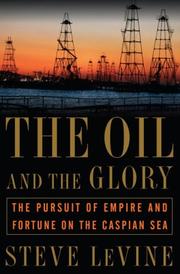
The Oil and the Glory

The Oil and the Glory

Steve LeVine
2007
T2 496 pages · about 8h 16m to read Open Librarygoodreads

How Tengiz and Kashagan were negotiated; the best account of dealmaking in the region.

Summary

Steve LeVine covered Central Asia and the Caucasus for the Wall Street Journal and Newsweek, and wrote this history of the competition for Caspian Sea oil from the nineteenth century to the present.

The historical material covers Baku's first oil boom, the Nobel and Rothschild interests there, and the region's role in Soviet oil production. The main narrative concerns the period after 1991, when the Caspian states became independent and Western oil companies sought access to reserves that had been closed. LeVine covers the Tengiz field in Kazakhstan and Chevron's long negotiation for it, the Azerbaijani contract of the century in 1994, the Kashagan discovery and its enormous cost overruns, and the pipeline question.

The pipeline material is the political core. Landlocked Caspian oil must cross someone's territory, and the routing decision determined which countries gained transit revenue and leverage. LeVine covers the competition between the Russian route, the Iranian route that American sanctions foreclosed, and the Baku-Tbilisi-Ceyhan pipeline through Georgia to the Turkish Mediterranean coast that the United States promoted and that was eventually built. He covers the personalities including the intermediaries, the corruption allegations including the Giffen case involving payments to Kazakh officials, and the American policy interest. The book is journalism with extensive field reporting and is the standard account of the region's oil politics.

Key takeaways 7

  1. Landlocked Caspian oil requires crossing another country's territory, which makes pipeline routing the central political question.
  2. The Baku-Tbilisi-Ceyhan pipeline was built for political reasons, to avoid both Russian and Iranian territory, rather than on cost grounds.
  3. American sanctions on Iran foreclosed the shortest and cheapest export route from the Caspian.
  4. Kashagan's development cost overruns made it among the most expensive oil projects ever undertaken.
  5. Intermediaries with political access captured substantial value between the oil companies and the host governments.
  6. The Giffen prosecution documented payments to Kazakh officials and raised questions about what American policy had sanctioned.
  7. Caspian reserves proved smaller and more expensive to develop than the initial estimates that drove the competition for them.

Who should read it

Energy investors and analysts of resource politics who want the field-reported history of how Caspian oil access and transit were determined.

Similar books 6

Chosen by shared topics, the entries that hold them, and the people who recommended both.

Joanna Lillis · 2019

Reporting on the succession, Zhanaozen and how the state and business interlock.

Alexander Cooley, John Heathershaw · 2017

How Central Asia's rulers use offshore firms, foreign banks and Western property.
Martha Brill Olcott · 2001

The standard account of Nazarbayev-era state building and asset allocation.

Pauline Jones Luong, Erika Weinthal · 2010

Why ownership structure, not oil itself, set post-Soviet states' fortunes.

Tom Burgis · 2020

How money from resource-rich autocracies flows into Western finance and law.
Where it sits in the reference 2

Geographies
Geographies

Topics

Environment and EnergyPolitics and GovernmentGeneral HistoryAsia, Africa, Latin America and the Middle EastEurope, Britain and RussiaOil, gas and coal