Updates

  1. Person pages list letters, writing, profiles and links as sortable tables with filters, and show each person's companies as links; Fund letters show each letter's description in its own column.
  2. Experts show a checked job title and a short description of each person; 30 more people have photographs.
  3. Every company, fund, university and publication the experts work for has a page listing the people there.
  4. Fund letters show each letter's thesis and filter by it; 225 person pages list the essays, columns and newsletter issues the person wrote.
  5. Person pages list every essay and newsletter issue a person wrote, and their own books as a table in List view.
  6. Recommends shows the five largest kinds of book and the rest under More; browse pictures load sooner.
  7. Podcasts and talks link the original episode, filter by Audio and video or Press, and list each publisher once.
  8. Pages are wider, Recommends has List and Grid, and a filter clicked again turns off.
  9. Book cards sit in a ruled grid with Open Library and Goodreads links and each book's one-line note.
  10. Funds is now Investors; each investor's styles are buttons that filter the table.
  11. Podcasts and talks on a person's page filter by year and publisher and show as a list or a grid of pictures.
  12. Quotes show only people's own words: 472 summaries written by list sites are gone.
  13. Country pages open from Browse again, and every link on the shelf lands on a page.
  14. Subject and person pages show their sections as tabs, and each book appears once on a person's page.
  15. Book cards show the quote, who said it and the source; grids show five cards to a row.
  16. On a phone, a menu holds the sections, search, Updates, Feedback and dark mode.
  17. Feedback takes a screenshot of the page with no browser prompt, opens a screenshot full size when you click it, and clears itself once sent.
  18. Book cards are centred, search names the topic each book sits in, and any text cut short shows whole on hover.
  19. Search groups its results by kind: people, companies, geographies, subjects, topics, books, funds, fund letters and papers.
  20. The Books table lists who recommended each book by name, and the browser tab names the section you are in.
  21. Feedback can take a screenshot of the page, or one you paste or choose, and opens in the corner beside Updates.
  22. Each rail button reopens its section where you left it, and Browse, Table and People show on every book and subject page.
  23. Filters grey out choices that hold nothing instead of hiding them, and Books › People filters by authors or recommenders.
  24. Feedback takes a subject line and up to three screenshots.
  25. Biographies are grouped by the person they are about: 41 new pages, from Abraham Lincoln to Lee Kuan Yew.
  26. Sport splits into 23 sports, and Religion into one topic per faith.
  27. Book lists show as cards: the cover, one recommendation quote and every recommender by name.
  28. Seventeen subjects that had two or three pages under different names now have one page each.
  29. Every page lists its Experts as authors and recommenders, with a link to them on the Experts tab.
  30. Economics, Financial history, Financial panics and Accounting are subjects of their own, with one page per financial crisis.
  31. Book, person and subject pages open inside the app, so the tabs stay in view.
  32. 996 more book covers, and photographs or logos for 227 more people and companies.
  33. Books › Browse shows every subject as cards, and the rail holds Fund letters, Papers, Experts, Books and Funds.
  34. Every topic over 150 books splits into narrower topics, each with a page of its own.

Send feedback

What is it?
Screenshots, up to 3 (optional)
or paste one with Ctrl+V

We use your email only to reply to you.

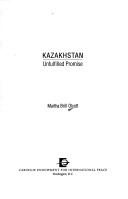
Kazakhstan: Unfulfilled Promise

Kazakhstan: Unfulfilled Promise

Martha Brill Olcott
2001
T3 276 pages · about 4h 36m to read Open Librarygoodreads

The standard account of Nazarbayev-era state building and asset allocation.

Summary

The reference has not verified this book in detail; the summary states only what the title, author and subject establish.

Martha Brill Olcott was a Carnegie Endowment specialist on Central Asia, and this book assesses Kazakhstan roughly a decade after independence. The promise of the title is the country's combination of large hydrocarbon reserves, an educated Soviet-era workforce and a leadership that presented itself as reformist.

Olcott's assessment covers the political consolidation under Nursultan Nazarbayev, the management of relations between the Kazakh and Russian populations, the oil and gas sector and the pipeline routes that determine who buys the output, the privatisation programme, and the country's positioning between Russia, China and the West. Her judgement is that political consolidation foreclosed the institutional development that would have converted resource wealth into broad-based growth, and that the state and the ruling family's economic interests became difficult to separate.

The reference has not verified this book chapter by chapter, and this entry reflects the author's known positions and the book's established scope rather than a close reading. It also predates the oil production growth of the 2000s, the Kashagan development, the 2022 unrest and Nazarbayev's removal from influence, all of which bear on its conclusions.

Key takeaways 5

  1. Kazakhstan's hydrocarbon wealth arrived before it had institutions capable of managing the revenue.
  2. Pipeline routing decisions determined Kazakhstan's foreign policy alignment more than any diplomatic choice did.
  3. Political consolidation under a single leader removed the pluralism that would have constrained resource rent capture.
  4. Ethnic Russian emigration in the 1990s removed technical personnel the economy depended on.
  5. Olcott argues that Kazakhstan's reform reputation among Western governments outran its actual institutional record.

Who should read it

Analysts of Central Asia and of resource-dependent states who want an early assessment of Kazakhstan's institutional trajectory.

Similar books 6

Chosen by shared topics, the entries that hold them, and the people who recommended both.

Joanna Lillis · 2019

Reporting on the succession, Zhanaozen and how the state and business interlock.

Alexander Cooley, John Heathershaw · 2017

How Central Asia's rulers use offshore firms, foreign banks and Western property.
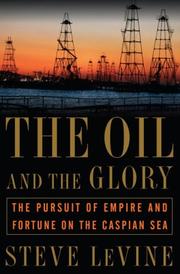
Steve LeVine · 2007

The fight for Caspian Sea oil from the 19th century to the present.

Tom Burgis · 2020

How money from resource-rich autocracies flows into Western finance and law.

Alexander Cooley · 2012

How Central Asian states play the outside powers off against each other.

Craig Murray · 2006

A UK ambassador's account of Uzbekistan's cotton trade and its abuses.

Where it sits in the reference 2

Geographies
Geographies

Topics

Politics and GovernmentEurope, Britain and Russia