Updates

  1. Person pages list letters, writing, profiles and links as sortable tables with filters, and show each person's companies as links; Fund letters show each letter's description in its own column.
  2. Experts show a checked job title and a short description of each person; 30 more people have photographs.
  3. Every company, fund, university and publication the experts work for has a page listing the people there.
  4. Fund letters show each letter's thesis and filter by it; 225 person pages list the essays, columns and newsletter issues the person wrote.
  5. Person pages list every essay and newsletter issue a person wrote, and their own books as a table in List view.
  6. Recommends shows the five largest kinds of book and the rest under More; browse pictures load sooner.
  7. Podcasts and talks link the original episode, filter by Audio and video or Press, and list each publisher once.
  8. Pages are wider, Recommends has List and Grid, and a filter clicked again turns off.
  9. Book cards sit in a ruled grid with Open Library and Goodreads links and each book's one-line note.
  10. Funds is now Investors; each investor's styles are buttons that filter the table.
  11. Podcasts and talks on a person's page filter by year and publisher and show as a list or a grid of pictures.
  12. Quotes show only people's own words: 472 summaries written by list sites are gone.
  13. Country pages open from Browse again, and every link on the shelf lands on a page.
  14. Subject and person pages show their sections as tabs, and each book appears once on a person's page.
  15. Book cards show the quote, who said it and the source; grids show five cards to a row.
  16. On a phone, a menu holds the sections, search, Updates, Feedback and dark mode.
  17. Feedback takes a screenshot of the page with no browser prompt, opens a screenshot full size when you click it, and clears itself once sent.
  18. Book cards are centred, search names the topic each book sits in, and any text cut short shows whole on hover.
  19. Search groups its results by kind: people, companies, geographies, subjects, topics, books, funds, fund letters and papers.
  20. The Books table lists who recommended each book by name, and the browser tab names the section you are in.
  21. Feedback can take a screenshot of the page, or one you paste or choose, and opens in the corner beside Updates.
  22. Each rail button reopens its section where you left it, and Browse, Table and People show on every book and subject page.
  23. Filters grey out choices that hold nothing instead of hiding them, and Books › People filters by authors or recommenders.
  24. Feedback takes a subject line and up to three screenshots.
  25. Biographies are grouped by the person they are about: 41 new pages, from Abraham Lincoln to Lee Kuan Yew.
  26. Sport splits into 23 sports, and Religion into one topic per faith.
  27. Book lists show as cards: the cover, one recommendation quote and every recommender by name.
  28. Seventeen subjects that had two or three pages under different names now have one page each.
  29. Every page lists its Experts as authors and recommenders, with a link to them on the Experts tab.
  30. Economics, Financial history, Financial panics and Accounting are subjects of their own, with one page per financial crisis.
  31. Book, person and subject pages open inside the app, so the tabs stay in view.
  32. 996 more book covers, and photographs or logos for 227 more people and companies.
  33. Books › Browse shows every subject as cards, and the rail holds Fund letters, Papers, Experts, Books and Funds.
  34. Every topic over 150 books splits into narrower topics, each with a page of its own.

Send feedback

What is it?
Screenshots, up to 3 (optional)
or paste one with Ctrl+V

We use your email only to reply to you.

Dictators Without Borders: Power and Money i

Dictators Without Borders: Power and Money in Central Asia

Alexander Cooley, John Heathershaw
2017
T2 290 pages · about 4h 50m to read Open Librarygoodreads

Traces Kazakh elite money through offshore vehicles, London lawyers and Western banks.

Summary

Cooley and Heathershaw, both academics specialising in Central Asia, argued that the region's regimes should not be analysed as isolated closed systems but as deeply integrated into global financial, legal and reputational networks.

The central claim rejects the standard framing. Central Asian states are usually described as remote, closed and disconnected. The authors show that their elites hold assets through offshore companies registered in the British Virgin Islands and elsewhere, bank in London, Dubai and Zurich, buy property in Western capitals, educate their children in Western universities, litigate against each other and against critics in London courts, and hire Western law firms, public relations agencies, lobbyists and consultants.

The cases include the Gulnara Karimova affair, in which the Uzbek president's daughter received several hundred million dollars from international telecommunications companies seeking market access, routed through offshore vehicles and eventually frozen by Swiss, Dutch and Swedish authorities; the Kazakhgate matter involving payments connected to oil concessions; and the movement of assets out of Kyrgyzstan and Tajikistan.

The analytical argument is that Western jurisdictions supply the infrastructure that makes this possible. Corporate anonymity, property markets that accept anonymous purchasers, libel law that permits reputational management through litigation, and professional services that ask few questions are all provided by states that simultaneously criticise the region's governance.

The book is academic and well sourced from court records, leaked documents and financial filings. It was published in 2017, before the beneficial ownership registers and sanctions developments of the following years, some of which addressed parts of what it describes. The general argument, that authoritarian wealth depends on Western financial and legal infrastructure, has been amply confirmed since.

Key takeaways 7

  1. Central Asian elites hold assets through offshore structures and bank, litigate and educate their children in Western jurisdictions.
  2. These regimes are integrated into global financial and legal networks rather than being isolated closed systems.
  3. International telecommunications companies paid several hundred million dollars to a president's daughter for market access.
  4. Western corporate anonymity, property markets and professional services supply the infrastructure that makes extraction possible.
  5. Libel law in London permits reputational management through litigation against critics and journalists.
  6. Elite conflicts within these regimes are frequently fought in Western courts rather than at home.
  7. Criticising a region's governance while supplying the financial and legal infrastructure its elites depend on is the contradiction the book identifies.

Who should read it

Investors, advisers and compliance professionals who need to see how offshore structures and Western professional services connect to authoritarian wealth.

Similar books 6

Chosen by shared topics, the entries that hold them, and the people who recommended both.

Joanna Lillis · 2019

Reporting on the succession, Zhanaozen and how the state and business interlock.
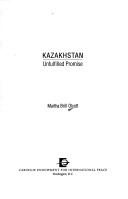
Martha Brill Olcott · 2001

The standard account of Nazarbayev-era state building and asset allocation.
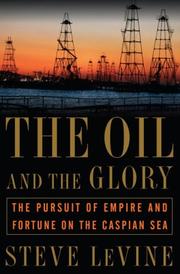
Steve LeVine · 2007

The fight for Caspian Sea oil from the 19th century to the present.

Tom Burgis · 2020

How money from resource-rich autocracies flows into Western finance and law.

Alexander Cooley · 2012

How Central Asian states play the outside powers off against each other.

Craig Murray · 2006

A UK ambassador's account of Uzbekistan's cotton trade and its abuses.

Where it sits in the reference 2

Geographies
Geographies

Topics

Politics and GovernmentEurope, Britain and Russia