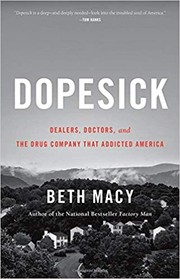
Dopesick: Dealers, Doctors, and the Drug Company That Addicted America
America's opioid crisis from OxyContin's 1996 launch through Central Appalachia.
The epidemic from Appalachia upward; basis for the series.
Summary
Macy traces America's opioid epidemic, a struggle of more than twenty years, from Purdue Pharma's release of OxyContin in 1996, through the spread of addiction in distressed communities of Central Appalachia, to the national crisis. Purdue won approval for the drug for less serious ailments than opiates were normally prescribed for, on the claim that its extended-release design, the "-Contin" standing for continuous, made it safe from recreational users and addicts seeking a quick fix.
Much of the book consists of personal stories from affected people and families in Appalachia and small-town America. Macy also reports on treatment, quoting Nora Volkow, director of the National Institute on Drug Abuse, that every study shows better outcomes for patients treated with buprenorphine and other maintenance medications. Reviewers in The New York Times praised its reporting; The Christian Century found its many stories of misery hard to tell apart. It won the 2018 Los Angeles Times Book Prize for Science and Technology and was adapted as a Hulu series in 2021.
Key takeaways 4
- Purdue Pharma's claim that extended release made OxyContin hard to abuse allowed it to be prescribed widely.
- The epidemic took hold first in distressed communities of Central Appalachia before becoming national.
- Maintenance medications such as buprenorphine produce better outcomes than treatment without them.
- A drug company's marketing can drive a public-health crisis that lasts more than two decades.
Who should read it
Investors in healthcare and pharmaceuticals, and anyone who wants a reported account of how the opioid crisis began and spread.
Similar books 6
Chosen by shared topics, the entries that hold them, and the people who recommended both.

How a West Virginia town of 382 people got 12 million opioid pills in three years.

America's opiate epidemic, seen from the demand side of the OxyContin market.
Recommended by: Chris Sacca

How OxyContin was marketed, and how its abuse spread across America.

The drug distributors behind the opioid epidemic and the lawsuits against them.

How drug makers, regulators and distributors let the US opioid epidemic grow.

Three generations of the Sackler family and how Purdue Pharma sold OxyContin.