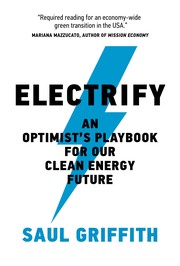
Electrify
An engineer's plan to decarbonise America by electrifying nearly everything.
The demand side: what full electrification of homes and vehicles requires.
Summary
Griffith, an engineer and inventor, wrote this as a technical argument that decarbonising the American economy requires electrifying nearly everything and that the analysis should start from where energy is actually used.
His method is energy flow accounting. He mapped every use of energy in the United States, from power stations through to end uses in vehicles, buildings, industry and appliances, and showed where the energy goes and how much is lost. The key finding is that roughly two thirds of primary energy is wasted, largely as heat in combustion: internal combustion engines convert around a fifth of fuel energy into motion, thermal power stations lose most of the fuel energy up the stack, and gas furnaces lose energy in flues. Electric equivalents are far more efficient at the point of use, so electrifying reduces total primary energy demand substantially even before the generation is decarbonised.
His prescriptions follow from this. Electrify vehicles, space heating through heat pumps, water heating, cooking and industrial process heat where possible. Build generation and storage to match. Do not wait for future technologies, since the required equipment already exists and is manufacturable. Replace equipment at the end of its life rather than prematurely, which sets the timetable: every furnace, car and water heater replaced with a fossil version locks in emissions for its lifetime, so the decision points are the replacement moments.
His financing argument is that the transition is a capital cost problem rather than an operating cost problem, since electrified equipment is cheaper to run and more expensive to buy, and he proposes government-backed low-cost lending as the intervention.
He is dismissive of demand reduction through behaviour change and of some technologies including hydrogen for most uses, which readers may find too confident. The energy flow analysis is the durable contribution.
Key takeaways 7
- Roughly two thirds of American primary energy is wasted, largely as heat in combustion processes.
- Electrifying end uses reduces total primary energy demand substantially before any change in how electricity is generated.
- The equipment required for electrification already exists and is manufacturable, so the transition does not depend on future technology.
- Every fossil appliance or vehicle installed locks in emissions for its operating life, which makes replacement moments the decision points.
- The transition is a capital cost problem rather than an operating cost problem, because electrified equipment costs more to buy and less to run.
- Low-cost financing rather than subsidy is the intervention that matches the actual constraint.
- Starting the analysis from where energy is used rather than from where it is generated changes which interventions matter most.
Who should read it
Investors and operators in energy, buildings and transport who want a quantified engineering argument about where the transition's decisions actually sit.
Similar books 6
Chosen by shared topics, the entries that hold them, and the people who recommended both.
Electrification in the US, Britain and Germany, 1880 to 1930, as a technical system.
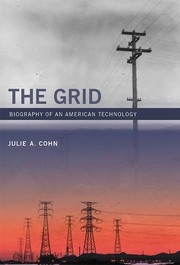
How the American power grid was interconnected and who controls it.
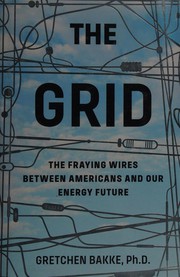
The American electrical grid as a physical and social system, and why it is strained.
“And then another book I'm reading, which was actually a Bill Gates recommendation is, it's called The Grid about the electric grid, which is also pretty good.” — Mohnish Pabrai
Source: Pabrai Investment Funds Annual Meeting Transcript 2018, page 21
Recommended by: Mohnish Pabrai
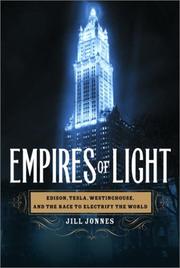
Edison, Westinghouse and Tesla, and the fight to electrify the United States.
“I mean, the airplane, the car, the photograph, the light bulb, for God's sake, this amazing book called Empires of Light.” — Chris Dixon
Recommended by: Chris Dixon
A short primer on energy: its forms, units and role in nature and economies.
Recommended by: Nat Eliason, Bill Gates, Mark Zuckerberg
History told through energy, from muscle and fire to coal, oil and electricity.
Recommended by: Balaji S. Srinivasan, Bill Gates and 1 other