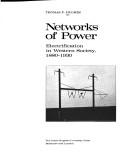
Networks of Power
Electrification in the US, Britain and Germany, 1880 to 1930, as a technical system.
The classic history of electrification as a system business.
Summary
Hughes wrote a comparative history of electrification in the United States, Britain and Germany between 1880 and 1930, and in doing so established a framework for understanding large technological systems that has shaped the history of technology since.
The framework's central concepts are specific. A technological system consists of physical artefacts, organisations, scientific components, legislation and natural resources, and it is built by system builders who work across all of these rather than only on the technology. Edison is his primary case, presented not as an inventor of a lamp but as the designer of a complete generation, distribution, metering and pricing system in which the lamp was one component whose specification followed from the economics of copper conductors. A reverse salient is a component that has fallen behind and holds back the whole system, and Hughes argues that inventive activity concentrates on reverse salients rather than being distributed randomly. Technological momentum describes how a system that has accumulated capital, trained personnel, institutions and users becomes resistant to change and shapes its environment rather than merely adapting to it.
The comparative material is the evidence. The same technology produced very different systems in the three countries. Britain's local authority control and parliamentary politics produced fragmented small systems that resisted interconnection. Germany's technical education and industrial banking produced integrated regional systems. Chicago under Samuel Insull produced the most economically advanced system through load management: Insull recognised that the cost of electricity depends on load factor, meaning capacity utilisation over time, and deliberately sought customers whose demand peaked at different hours, then priced to encourage the mix.
The book is long, detailed and academic. Its concepts have been widely adopted and also criticised, particularly for the emphasis on individual system builders, which later scholarship in the social construction of technology tradition treated as insufficiently attentive to users and to contingency.
Key takeaways 7
- Edison invented a complete electrical system rather than a lamp, and the lamp's specification was derived from the economics of distribution.
- A technological system includes organisations, legislation and financing alongside physical equipment, and none of these can be designed separately.
- Inventive effort concentrates on the component holding back the whole system rather than being spread evenly across it.
- Load factor, meaning capacity utilisation over time, determines the cost of electricity, so mixing customers with different demand patterns lowers cost for all of them.
- Samuel Insull built the most advanced early system by managing demand diversity rather than by improving generation technology.
- The same technology produced very different systems in different countries because political and financial institutions differed.
- Systems accumulate momentum through capital, trained people and institutions, after which they shape their environment rather than adapting to it.
Who should read it
Operators and investors in infrastructure, energy and platform businesses who need a framework for how technical systems, institutions and economics develop together.
Similar books 6
Chosen by shared topics, the entries that hold them, and the people who recommended both.
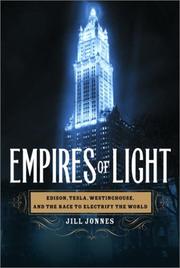
Edison, Westinghouse and Tesla, and the fight to electrify the United States.
“I mean, the airplane, the car, the photograph, the light bulb, for God's sake, this amazing book called Empires of Light.” — Chris Dixon
Recommended by: Chris Dixon
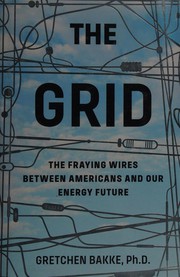
The American electrical grid as a physical and social system, and why it is strained.
“And then another book I'm reading, which was actually a Bill Gates recommendation is, it's called The Grid about the electric grid, which is also pretty good.” — Mohnish Pabrai
Source: Pabrai Investment Funds Annual Meeting Transcript 2018, page 21
Recommended by: Mohnish Pabrai
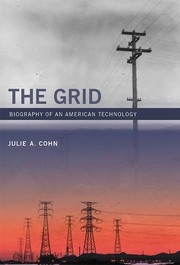
How the American power grid was interconnected and who controls it.
An engineer's plan to decarbonise America by electrifying nearly everything.
How utility business models must change once regulated growth ends.
Every US information industry moved from an open era to control by one firm.
Recommended by: David Perell, Patrick Collison, Andrew Chen