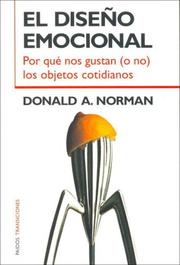
Emotional Design
Why attractive things work better, and how emotion shapes design.
Summary
The reference has not verified this book in detail; the summary states only what the title, author and subject establish.
Norman argues that attractive things work better. His earlier book, The Design of Everyday Things, showed why products should not be confusing, irritating or frustrating; Emotional Design argues that they must also be attractive, pleasurable and fun, because people do not just use a product but become emotionally involved with it. He opens with questions such as why cheap wine tastes better in fancy glasses and why washing and polishing a car seems to make it drive better.
He draws on many examples and on recent research to explore the emotional effects of the objects in everyday life, and argues that this influence on design has been overlooked. The book appeared in 2003. The only source read in this pass is the jacket description, so his model of how emotion works in design is not recorded here.
Key takeaways 3
- People become emotionally involved with the products they use, not only functionally.
- Attractive products are perceived to work better, and research supports the effect.
- Good design must be pleasurable as well as usable.
Who should read it
Designers and product managers who want the argument that emotion and attractiveness belong in product design alongside usability.
Who recommended it 1
Similar books 6
Chosen by shared topics, the entries that hold them, and the people who recommended both.
How to design graphical user interfaces around how the mind works.
Recommended by: Nir Eyal
Tools to understand users' reasons for doing things, and to design for them.
Recommended by: David Kadavy
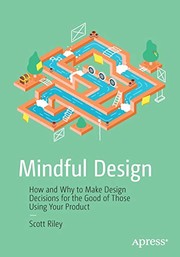
The brain science that matters to designers and how it shapes people's daily use.
Recommended by: Ryan Hoover
The science and art of how fonts affect what we read and the choices we make.
Recommended by: Jeremiah Shoaf
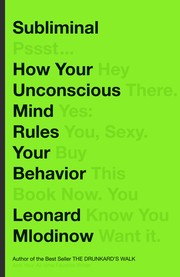
How the unconscious mind shapes perception, judgement and dealings with others.
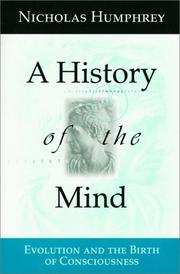
How consciousness and the senses evolved, and the history of the mind.
Recommended by: Mohnish Pabrai, Nassim Nicholas Taleb