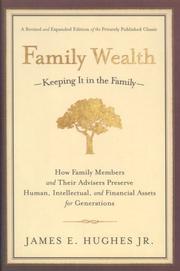
Family Wealth
What a family must preserve to keep its wealth: its human and intellectual capital.
Human and intellectual capital as what a family actually preserves.
Summary
Hughes, who for more than three decades has advised several generations of wealthy families, argues that what a family should hand on is more than money. Families hope to pass on character and leadership, creativity and enterprise, help each member find a calling, and avoid the financial dependency and loss of initiative that often follow success; many never achieve this, let alone sustain it for three, four or five generations.
Hughes sets out strategies for preserving a family's human and intellectual capital as well as its financial assets. His teaching draws on psychology, anthropology, political history, philosophy, economic theory and law, and it offers principles and practices for family governance and joint decision-making. The first edition, privately published, spread by word of mouth; the revised edition adds chapters that challenge conventional ideas of wealth and give guidelines for conserving family assets in the broadest sense.
Key takeaways 4
- A family's wealth includes its human and intellectual capital, not only its money.
- Most families fail to sustain their wealth across three or more generations.
- Financial success can produce dependency and a loss of initiative in heirs.
- Families need governance and joint decision-making to preserve wealth over generations.
Who should read it
Wealthy families and their advisers who want a framework for keeping wealth, and the family itself, intact across generations.
Similar books 6
Chosen by shared topics, the entries that hold them, and the people who recommended both.
How family firms develop, seen as three overlapping circles: family, owners, firm.
How family-owned firms can plan for growth, ownership and succession.
What eighteen long-lived companies did differently from close rivals in their fields.
“Drucker), Commander Watson noted that “people are driven by an intrinsic need to connect with a purpose larger than themselves,” and even quotes the authors of two best-selling business books: First hear Jim Collins, author of Built To Last: “The best executives aspire to create something bigger and more lasting than themselves—an on-going institution rooted in a set of timeless core values that exists for a purpose beyond …” — John C. Bogle
Source: Helping Others, page 4
Recommended by: John C. Bogle, Mohnish Pabrai, Drew Houston and 4 others
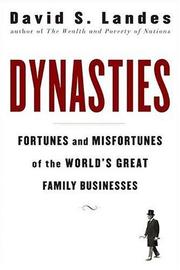
What drives family business dynasties such as the Rothschilds, Fords and Toyodas.
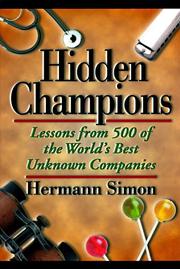
Little-known mid-sized firms, mostly German, that lead world niche markets.
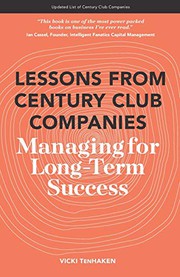
What Japanese companies that have lasted over a century have in common.
“Recently, I came across two books on long lived companies: ‘‘The Living Company, Habits for Survival in a Turbulent Business Environment’’ by Arie de Geus, and ‘‘Lessons from Century Club Companies, Managing for Long Term Success’’ by Vicki Tenhaken.” — Prem Watsa
Source: Chairman's Letter to Shareholders 2020, page 27
Recommended by: Prem Watsa
Where it sits in the reference 1
Topics 2
As an Amazon Associate I earn from qualifying purchases.