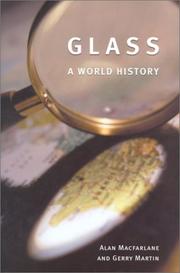
Glass
How glass changed how people see themselves and the world.
Summary
Alan Macfarlane and Gerry Martin, in Glass: A World History, argue that glass changed how people see themselves and the world. Without it there would be no microscopes or telescopes, no microbiology or astronomy; people with poor sight would grope in the shadows; artists would lack three-dimensional perspective; and planes, cars and even electricity probably would not exist.
The authors trace glass from its invention about ten thousand years ago in the Near East, through ancient India, China and Rome, to western Europe in the Renaissance, the Enlightenment and the Industrial Revolution, and on to the present. They argue that glass shaped both humanity's relationship with nature and the diverging paths of Eastern and Western civilisation. Every society that used glass first prized it for jewellery and ornaments, and some later made bottles and containers, but only western Europeans went on to develop glass for precise optics, mirrors and windows. Those innovations, they argue, laid foundations for European dominance of the world in the centuries after the Scientific Revolution.
Key takeaways 4
- Glass made possible lenses, microscopes and telescopes, and so whole sciences.
- Societies used glass in different ways: most for ornament and containers, western Europe for optics.
- Macfarlane and Martin tie European optical glass to the Scientific Revolution.
- A single material can shape the course of civilisations.
Who should read it
Readers of world history and the history of science interested in how technology shaped East and West.
Who recommended it 1
Similar books 6
Chosen by shared topics, the entries that hold them, and the people who recommended both.
A history of Western technology and its place in civilisation.
Recommended by: Nick Szabo
The men behind the steam engine, the machine that drove the Industrial Revolution.
Recommended by: Bill Gates, Mohnish Pabrai, Nick Szabo
An abridged survey of the fifteenth-century communications revolution of print.
Recommended by: Nick Szabo
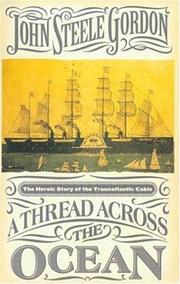
The history of laying the first telegraph cable across the Atlantic.
Recommended by: Paul Graham

What really happened in the Chernobyl reactor disaster and the fight to contain it.
Recommended by: Brad Feld
A history of clocks and clockmaking and their place in culture.
Recommended by: Paul Graham