Head to Head: The Coming Economic Battle Among Japan, Europe, and America
The post-Cold War economic contest among Japan, Europe and America.
Summary
The reference has not verified this book in detail; the summary states only what the title, author and subject establish.
Thurow, an economist and former dean of MIT's Sloan School of Management, argues that after the fall of communism the next world leader would be decided by head-to-head economic competition among Japan, the United States and a newly united Europe, not by military might. In a world no longer governed by two military superpowers, the race for economic supremacy was only beginning in the 1990s.
Using data and analysis, Thurow lays out an economic plan for the United States to win that contest and achieve dominance in the global economy. The book was published in 1992. The source read in this pass, the publisher's description, gives the thesis but not the specific measures he proposes.
Key takeaways 3
- After the Cold War, economic competition replaced military rivalry as the measure of national power.
- Japan, the United States and Europe were the three contenders in Thurow's view.
- The United States needed a deliberate economic strategy to stay ahead.
Who should read it
Readers interested in early-1990s views of global economic competition, read against how events unfolded.
Who recommended it 1 · 1 direct
Similar books 6
Chosen by shared topics, the entries that hold them, and the people who recommended both.

A forecast that information technology will erode the nation state's power to tax.
“This is the best book I've read since Sapiens (far less mainstream, though).” — Naval Ravikant
Source: Naval's Recommended Reading — The Almanack of Naval Ravikant
Recommended by: Balaji S. Srinivasan, Nat Eliason and 11 others
How America was ceding its future to Japan, and how to reverse it.
Recommended by: Patrick Collison
Forecasts for the United States over two decades, drawn from trends already set.
How the US made sanctions and economic warfare its main tool of coercion.
How America is failing four challenges, from globalization to its chronic deficits.
Recommended by: Bill Gates
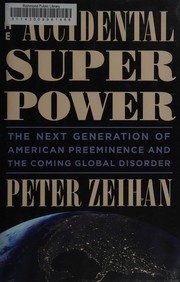
How geography, demography and shale energy set America up to dominate as others age.
Recommended by: Mohnish Pabrai