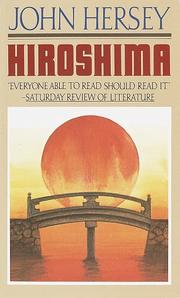
Hiroshima
The stories of six survivors of the atomic bomb dropped on Hiroshima.
Summary
John Hersey's Hiroshima, published in 1946, tells the stories of six survivors of the atomic bomb dropped on the city and describes what the bombing did to them. It is regarded as one of the earliest examples of New Journalism, which adapts the storytelling techniques of fiction to nonfiction reporting.
Hersey had been a war correspondent for Life and other publications in the Pacific and was one of the first Western journalists to see the ruins of Hiroshima. William Shawn of The New Yorker commissioned him to write about the impact of a nuclear explosion through witness accounts, a subject journalists had almost entirely ignored; Hersey interviewed many witnesses and focused on six. The magazine planned to run the piece over four issues but instead gave its whole issue of 31 August 1946 to the single article, with a note to readers explaining why. Alfred A. Knopf published it as a book less than two months later. It has never gone out of print and has sold more than three million copies; Roger Angell wrote in 1995 that its story had become part of "our ceaseless thinking about world wars and nuclear holocaust".
Key takeaways 4
- Hersey told the bombing through six survivors rather than through statistics.
- He used the techniques of fiction to report fact.
- The New Yorker gave an entire issue to the article in August 1946.
- The book shaped public thinking about nuclear war for decades.
Who should read it
Readers of history and journalism who want a human account of the atomic bombing of Hiroshima.
Who recommended it 1
Similar books 6
Chosen by shared topics, the entries that hold them, and the people who recommended both.
The year that could have stalled the Allies, and how the war turned.
Recommended by: Keith Rabois
A biography of General Douglas MacArthur.
Recommended by: Jim Collins, Mohnish Pabrai, Elon Musk
The Nazi and Stalinist mass murders in the lands between, told as one history.
Recommended by: Eric Weinstein, Peter Thiel
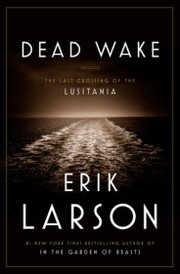
The sinking of the Lusitania, told from both the hunter and the hunted.
Recommended by: Chris Dixon, Sahil Bloom
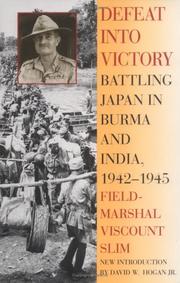
The commander of Britain's 14th Army on retaking Burma from Japan.
Recommended by: Mohnish Pabrai
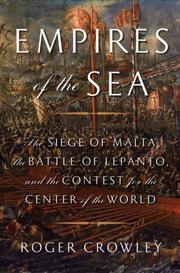
The Ottoman-Christian war for the Mediterranean, from Rhodes onward.
Recommended by: Paul Graham