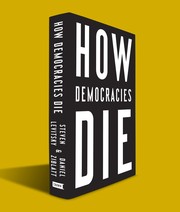
How Democracies Die
How elected leaders subvert democracy step by step, and the norms that guard it.
Summary
Levitsky and Ziblatt, Harvard political scientists, examine democratic backsliding: how elected leaders can gradually subvert democracy to increase their power. They study Venezuela, Russia, Turkey, Thailand, Hungary and Poland, and warn that the first presidency of Donald Trump imperils American democracy. Their central argument is that constitutions depend on two unwritten norms, which they call soft guardrails: mutual tolerance, the acceptance of rivals as legitimate citizens with an equal right to compete for power and govern, and institutional forbearance, the self-restraint of not using every legal power to its limit.
When tolerance erodes, politicians demonise opponents and treat defeat as a catastrophe; when forbearance erodes, they play constitutional hardball with legal but norm-breaking manoeuvres such as court packing, which the Senate's long practice of confirming qualified nominees from the other party had kept in check. Published in 2018, it was a widely praised bestseller; the authors followed it with Tyranny of the Minority in 2023.
Key takeaways 4
- Elected leaders can subvert democracy gradually from within, without a coup.
- Mutual tolerance and institutional forbearance protect a constitution more than its written rules do.
- Constitutional hardball, using legal powers to their extreme, wears down democratic norms.
- Partisan polarisation that treats rivals as enemies erodes the first guardrail.
Who should read it
Readers worried about the health of democracy who want a comparative political scientists' account of how it erodes.
Who recommended it 2
Similar books 6
Chosen by shared topics, the entries that hold them, and the people who recommended both.
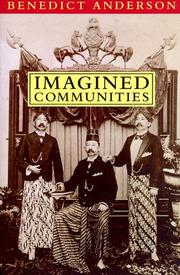
Nations as imagined communities: where nationalism came from and how it spread.
Recommended by: Balaji S. Srinivasan
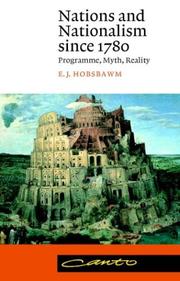
An enquiry into nationalism since 1780: its programme, its myths and its reality.
Recommended by: Patrick Collison
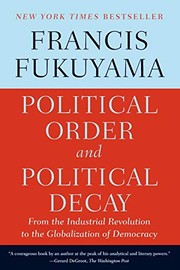
A history of the modern state: how political order develops and how it decays.
Recommended by: Ray Dalio
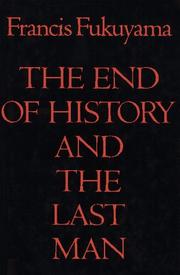
Why liberal democracy may be the end state of political change, and how people react.
Recommended by: Marc Andreessen, Peter Thiel
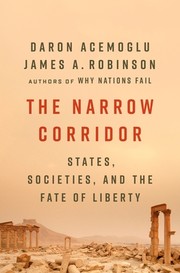
Why liberty is hard to win and keep, and how it can survive new threats.
Recommended by: Satya Nadella