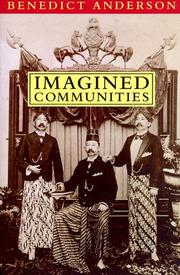
Imagined Communities
Nations as imagined communities: where nationalism came from and how it spread.
Summary
Benedict Anderson's Imagined Communities: Reflections on the Origin and Spread of Nationalism, first published in 1983 and revised in 1991 and 2006, asks what makes people love and die for nations, and hate and kill in their name. It introduced the term "imagined communities" for nations, now standard across the social sciences, and is among the most-cited works in the field. Anderson defined a nation as "an imagined political community—and imagined as both inherently limited and sovereign": members of even the smallest nation will never meet most of their fellows, yet each holds an image of their communion.
Anderson argues that nations are socially constructed and relatively new. He traces the processes that created them: the territorialisation of religious faiths, the decline of ancient kingship and rule by divine right, the interaction of capitalism and print, which standardised calendars, clocks and languages through books and newspapers, the development of vernacular languages of state, and changing ideas of time. He shows how a nationalism first born in the Americas was adopted as a model by popular movements in Europe, by imperial powers and by anti-imperialist movements in Asia and Africa. The revised edition adds chapters on the colonial state's role in Third World nationalism and on how nations came to imagine themselves as old.
Key takeaways 4
- Nations are imagined communities whose members will never all meet.
- Print capitalism spread shared languages and a sense of shared time.
- Nationalism first arose in the Americas and was copied elsewhere.
- Nations present themselves as ancient although the idea is modern.
Who should read it
Students and readers of politics, history and sociology interested in the origins of nationalism.
Who recommended it 1 · 1 direct
Similar books 6
Chosen by shared topics, the entries that hold them, and the people who recommended both.

Why large state plans fail when they override local, practical knowledge.
Recommended by: Balaji S. Srinivasan, Nat Eliason and 1 other

How different societies reached their forms of political order.
Recommended by: Balaji S. Srinivasan

An evolutionary biologist's theory of how empires rise and fall.
Recommended by: Balaji S. Srinivasan
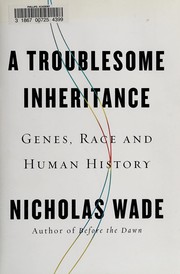
The genetic basis of race and its role in human history, from genome mapping.
Recommended by: Mohnish Pabrai

How food supply and environment shaped the origins of human cultures.
Recommended by: Mohnish Pabrai

Why customs that look irrational come from concrete social and economic conditions.
“Mind-blowing anthropology. Great argument that the reasons that religions worship cows or hate pigs, that tribes wage wars, or Europe's 200 years of witch hunts, are all very practical economic reasons usually unknown to the participants or washed out of history. But they're revealed here in zoomed-out hindsight. My notes here can't describe it. You have to read the whole book. Riveting.” — Derek Sivers
Source: Derek Sivers book notes (primary, rated list) · Rating: 9/10
Recommended by: Derek Sivers, Mohnish Pabrai