Updates

  1. Person pages list letters, writing, profiles and links as sortable tables with filters, and show each person's companies as links; Fund letters show each letter's description in its own column.
  2. Experts show a checked job title and a short description of each person; 30 more people have photographs.
  3. Every company, fund, university and publication the experts work for has a page listing the people there.
  4. Fund letters show each letter's thesis and filter by it; 225 person pages list the essays, columns and newsletter issues the person wrote.
  5. Person pages list every essay and newsletter issue a person wrote, and their own books as a table in List view.
  6. Recommends shows the five largest kinds of book and the rest under More; browse pictures load sooner.
  7. Podcasts and talks link the original episode, filter by Audio and video or Press, and list each publisher once.
  8. Pages are wider, Recommends has List and Grid, and a filter clicked again turns off.
  9. Book cards sit in a ruled grid with Open Library and Goodreads links and each book's one-line note.
  10. Funds is now Investors; each investor's styles are buttons that filter the table.
  11. Podcasts and talks on a person's page filter by year and publisher and show as a list or a grid of pictures.
  12. Quotes show only people's own words: 472 summaries written by list sites are gone.
  13. Country pages open from Browse again, and every link on the shelf lands on a page.
  14. Subject and person pages show their sections as tabs, and each book appears once on a person's page.
  15. Book cards show the quote, who said it and the source; grids show five cards to a row.
  16. On a phone, a menu holds the sections, search, Updates, Feedback and dark mode.
  17. Feedback takes a screenshot of the page with no browser prompt, opens a screenshot full size when you click it, and clears itself once sent.
  18. Book cards are centred, search names the topic each book sits in, and any text cut short shows whole on hover.
  19. Search groups its results by kind: people, companies, geographies, subjects, topics, books, funds, fund letters and papers.
  20. The Books table lists who recommended each book by name, and the browser tab names the section you are in.
  21. Feedback can take a screenshot of the page, or one you paste or choose, and opens in the corner beside Updates.
  22. Each rail button reopens its section where you left it, and Browse, Table and People show on every book and subject page.
  23. Filters grey out choices that hold nothing instead of hiding them, and Books › People filters by authors or recommenders.
  24. Feedback takes a subject line and up to three screenshots.
  25. Biographies are grouped by the person they are about: 41 new pages, from Abraham Lincoln to Lee Kuan Yew.
  26. Sport splits into 23 sports, and Religion into one topic per faith.
  27. Book lists show as cards: the cover, one recommendation quote and every recommender by name.
  28. Seventeen subjects that had two or three pages under different names now have one page each.
  29. Every page lists its Experts as authors and recommenders, with a link to them on the Experts tab.
  30. Economics, Financial history, Financial panics and Accounting are subjects of their own, with one page per financial crisis.
  31. Book, person and subject pages open inside the app, so the tabs stay in view.
  32. 996 more book covers, and photographs or logos for 227 more people and companies.
  33. Books › Browse shows every subject as cards, and the rail holds Fund letters, Papers, Experts, Books and Funds.
  34. Every topic over 150 books splits into narrower topics, each with a page of its own.

Send feedback

What is it?
Screenshots, up to 3 (optional)
or paste one with Ctrl+V

We use your email only to reply to you.

In-N-Out Burger: A Behind-the-Counter Look a

In-N-Out Burger: A Behind-the-Counter Look at the Fast-Food Chain That Breaks All the Rules

Stacy Perman
2009
T3 Open Librarygoodreads

Summary

Perman tells the history of In-N-Out from Harry and Esther Snyder's first stand in Baldwin Park in 1948 through the family conflicts and deaths that left Lynsi Snyder in control. The company invented the drive-through with a two-way speaker, kept the menu almost unchanged for sixty years, refused to franchise, refused outside investment, and refused to expand beyond a radius its distribution centres could supply with fresh product.

The operating decisions are the useful content. In-N-Out owns all its restaurants, pays wages far above the industry norm, promotes managers exclusively from within, and has manager tenure and turnover figures unlike anything else in fast food. It refuses freezers, microwaves and heat lamps, which constrains the menu and the geography simultaneously. It has grown at a small number of stores per year for decades. Perman shows these are connected: the wage policy and internal promotion produce the execution quality, and the refusal to franchise is what makes the wage policy affordable and enforceable.

The second half is family drama: the death of Harry, then of Rich Snyder in a plane crash, then of Guy, the litigation involving Esther's estate and executives accused of trying to take control, and Lynsi's inheritance. Perman did not have company cooperation and the family is private, so the reporting is from court filings, interviews with former employees and public records. The business analysis is thin relative to the narrative, and readers wanting a rigorous account of the unit economics will not find one. The company's deliberate constraint on growth remains the most interesting thing about it and Perman describes rather than analyses it.

Key takeaways 7

  1. In-N-Out limits its geography to what its own distribution centres can supply with fresh, never-frozen product, which caps growth as a direct consequence of the product decision.
  2. Refusing to franchise keeps every unit under direct control, which is what makes uniform wage and training policies enforceable.
  3. Paying store staff and managers far above industry rates produces the execution quality that the brand depends on, and the company treats it as a cost of the model rather than as generosity.
  4. Promoting all managers from within creates tenure and knowledge that competitors relying on external hiring cannot match.
  5. Holding the menu almost unchanged for decades simplifies the kitchen, the supply chain and the training, and is a cost decision rather than a nostalgic one.
  6. Refusing outside capital kept the family in control and forced growth to be funded from cash flow, which is why expansion has been slow and steady.
  7. The company's marketing consists almost entirely of the product and word of mouth, and the deliberately limited availability contributes to demand.

Who should read it

Founders and multi-unit operators studying how deliberate constraints on growth, ownership and menu produce durable execution quality.

Who recommended it 2 · 1 direct

Similar books 6

Chosen by shared topics, the entries that hold them, and the people who recommended both.

Ray Kroc, Robert Anderson · 1977

A milkshake-machine salesman finds the McDonald brothers and builds the franchise.

Recommended by: Mohnish Pabrai

John F. Love · 1986

McDonald's to the mid-1980s, from the brothers' stand to Kroc's franchise system.

Recommended by: Mohnish Pabrai
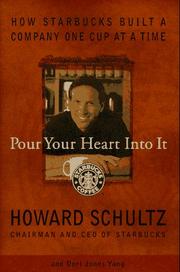
Howard Schultz, Dori Jones Yang · 1997

Insider account: Schultz on building the company to 1997.

Recommended by: Mohnish Pabrai

Eric Schlosser · 2001

How fast food reshaped farming, meatpacking, food science and low-wage work.

James L. Watson · 1997

Edited fieldwork on how the format was localised across Asia.

Where it sits in the reference 2

Companies
Industries

Topics

Company Histories