Updates

  1. Person pages list letters, writing, profiles and links as sortable tables with filters, and show each person's companies as links; Fund letters show each letter's description in its own column.
  2. Experts show a checked job title and a short description of each person; 30 more people have photographs.
  3. Every company, fund, university and publication the experts work for has a page listing the people there.
  4. Fund letters show each letter's thesis and filter by it; 225 person pages list the essays, columns and newsletter issues the person wrote.
  5. Person pages list every essay and newsletter issue a person wrote, and their own books as a table in List view.
  6. Recommends shows the five largest kinds of book and the rest under More; browse pictures load sooner.
  7. Podcasts and talks link the original episode, filter by Audio and video or Press, and list each publisher once.
  8. Pages are wider, Recommends has List and Grid, and a filter clicked again turns off.
  9. Book cards sit in a ruled grid with Open Library and Goodreads links and each book's one-line note.
  10. Funds is now Investors; each investor's styles are buttons that filter the table.
  11. Podcasts and talks on a person's page filter by year and publisher and show as a list or a grid of pictures.
  12. Quotes show only people's own words: 472 summaries written by list sites are gone.
  13. Country pages open from Browse again, and every link on the shelf lands on a page.
  14. Subject and person pages show their sections as tabs, and each book appears once on a person's page.
  15. Book cards show the quote, who said it and the source; grids show five cards to a row.
  16. On a phone, a menu holds the sections, search, Updates, Feedback and dark mode.
  17. Feedback takes a screenshot of the page with no browser prompt, opens a screenshot full size when you click it, and clears itself once sent.
  18. Book cards are centred, search names the topic each book sits in, and any text cut short shows whole on hover.
  19. Search groups its results by kind: people, companies, geographies, subjects, topics, books, funds, fund letters and papers.
  20. The Books table lists who recommended each book by name, and the browser tab names the section you are in.
  21. Feedback can take a screenshot of the page, or one you paste or choose, and opens in the corner beside Updates.
  22. Each rail button reopens its section where you left it, and Browse, Table and People show on every book and subject page.
  23. Filters grey out choices that hold nothing instead of hiding them, and Books › People filters by authors or recommenders.
  24. Feedback takes a subject line and up to three screenshots.
  25. Biographies are grouped by the person they are about: 41 new pages, from Abraham Lincoln to Lee Kuan Yew.
  26. Sport splits into 23 sports, and Religion into one topic per faith.
  27. Book lists show as cards: the cover, one recommendation quote and every recommender by name.
  28. Seventeen subjects that had two or three pages under different names now have one page each.
  29. Every page lists its Experts as authors and recommenders, with a link to them on the Experts tab.
  30. Economics, Financial history, Financial panics and Accounting are subjects of their own, with one page per financial crisis.
  31. Book, person and subject pages open inside the app, so the tabs stay in view.
  32. 996 more book covers, and photographs or logos for 227 more people and companies.
  33. Books › Browse shows every subject as cards, and the rail holds Fund letters, Papers, Experts, Books and Funds.
  34. Every topic over 150 books splits into narrower topics, each with a page of its own.

Send feedback

What is it?
Screenshots, up to 3 (optional)
or paste one with Ctrl+V

We use your email only to reply to you.

Covert Cows and Chick-fil-A

Covert Cows and Chick-fil-A

Steve Robinson
2019
T3 224 pages · about 3h 44m to read Open Librarygoodreads

Summary

Robinson was Chick-fil-A's chief marketing officer for thirty-four years and this is his account of the brand's development, centred on the Eat Mor Chikin cow campaign that ran from 1995.

The marketing content covers the campaign's origin, which was a billboard concept from the Richards Group agency in Dallas, and its development into a long-running platform across media. Robinson's argument about why it worked is that it was a single idea maintained for decades rather than replaced each year, that the humour created affection rather than merely awareness, and that the campaign accomplished the specific strategic task of positioning chicken against beef, which was the category question the company needed answered.

The business material covers the operating decisions: the closure on Sundays, which Truett Cathy imposed for religious reasons and which Robinson argues also functioned commercially by giving operators and staff a guaranteed day and by making the closure itself a communicated value; the franchise structure in which operators run one store with a low initial fee and cannot own multiple locations, which produces owner-operators rather than investors; and the emphasis on service standards enforced through operator selection.

The book is a company insider's account and is devotional in places, particularly about Truett Cathy and the company's religious basis. It does not address the controversies over the Cathy family's political donations or the criticisms of the franchise model's constraints on operators. The marketing analysis of campaign longevity is the transferable part.

Key takeaways 7

  1. Maintaining a single campaign idea for decades rather than replacing it annually is what built the brand's recognition and affection.
  2. The cow campaign accomplished a specific strategic task, being the positioning of chicken against beef, rather than only generating awareness.
  3. Humour that creates affection rather than mere recall produces a durable brand asset that competitors cannot copy without seeming derivative.
  4. Closing on Sundays functioned commercially by guaranteeing operators and staff a fixed day off and by communicating a value the company would not trade away.
  5. Restricting operators to a single location produces owner-operators who work in the restaurant rather than passive investors managing a portfolio.
  6. A low initial franchise fee combined with rigorous operator selection allows the company to choose for character rather than for capital.
  7. Consistent service standards in a franchise system are enforced through who is selected as an operator rather than through inspection.

Who should read it

Marketers and multi-unit operators interested in long-running campaign platforms and franchise operator selection.

Who recommended it 1

Chris Powersreported

Similar books 6

Chosen by shared topics, the entries that hold them, and the people who recommended both.
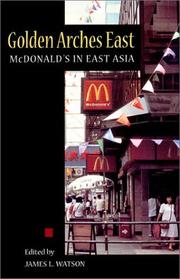
James L. Watson · 1997

Edited fieldwork on how the format was localised across Asia.

Ray Kroc, Robert Anderson · 1977

A milkshake-machine salesman finds the McDonald brothers and builds the franchise.

Recommended by: Mohnish Pabrai

John F. Love · 1986

McDonald's to the mid-1980s, from the brothers' stand to Kroc's franchise system.

Recommended by: Mohnish Pabrai
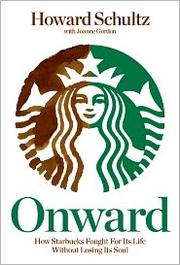
Howard Schultz, Joanne Gordon · 2011

Insider account: Schultz's 2008 return and the store closures.

Recommended by: Ron Conway, Tom Bilyeu
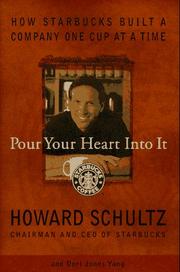
Howard Schultz, Dori Jones Yang · 1997

Insider account: Schultz on building the company to 1997.

Recommended by: Mohnish Pabrai

Where it sits in the reference 2

Companies
Industries

Topics

Sales and MarketingCompany HistoriesBrands, positioning and luxury