Updates

  1. Person pages list letters, writing, profiles and links as sortable tables with filters, and show each person's companies as links; Fund letters show each letter's description in its own column.
  2. Experts show a checked job title and a short description of each person; 30 more people have photographs.
  3. Every company, fund, university and publication the experts work for has a page listing the people there.
  4. Fund letters show each letter's thesis and filter by it; 225 person pages list the essays, columns and newsletter issues the person wrote.
  5. Person pages list every essay and newsletter issue a person wrote, and their own books as a table in List view.
  6. Recommends shows the five largest kinds of book and the rest under More; browse pictures load sooner.
  7. Podcasts and talks link the original episode, filter by Audio and video or Press, and list each publisher once.
  8. Pages are wider, Recommends has List and Grid, and a filter clicked again turns off.
  9. Book cards sit in a ruled grid with Open Library and Goodreads links and each book's one-line note.
  10. Funds is now Investors; each investor's styles are buttons that filter the table.
  11. Podcasts and talks on a person's page filter by year and publisher and show as a list or a grid of pictures.
  12. Quotes show only people's own words: 472 summaries written by list sites are gone.
  13. Country pages open from Browse again, and every link on the shelf lands on a page.
  14. Subject and person pages show their sections as tabs, and each book appears once on a person's page.
  15. Book cards show the quote, who said it and the source; grids show five cards to a row.
  16. On a phone, a menu holds the sections, search, Updates, Feedback and dark mode.
  17. Feedback takes a screenshot of the page with no browser prompt, opens a screenshot full size when you click it, and clears itself once sent.
  18. Book cards are centred, search names the topic each book sits in, and any text cut short shows whole on hover.
  19. Search groups its results by kind: people, companies, geographies, subjects, topics, books, funds, fund letters and papers.
  20. The Books table lists who recommended each book by name, and the browser tab names the section you are in.
  21. Feedback can take a screenshot of the page, or one you paste or choose, and opens in the corner beside Updates.
  22. Each rail button reopens its section where you left it, and Browse, Table and People show on every book and subject page.
  23. Filters grey out choices that hold nothing instead of hiding them, and Books › People filters by authors or recommenders.
  24. Feedback takes a subject line and up to three screenshots.
  25. Biographies are grouped by the person they are about: 41 new pages, from Abraham Lincoln to Lee Kuan Yew.
  26. Sport splits into 23 sports, and Religion into one topic per faith.
  27. Book lists show as cards: the cover, one recommendation quote and every recommender by name.
  28. Seventeen subjects that had two or three pages under different names now have one page each.
  29. Every page lists its Experts as authors and recommenders, with a link to them on the Experts tab.
  30. Economics, Financial history, Financial panics and Accounting are subjects of their own, with one page per financial crisis.
  31. Book, person and subject pages open inside the app, so the tabs stay in view.
  32. 996 more book covers, and photographs or logos for 227 more people and companies.
  33. Books › Browse shows every subject as cards, and the rail holds Fund letters, Papers, Experts, Books and Funds.
  34. Every topic over 150 books splits into narrower topics, each with a page of its own.

Send feedback

What is it?
Screenshots, up to 3 (optional)
or paste one with Ctrl+V

We use your email only to reply to you.

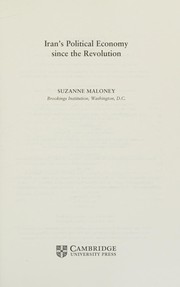
Iran's Political Economy since the Revolutio

Iran's Political Economy since the Revolution

Suzanne Maloney
2015
T3 587 pages · about 9h 47m to read Open Librarygoodreads

The standard survey: bonyads, IRGC commercial holdings, subsidies and sanctions.

Summary

Suzanne Maloney of Brookings traces Iranian economic policymaking from 1979 to the mid-2010s, arguing that economic considerations have shaped the Islamic Republic's decisions far more than the ideological reading of Iranian politics allows. She organises the history by leadership period: the revolutionary and war years, Rafsanjani's reconstruction and liberalisation, Khatami's reform attempt, Ahmadinejad's redistribution and confrontation, and Rouhani's negotiation of the nuclear agreement.

Her central argument is that the regime has repeatedly subordinated ideological commitments to economic necessity, and that this pattern is the strongest available lever for outside powers. She documents the internal fights over foreign investment, over subsidy reform, over privatisation that transferred assets to entities linked to the Revolutionary Guard, and over the oil sector's contract terms. She is careful about the limits of the pattern: economic pressure has produced tactical concessions and also produced consolidation of the security-linked economy that sanctions helped create.

The book is thoroughly sourced in Persian-language material and in the policy record. Its principal limitation is timing: it appeared as the nuclear agreement was concluded, and the American withdrawal in 2018, the reimposition of sanctions and the subsequent economic contraction fall outside it. Maloney's account of how sanctions strengthened rather than weakened the Revolutionary Guard's commercial position is the part most relevant to anyone assessing the current situation.

Key takeaways 7

  1. Iranian policy has consistently subordinated ideological commitments to economic necessity when the two conflicted.
  2. Sanctions transferred economic activity to entities capable of operating illicitly, which strengthened the Revolutionary Guard's commercial position.
  3. Iran's privatisation programme transferred state assets to quasi-public entities rather than to private owners.
  4. Subsidy reform has repeatedly been attempted and repeatedly reversed, because the political cost arrives before the fiscal benefit.
  5. Factional conflict inside the regime is largely about control of economic resources rather than about doctrine.
  6. Foreign investment terms in Iranian oil have been governed by constitutional restrictions on foreign ownership, which no government has been able to amend.
  7. Maloney argues that economic pressure produces Iranian concessions only when it is paired with a credible path to relief.

Who should read it

Investors and analysts assessing Iranian political risk who need the internal economic history behind the regime's negotiating behaviour.

Similar books 6

Chosen by shared topics, the entries that hold them, and the people who recommended both.
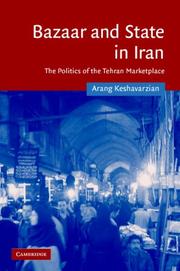
Arang Keshavarzian · 2003

How informal credit, trust networks and trade finance work when the banking system does not.

Jahangir Amuzegar · 1993

The earlier survey: nationalisation, war financing and the bonyad economy.
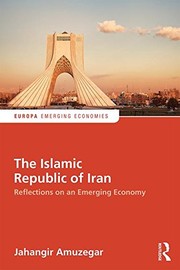
Jahangir Amuzegar · 2014

Former finance minister on subsidies, privatisation and the rial.
Alan Richards, John Waterbury · 1990

Egypt is the anchor case throughout; the standard textbook on regional state-business relations.
Steffen Hertog, Giacomo Luciani, Marc Valeri · 2015

How business associations and state elites actually bargain across the region.
Adam Hanieh · 2011

A class analysis of the Gulf states that rejects the standard rentier-state view.

Where it sits in the reference 2

Geographies
Economics

Topics

EconomicsPolitics and GovernmentMiddle East and North Africa