
Irrational Exuberance
How psychology, not fundamentals, drove the stock and housing booms of 2000 and 2005.
Third edition 2015 added a bond-market chapter.
Summary
Shiller published the first edition in 2000, timed almost exactly to the technology peak, and argued that stock prices were driven by psychological and structural factors rather than by fundamentals. The second edition in 2005 added housing and warned about that market before its collapse. Shiller received the Nobel Prize in economics in 2013.
His empirical foundation is the cyclically adjusted price to earnings ratio, which averages inflation-adjusted earnings over ten years to remove cycle effects, and which he shows has been a useful indicator of long-run subsequent returns while providing no timing information. His earlier work on excess volatility showed that stock prices move far more than the present value of subsequent dividends could justify, which is the finding that established his position against efficient markets.
His explanatory framework covers structural factors including the growth of defined contribution retirement plans, the expansion of financial media, and the reduction in trading costs; cultural factors including the amplification of narratives; and psychological factors including anchoring, overconfidence and herding. He also addresses the feedback loop mechanism, in which price increases generate the stories that justify further increases, which is his account of how a bubble sustains itself without any participant behaving irrationally in isolation.
The book is academic in register and the data chapters require attention. Shiller is explicit that the indicator cannot time anything, which many readers ignore, and the ratio has remained elevated for long periods without producing the reversion the framework implies. His housing warning was correct and unusually early. Later editions add material on the 2008 crisis and on bond markets.
Key takeaways 8
- Stock prices move far more than the present value of subsequent dividends can justify, which is the excess volatility finding.
- The cyclically adjusted price to earnings ratio predicts long-run subsequent returns while providing no information about timing.
- Price increases generate the narratives that justify further increases, which is the feedback mechanism sustaining a bubble.
- Structural changes including defined contribution plans, financial media expansion and lower trading costs increased retail participation and amplified price movements.
- Housing was in a bubble by 2005, which Shiller stated publicly and documented with the long-run real price series he constructed.
- Real house prices had been roughly flat over a century before the run-up, which undermines the belief that housing appreciates reliably.
- Bubbles do not require any participant to behave irrationally in isolation, since following the trend can be individually rational.
- An elevated valuation indicator can remain elevated for many years, which makes it useless for anyone whose horizon is shorter than a decade.
Who should read it
Investors who want the empirical case against efficient markets and the long-run valuation data, with the timing limitations understood.
About Robert J. Shiller
Sterling Professor of Economics Emeritus, Yale University; co-creator of the Case-Shiller home price indices; Nobel laureate in economics 2013
Excess-volatility work and Irrational Exuberance are the primary sources for the empirical case that asset prices move far more than fundamentals justify.
Who recommended it 4 · 2 direct
“In Irrational Exuberance he takes the reader on a scholarly tour of the excesses of the millennial capital markets.”
Similar books 6
Chosen by shared topics, the entries that hold them, and the people who recommended both.
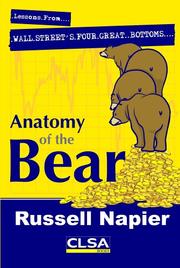
What markets looked like at the US stock bottoms of 1921, 1932, 1949 and 1982.
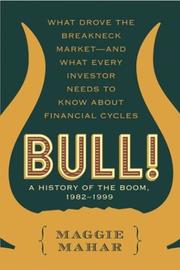
The US bull market from August 1982 to its 1999 peak, and what changed in it.
“A 2003 book that investors can learn much from is Bull! by Maggie Mahar.” — Warren Buffett
Source: Berkshire Hathaway shareholder letter, 2003
Recommended by: Warren Buffett, Nassim Nicholas Taleb

Speculation from ancient Rome and tulip mania to the 1990s, and its recurring traits.
“The book "Devil Take the Hindmost" by Edward Chancellor does an excellent job of chronicling the history of financial speculation.” — Howard Marks
Source: bubble.com, page 1
Recommended by: Howard Marks, Jeremy Grantham, John C. Bogle and 3 others
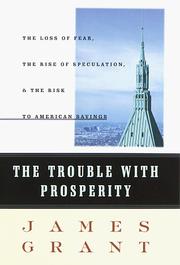
Why long good times erode the memory of losses and set up the reversal.
“Market," and "The Trouble with Prosperity." If you ever have the opportunity to hear this man speak, you should avail yourself.” — William J. Bernstein
Source: Efficient Frontier, issue 401 (2001)
Recommended by: Mohnish Pabrai, William J. Bernstein and 1 other
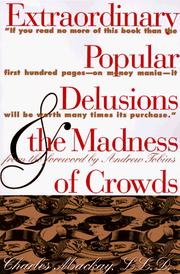
Crowd manias from the Mississippi scheme and South Sea Bubble to witch trials.
“We find whole communities suddenly fix their minds upon one object, and go mad in its pursuit,” wrote Charles Mackay in Extraordinary Popular Delusions and the Madness of Crowds (1841), which contains descriptions of early speculative manias.” — Jeremy Grantham
Source: Valuing AI: Extreme Bubble, New Golden Era - or Both?, page 6
Recommended by: Barton Biggs, Bernard Baruch and 6 others
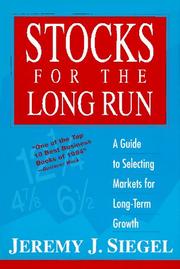
US returns since 1802 show stocks beat bonds and cash over every long period.
“his book "Stocks for the Long Run" contributed greatly to the bull market's middle years” — Howard Marks
Source: Oaktree memo 'Irrational Exuberance'
Recommended by: Howard Marks, John C. Bogle and 4 others
Where it sits in the reference 4
Topics 2
As an Amazon Associate I earn from qualifying purchases.