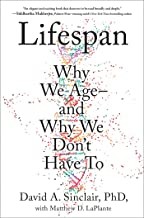
Lifespan
The case that ageing is a disease that can be treated, and the theory behind it.
Summary
Sinclair, a Harvard genetics professor, argues that ageing should be classified and treated as a disease rather than accepted as inevitable, and presents his information theory of ageing. The theory holds that ageing results from loss of epigenetic information, meaning the instructions telling cells which genes to express, rather than from accumulated DNA mutations. Cells retain the genetic information and lose the ability to read the right parts of it.
The mechanism he proposes centres on sirtuins, a family of proteins that regulate gene expression and DNA repair, and which are diverted from their regulatory role when repairing damage, producing epigenetic drift over time. He connects this to caloric restriction, to the compounds he studies including resveratrol and NAD precursors, and to work on partial cellular reprogramming using Yamanaka factors, which in mouse experiments restored function in damaged optic nerves.
His personal recommendations include intermittent fasting, exposure to cold and heat, exercise, reduced protein intake, and the supplements he takes.
The conflicts of interest are substantial and Sinclair discloses them: he has founded and holds positions in companies commercialising the compounds he discusses. The resveratrol research has been widely disputed, including a legal dispute over Sirtris after GlaxoSmithKline's acquisition, and other laboratories have failed to replicate key sirtuin findings. Several researchers criticised the book for presenting contested hypotheses with the confidence of established results. The Yamanaka factor reprogramming work is genuinely significant and the most substantial part of the science. Readers should treat the personal protocol chapters as untested and the theory as one hypothesis among several.
Key takeaways 8
- Sinclair argues that ageing results from loss of epigenetic information rather than from accumulated genetic mutation, so the instructions rather than the data are degraded.
- If the information is intact but misread, ageing may in principle be reversible rather than only slowable.
- Sirtuins regulate gene expression and are diverted to DNA repair, which Sinclair proposes as the mechanism producing epigenetic drift.
- Partial reprogramming using Yamanaka factors restored function in damaged mouse optic nerves, which is the most substantial experimental result in the book.
- Classifying ageing as a disease would change how research and treatment for age-related conditions are funded and approved.
- Interventions including caloric restriction, fasting and temperature stress activate the same survival pathways, which is the basis for the lifestyle recommendations.
- Sinclair holds commercial positions in companies developing the compounds discussed, which he discloses and which readers should weigh.
- Key sirtuin and resveratrol findings have failed to replicate in other laboratories, and the theory is contested rather than established.
Who should read it
Readers following longevity research who want the epigenetic hypothesis stated by its main advocate, with the commercial interests and replication problems in view.
Who recommended it 6 · 1 direct
“This eye-opening narrative reveals incredible scientific breakthroughs about aging and ways we can slow down, or even reverse, the process.”
Similar books 6
Chosen by shared topics, the entries that hold them, and the people who recommended both.
How modern chemicals and habits disrupt hormones and lower sperm counts.
“These include Sicker Fatter Poorer by Leonardo Trasande (2019), Count Down by Shanna Swan and Stacey Colino (2021), The Obesogen Effect by Bruce Blumberg and Kristin Loberg (2018), Toxic Cocktail by Barbara Demeneix (2017), and Our Stolen Future by Dianne Dumanoski, John Peterson Myers, and Theo Colborn (1996).” — Jeremy Grantham
Source: Rising Toxicity and the Threat to Capitalism and Life Itself, page 3
Recommended by: Jeremy Grantham, Nat Eliason
How the human immune system works, and its part in health and longevity.
“Explains for the lay reader the intricate biology of our immune system.” — Vinod Khosla
Source: 2019 Book Recommendations — Vinod Khosla, Medium
Recommended by: Bill Gates, Vinod Khosla, Keith Rabois
The case that sugar is the new tobacco: harmful, entrenched and backed by lobbies.
Recommended by: Vinod Khosla
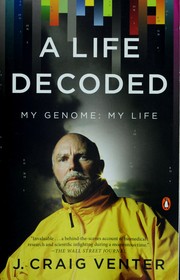
An insider's account of the private race to sequence the human genome.
Recommended by: Sam Altman
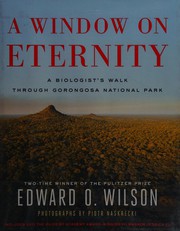
A biologist's walk through Gorongosa National Park, and why biodiversity matters.
Recommended by: Patrick Collison