Updates

  1. Person pages list letters, writing, profiles and links as sortable tables with filters, and show each person's companies as links; Fund letters show each letter's description in its own column.
  2. Experts show a checked job title and a short description of each person; 30 more people have photographs.
  3. Every company, fund, university and publication the experts work for has a page listing the people there.
  4. Fund letters show each letter's thesis and filter by it; 225 person pages list the essays, columns and newsletter issues the person wrote.
  5. Person pages list every essay and newsletter issue a person wrote, and their own books as a table in List view.
  6. Recommends shows the five largest kinds of book and the rest under More; browse pictures load sooner.
  7. Podcasts and talks link the original episode, filter by Audio and video or Press, and list each publisher once.
  8. Pages are wider, Recommends has List and Grid, and a filter clicked again turns off.
  9. Book cards sit in a ruled grid with Open Library and Goodreads links and each book's one-line note.
  10. Funds is now Investors; each investor's styles are buttons that filter the table.
  11. Podcasts and talks on a person's page filter by year and publisher and show as a list or a grid of pictures.
  12. Quotes show only people's own words: 472 summaries written by list sites are gone.
  13. Country pages open from Browse again, and every link on the shelf lands on a page.
  14. Subject and person pages show their sections as tabs, and each book appears once on a person's page.
  15. Book cards show the quote, who said it and the source; grids show five cards to a row.
  16. On a phone, a menu holds the sections, search, Updates, Feedback and dark mode.
  17. Feedback takes a screenshot of the page with no browser prompt, opens a screenshot full size when you click it, and clears itself once sent.
  18. Book cards are centred, search names the topic each book sits in, and any text cut short shows whole on hover.
  19. Search groups its results by kind: people, companies, geographies, subjects, topics, books, funds, fund letters and papers.
  20. The Books table lists who recommended each book by name, and the browser tab names the section you are in.
  21. Feedback can take a screenshot of the page, or one you paste or choose, and opens in the corner beside Updates.
  22. Each rail button reopens its section where you left it, and Browse, Table and People show on every book and subject page.
  23. Filters grey out choices that hold nothing instead of hiding them, and Books › People filters by authors or recommenders.
  24. Feedback takes a subject line and up to three screenshots.
  25. Biographies are grouped by the person they are about: 41 new pages, from Abraham Lincoln to Lee Kuan Yew.
  26. Sport splits into 23 sports, and Religion into one topic per faith.
  27. Book lists show as cards: the cover, one recommendation quote and every recommender by name.
  28. Seventeen subjects that had two or three pages under different names now have one page each.
  29. Every page lists its Experts as authors and recommenders, with a link to them on the Experts tab.
  30. Economics, Financial history, Financial panics and Accounting are subjects of their own, with one page per financial crisis.
  31. Book, person and subject pages open inside the app, so the tabs stay in view.
  32. 996 more book covers, and photographs or logos for 227 more people and companies.
  33. Books › Browse shows every subject as cards, and the rail holds Fund letters, Papers, Experts, Books and Funds.
  34. Every topic over 150 books splits into narrower topics, each with a page of its own.

Send feedback

What is it?
Screenshots, up to 3 (optional)
or paste one with Ctrl+V

We use your email only to reply to you.

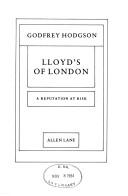
Lloyd's of London

Lloyd's of London

Godfrey Hodgson
1984
T3 414 pages · about 6h 54m to read Open Librarygoodreads

History of the market before the losses that nearly ended it.

Summary

Hodgson, a British journalist, wrote a history of Lloyd's of London covering its origins in Edward Lloyd's coffee house, its development into the world's principal marine and specialty insurance market, its structure of individual Names bearing unlimited personal liability, and the scandals of the late 1970s and early 1980s.

The institutional material is what makes it useful. Lloyd's is a market rather than a company: underwriting syndicates operate within it, capital is supplied by Names who pledge their entire personal wealth against claims, and the market's reputation for paying claims is the asset that all the participants depend on. Hodgson explains the agency structure, the role of brokers, and the reinsurance arrangements including the reinsurance-to-close mechanism that transferred one year's remaining liabilities to the next.

The scandals he covers involved syndicate managers placing bad risks with Names they represented while protecting themselves and preferred clients, and the removal of funds through offshore reinsurance vehicles. Hodgson examines how the self-regulating structure permitted this and how the resulting inquiries changed governance.

The book was published in 1984, before the asbestos and pollution claims that nearly destroyed Lloyd's in the early 1990s, bankrupted thousands of Names and forced the introduction of corporate capital and the Equitas run-off vehicle. That is the most important thing that has happened to the institution and this book predates it entirely. Read it for the structure and the earlier history rather than as a current account.

Key takeaways 7

  1. Lloyd's is a market within which syndicates underwrite, not an insurance company, and its central asset is a collective reputation for paying claims.
  2. Names supplied capital by pledging their entire personal wealth, which gave the market capacity without requiring the capital to be paid in.
  3. Unlimited personal liability meant Names bore losses that could exceed anything they had earned from the market over decades.
  4. The reinsurance-to-close mechanism transferred a year's remaining liabilities to the following year's Names, which moved long-tail exposures onto people who had not underwritten them.
  5. Self-regulation permitted agents to place poor risks with the Names they represented while protecting themselves, and the structure supplied no independent check.
  6. Brokers rather than underwriters controlled the flow of business, which gave them power over which syndicates saw which risks.
  7. A market that pools reputation gives every participant an interest in the others' conduct and no individual mechanism for enforcing it.

Who should read it

Insurance professionals and investors interested in the structure of the Lloyd's market, read as predating the asbestos crisis that transformed it.

Similar books 6

Chosen by shared topics, the entries that hold them, and the people who recommended both.
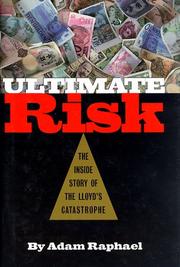
Adam Raphael · 1994

The Lloyd's of London Names catastrophe and unlimited liability.

Maurice R. Greenberg, Lawrence A. Cunningham · 2013

How AIG became the world's largest insurer, and its builder's account of his ouster.

Recommended by: Mohnish Pabrai

Andrew Tobias · 1982

Consumer-side account of how insurers make money.
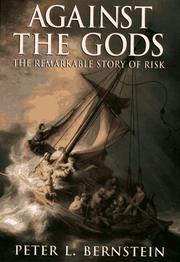
Peter L. Bernstein · 1996

How people learned to measure risk, from early probability to portfolio theory.

“I think some of the books that are a must would be Peter Bernstein's book about risk, Against the Gods: The Remarkable Story of Risk.” — Charles de Vaulx

Source: De Vaulx naming Bernstein's book a must-read on risk

Recommended by: Charles de Vaulx, Jim Collins and 8 others
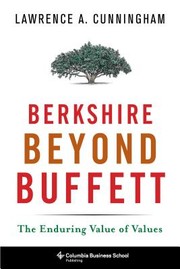
Lawrence A. Cunningham · 2014

Berkshire as an operating company: its subsidiaries' culture and whether it lasts.

Recommended by: Mohnish Pabrai
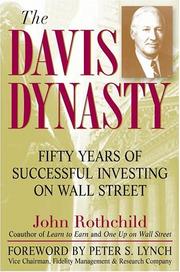
John Rothchild · 2001

Three generations compounding a fortune through insurance stocks

“When John Rothchild combines history and biography with investing in one package, history illuminates the biography and investing. This is a sparkling book on each level, but even more so as an…” — Peter Bernstein

Source: Bernstein on Rothchild mixing history, biography and investing

Recommended by: Mohnish Pabrai, Peter Bernstein and 1 other

Where it sits in the reference 3

Companies
Business models
Industries

Topics

Company HistoriesFinance and Markets