The AIG Story
Insider: the ousted CEO's defense of the firm he built.
Summary
Greenberg built AIG from a small operation into the largest insurance company in the world across nearly four decades, and was forced out in 2005 by the board under pressure from Eliot Spitzer's investigation, three years before the company required a federal rescue.
The business material covers the international expansion, which was the company's distinctive characteristic. AIG operated in markets that competitors would not enter, obtained licences in countries that restricted foreign insurers, and built underwriting operations in Asia, the Middle East and Latin America decades before its competitors. Greenberg treats the relationships with governments in those countries as the actual asset. The underwriting material covers his insistence on underwriting profit rather than on premium growth, the willingness to decline business at inadequate rates, and the development of specialised lines including political risk, kidnap and ransom, and directors and officers coverage.
The book's argument about the 2008 collapse is that the losses came from the financial products division after Greenberg's departure, that the credit default swap portfolio was written on terms he would not have accepted, and that the rescue terms imposed on the company were punitive relative to what other institutions received. Greenberg litigated this position and a court found partly in his favour on the terms while awarding no damages.
This is a self-account by a person defending his own record against specific allegations, written with Cunningham. It is advocacy and readers should treat the causal claims about the collapse as one side of a disputed question. The account of building an international insurance operation is the substantive material.
Key takeaways 8
- AIG's distinctive asset was operating in markets competitors would not enter, obtaining licences in countries that restricted foreign insurers.
- Relationships with governments in restricted markets were the actual barrier to entry rather than any underwriting capability.
- Underwriting profit rather than premium growth was the stated objective, which required declining business at inadequate rates.
- Specialised lines including political risk, kidnap and ransom and directors and officers coverage carried margins that commodity insurance did not.
- Greenberg argues that the losses producing the 2008 rescue came from the financial products division after his departure.
- He argues that the credit default swap portfolio was written on terms he would not have accepted, and that the collateral posting obligations were the specific failure.
- He argues that the rescue terms imposed on AIG were punitive relative to what other institutions received, and litigated the point.
- This is a self-account defending a contested record, and the causal claims about the collapse are one side of a disputed question.
Who should read it
Readers interested in building an international insurance business and in one participant's contested account of the 2008 rescue.
About Lawrence A. Cunningham
Corporate-governance scholar and longtime George Washington University law professor; edits The Essays of Warren Buffett and writes on Berkshire and quality investing.
The Essays of Warren Buffett reorganises decades of Berkshire shareholder letters by subject - governance, accounting, mergers, valuation - turning scattered annual commentary into a usable manual. The later books extend the analysis to Berkshire's decentralised structure and to the traits that make a business durable enough to hold for decades.
University of Delaware, Quality Shareholders Group, George Washington University
Who recommended it 1 · 1 direct
Similar books 6
Chosen by shared topics, the entries that hold them, and the people who recommended both.
Berkshire as an operating company: its subsidiaries' culture and whether it lasts.
Recommended by: Mohnish Pabrai
How AIG's derivatives unit led the world's largest insurer to a $180 billion rescue.
History of the market before the losses that nearly ended it.
The Lloyd's of London Names catastrophe and unlimited liability.

Consumer-side account of how insurers make money.
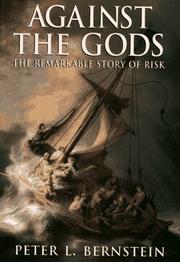
How people learned to measure risk, from early probability to portfolio theory.
“I think some of the books that are a must would be Peter Bernstein's book about risk, Against the Gods: The Remarkable Story of Risk.” — Charles de Vaulx
Source: De Vaulx naming Bernstein's book a must-read on risk
Recommended by: Charles de Vaulx, Jim Collins and 8 others
Where it sits in the reference 4
Topics