Updates

  1. Person pages list letters, writing, profiles and links as sortable tables with filters, and show each person's companies as links; Fund letters show each letter's description in its own column.
  2. Experts show a checked job title and a short description of each person; 30 more people have photographs.
  3. Every company, fund, university and publication the experts work for has a page listing the people there.
  4. Fund letters show each letter's thesis and filter by it; 225 person pages list the essays, columns and newsletter issues the person wrote.
  5. Person pages list every essay and newsletter issue a person wrote, and their own books as a table in List view.
  6. Recommends shows the five largest kinds of book and the rest under More; browse pictures load sooner.
  7. Podcasts and talks link the original episode, filter by Audio and video or Press, and list each publisher once.
  8. Pages are wider, Recommends has List and Grid, and a filter clicked again turns off.
  9. Book cards sit in a ruled grid with Open Library and Goodreads links and each book's one-line note.
  10. Funds is now Investors; each investor's styles are buttons that filter the table.
  11. Podcasts and talks on a person's page filter by year and publisher and show as a list or a grid of pictures.
  12. Quotes show only people's own words: 472 summaries written by list sites are gone.
  13. Country pages open from Browse again, and every link on the shelf lands on a page.
  14. Subject and person pages show their sections as tabs, and each book appears once on a person's page.
  15. Book cards show the quote, who said it and the source; grids show five cards to a row.
  16. On a phone, a menu holds the sections, search, Updates, Feedback and dark mode.
  17. Feedback takes a screenshot of the page with no browser prompt, opens a screenshot full size when you click it, and clears itself once sent.
  18. Book cards are centred, search names the topic each book sits in, and any text cut short shows whole on hover.
  19. Search groups its results by kind: people, companies, geographies, subjects, topics, books, funds, fund letters and papers.
  20. The Books table lists who recommended each book by name, and the browser tab names the section you are in.
  21. Feedback can take a screenshot of the page, or one you paste or choose, and opens in the corner beside Updates.
  22. Each rail button reopens its section where you left it, and Browse, Table and People show on every book and subject page.
  23. Filters grey out choices that hold nothing instead of hiding them, and Books › People filters by authors or recommenders.
  24. Feedback takes a subject line and up to three screenshots.
  25. Biographies are grouped by the person they are about: 41 new pages, from Abraham Lincoln to Lee Kuan Yew.
  26. Sport splits into 23 sports, and Religion into one topic per faith.
  27. Book lists show as cards: the cover, one recommendation quote and every recommender by name.
  28. Seventeen subjects that had two or three pages under different names now have one page each.
  29. Every page lists its Experts as authors and recommenders, with a link to them on the Experts tab.
  30. Economics, Financial history, Financial panics and Accounting are subjects of their own, with one page per financial crisis.
  31. Book, person and subject pages open inside the app, so the tabs stay in view.
  32. 996 more book covers, and photographs or logos for 227 more people and companies.
  33. Books › Browse shows every subject as cards, and the rail holds Fund letters, Papers, Experts, Books and Funds.
  34. Every topic over 150 books splits into narrower topics, each with a page of its own.

Send feedback

What is it?
Screenshots, up to 3 (optional)
or paste one with Ctrl+V

We use your email only to reply to you.

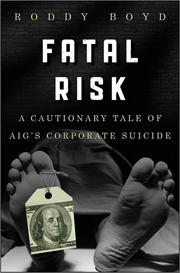
Fatal Risk: A Cautionary Tale of AIG's Corpo

Fatal Risk: A Cautionary Tale of AIG's Corporate Suicide

Roddy Boyd
2011
T2 349 pages · about 5h 49m to read Open Librarygoodreads

The fullest dedicated account of AIG Financial Products.

Summary

Boyd, a financial journalist, reconstructed how American International Group, the largest insurer in the world, required a rescue that reached roughly one hundred and eighty billion dollars.

The explanation centres on AIG Financial Products, a unit operating from London and Connecticut that wrote credit default swaps on the senior tranches of collateralised debt obligations backed by mortgages. The unit's leadership, Joseph Cassano and before him Tom Savage, treated these as insurance on securities that would never default, because the tranches sat above enough subordination to survive any historical loss experience. Boyd shows that the models used to reach that conclusion assumed regional rather than national house price declines, and that the unit stopped writing new business in 2005 when its own analysis raised doubts, by which point the exposure was already in place.

The mechanism of failure was not default but collateral. The contracts required AIG to post collateral if the reference securities declined in value or if AIG's own credit rating fell, regardless of whether any underlying loss occurred. When mortgage security prices fell and the ratings agencies downgraded AIG, both triggers fired simultaneously and the collateral demands exceeded the group's liquidity. Boyd also covers the securities lending programme, which had invested cash collateral from lent securities into mortgage assets, producing a second and largely separate liquidity failure.

The institutional argument is that Maurice Greenberg's departure in 2005, forced by Eliot Spitzer's investigation, removed the only person who understood and constrained Financial Products, and that his successors did not.

Boyd is sympathetic to Greenberg, which readers should weigh, and the counterfactual that Greenberg would have prevented the outcome is asserted rather than demonstrated. The book is detailed on the mechanics and is the best account of the collateral trigger structure specifically.

Key takeaways 7

  1. AIG failed on collateral calls rather than on realised credit losses, and no underlying default was required to destroy it.
  2. Credit default swap contracts required collateral posting when reference prices fell and when AIG's own rating fell, so both triggers fired together.
  3. The models supporting the exposure assumed regional rather than nationwide house price declines, which was the load-bearing assumption.
  4. Financial Products stopped writing new business in 2005, which shows the unit identified the risk before the market did and could not exit what it held.
  5. A securities lending programme investing cash collateral in mortgage assets created a second liquidity failure independent of the derivatives book.
  6. An insurance company's triple-A rating was the asset that made the business possible, and it was pledged in the contracts that destroyed it.
  7. A small unit operating outside the group's risk framework can generate exposure that exceeds the entire firm's capital.

Who should read it

Risk managers and investors in financial institutions who need to see how contractual collateral triggers rather than credit losses can destroy a solvent company.

Similar books 6

Chosen by shared topics, the entries that hold them, and the people who recommended both.

Maurice R. Greenberg, Lawrence A. Cunningham · 2013

How AIG became the world's largest insurer, and its builder's account of his ouster.

Recommended by: Mohnish Pabrai
Bethany McLean, Joe Nocera · 2010

The 2008 crisis traced back 25 years to mortgage bonds, Fannie Mae and subprime.
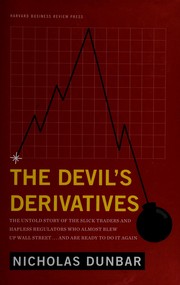
Nicholas Dunbar · 2011

How the swaps trade worked and why AIG sold it
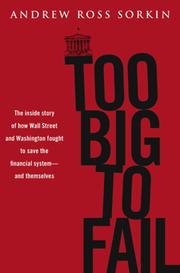
Andrew Ross Sorkin · 2009

Inside the meetings of bankers and regulators during the 2008 financial crisis.

Timothy F. Geithner · 2014

The 2008 crisis and its aftermath, from inside the New York Fed and the Treasury.

Lawrence G. McDonald, Patrick Robinson · 2009

Lehman Brothers' fall seen from its trading floor, and the warnings it ignored.

Where it sits in the reference 3

Companies
Business models
Financial panics

Topics

Company HistoriesFinance and Markets