Updates

  1. Person pages list letters, writing, profiles and links as sortable tables with filters, and show each person's companies as links; Fund letters show each letter's description in its own column.
  2. Experts show a checked job title and a short description of each person; 30 more people have photographs.
  3. Every company, fund, university and publication the experts work for has a page listing the people there.
  4. Fund letters show each letter's thesis and filter by it; 225 person pages list the essays, columns and newsletter issues the person wrote.
  5. Person pages list every essay and newsletter issue a person wrote, and their own books as a table in List view.
  6. Recommends shows the five largest kinds of book and the rest under More; browse pictures load sooner.
  7. Podcasts and talks link the original episode, filter by Audio and video or Press, and list each publisher once.
  8. Pages are wider, Recommends has List and Grid, and a filter clicked again turns off.
  9. Book cards sit in a ruled grid with Open Library and Goodreads links and each book's one-line note.
  10. Funds is now Investors; each investor's styles are buttons that filter the table.
  11. Podcasts and talks on a person's page filter by year and publisher and show as a list or a grid of pictures.
  12. Quotes show only people's own words: 472 summaries written by list sites are gone.
  13. Country pages open from Browse again, and every link on the shelf lands on a page.
  14. Subject and person pages show their sections as tabs, and each book appears once on a person's page.
  15. Book cards show the quote, who said it and the source; grids show five cards to a row.
  16. On a phone, a menu holds the sections, search, Updates, Feedback and dark mode.
  17. Feedback takes a screenshot of the page with no browser prompt, opens a screenshot full size when you click it, and clears itself once sent.
  18. Book cards are centred, search names the topic each book sits in, and any text cut short shows whole on hover.
  19. Search groups its results by kind: people, companies, geographies, subjects, topics, books, funds, fund letters and papers.
  20. The Books table lists who recommended each book by name, and the browser tab names the section you are in.
  21. Feedback can take a screenshot of the page, or one you paste or choose, and opens in the corner beside Updates.
  22. Each rail button reopens its section where you left it, and Browse, Table and People show on every book and subject page.
  23. Filters grey out choices that hold nothing instead of hiding them, and Books › People filters by authors or recommenders.
  24. Feedback takes a subject line and up to three screenshots.
  25. Biographies are grouped by the person they are about: 41 new pages, from Abraham Lincoln to Lee Kuan Yew.
  26. Sport splits into 23 sports, and Religion into one topic per faith.
  27. Book lists show as cards: the cover, one recommendation quote and every recommender by name.
  28. Seventeen subjects that had two or three pages under different names now have one page each.
  29. Every page lists its Experts as authors and recommenders, with a link to them on the Experts tab.
  30. Economics, Financial history, Financial panics and Accounting are subjects of their own, with one page per financial crisis.
  31. Book, person and subject pages open inside the app, so the tabs stay in view.
  32. 996 more book covers, and photographs or logos for 227 more people and companies.
  33. Books › Browse shows every subject as cards, and the rail holds Fund letters, Papers, Experts, Books and Funds.
  34. Every topic over 150 books splits into narrower topics, each with a page of its own.

Send feedback

What is it?
Screenshots, up to 3 (optional)
or paste one with Ctrl+V

We use your email only to reply to you.

The Devil's Derivatives

The Devil's Derivatives

Nicholas Dunbar
2011
T3 291 pages · about 4h 51m to read Open Librarygoodreads

How the swaps trade worked and why AIG sold it

Summary

Nicholas Dunbar, who covered derivatives for Risk magazine, traces the development of the credit derivatives and structured finance markets from the 1990s through the 2008 crisis. His organising device is a distinction between two types of market participant, whom he calls those who hate to lose money and those who love to make it.

The first group, principally commercial banks and insurers, buy protection and structure products so as to appear risk-free while accumulating exposure that is hidden rather than absent. The second group, principally hedge funds and proprietary traders, take positions they understand to be risky and are paid for doing so. Dunbar argues that most of the losses of 2008 were concentrated in the first group, because their structures concealed the risk from themselves as well as from others.

The technical narrative covers the development of the credit default swap at JPMorgan, the regulatory capital arbitrage that drove much early issuance, the collateralised debt obligation and the correlation modelling that priced its tranches, the role of the monoline insurers and of AIG's financial products unit in writing protection they did not hedge, and the mechanics by which triple-A rated tranches produced enormous losses. Dunbar is technically precise and writes for readers willing to follow structural detail. The book covers ground also treated by Gillian Tett and Michael Lewis, with considerably more attention to how the instruments actually worked.

Key takeaways 7

  1. Institutions that structured exposures to appear risk-free concentrated the losses, because the structures concealed risk from their own management.
  2. Credit default swaps were developed partly to reduce regulatory capital requirements rather than to transfer economic risk.
  3. Collateralised debt obligation tranche pricing depended on correlation assumptions that no data supported.
  4. AIG and the monoline insurers wrote protection without hedging it, on the basis that the underlying events would not occur.
  5. A triple-A rating on a structured tranche describes expected loss under a model rather than the security's resemblance to a government bond.
  6. Dunbar argues that participants who understood themselves to be taking risk managed it better than those who believed they had eliminated it.
  7. Regulatory capital rules shaped the instruments the market created more than economic demand did.

Who should read it

Investors and risk professionals who want the technical development of credit derivatives and structured credit explained by someone who covered the market throughout.

Similar books 6

Chosen by shared topics, the entries that hold them, and the people who recommended both.

Bethany McLean, Joe Nocera · 2010

The 2008 crisis traced back 25 years to mortgage bonds, Fannie Mae and subprime.
Roddy Boyd · 2011

How AIG's derivatives unit led the world's largest insurer to a $180 billion rescue.
Andrew Ross Sorkin · 2009

Inside the meetings of bankers and regulators during the 2008 financial crisis.

Timothy F. Geithner · 2014

The 2008 crisis and its aftermath, from inside the New York Fed and the Treasury.

Lawrence G. McDonald, Patrick Robinson · 2009

Lehman Brothers' fall seen from its trading floor, and the warnings it ignored.
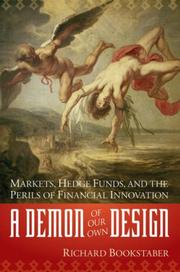
Richard M. Bookstaber · 2007

How financial innovation made markets more crisis-prone, from a risk manager.

Where it sits in the reference 2

Companies
Financial panics

Topics

Finance and Markets