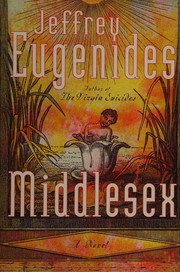
Middlesex
A mutated gene passes through three generations of a Greek family to an intersex man.
Summary
Jeffrey Eugenides's novel won the Pulitzer Prize and has sold more than four million copies since 2002. It is a coming-of-age story and a family saga that follows the effect of a mutated gene on three generations of a Greek family. Its narrator, Cal Stephanides, first raised as Calliope, is an intersex man with 5-alpha-reductase deficiency.
The first half tells of Cal's grandparents, a brother and sister who flee their village and the burning of Smyrna, marry on the ship, and settle in Detroit in 1922, then a booming industrial city, where the family assimilates. The second half, set in the late twentieth century, follows Cal's youth in Detroit and escape to San Francisco, where he comes to terms with his gender identity. Eugenides drew on his own Greek heritage but is not intersex; he wrote the novel after finding the 1980 memoir Herculine Barbin unsatisfying on intersex anatomy and feeling. Scholars name nature against nurture, rebirth and the American Dream among its themes, and it alludes often to Greek myth.
Key takeaways 4
- A mutated gene passes through three generations before shaping Cal's life.
- Eugenides joins an immigrant family saga to a coming-of-age story.
- Detroit, a booming industrial city, frames the family's fortunes.
- The novel questions how much of identity comes from biology and how much from upbringing.
Who should read it
Readers of family sagas and literary fiction about identity and immigration.
Who recommended it 2
Similar books 6
Chosen by shared topics, the entries that hold them, and the people who recommended both.

A novel of a Nigerian immigrant in America, and of race, love and home.
Recommended by: Michelle Obama

A story told entirely in pictograms and icons, with no words.
Recommended by: Patrick Collison

A Holocaust survivor and refugee who finds himself with three wives.
Recommended by: Patrick Collison
A novel set in an undated world ruled by a despot.
Recommended by: Marc Andreessen
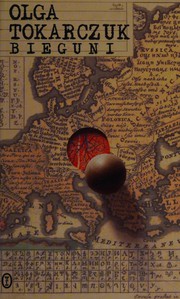
A fragmentary novel of travel, bodies and anatomy across the centuries.
Recommended by: Andrew Wilkinson
Milan publishers drawn into Kabbalah, the Knights Templar and conspiracy theories.
Recommended by: Patrick Collison